Advertisements
Advertisements
प्रश्न
What is Ulysses’ clarion call to his sailors? How does he inspire them?
Advertisements
उत्तर
In the third part of the poem, Ulysses makes a clarion call to his hearty compatriots (i.e.) mariners. They have been with him both during ‘thick and thin’ or thunders or sunshine. Similar to Ulysses they possess “free hearts and free foreheads” (i.e.) their hearts and brains are unburdened by domestic cares and responsibilities. They had frolicsome time fighting along with Ulysses against great warriors and Gods in the past. Ulysses does not want to live in the memory of glory. He believes they need not waste away their precious time in nostalgic memories just recounting their escapades to the younger generation. They can really do ‘ something of noble note’ before the end. He is conscious of the impending death in old age. But he tells it is not “too late to seek a newer world”.
The many “voices of the ocean” call out to the mariners to resume the voyage. Ulysses is not content with having earned a name for himself. He has seen many countries and acquired knowledge of various cultures. Those experiences are not to be taken as accomplishments. They are just an ‘arch leading them to an “untravelled world” and constantly sailing to the ever-expanding horizon. He does not want his compatriots to miss even an hour which could provide them novel experiences in their voyage. He persuades his compatriots to gather at the port as the sails are already puffing up welcoming them all. Their life would be one of fulfillment only when they venture out into the unknown on the seas. He uses emotional bait to his mariners. He highlights the probable outcome of their voyage. They might reach the “Happy Isles” (i.e.) great paradise and meet Achilles, their war hero. No matter how much strength they have, they still have some “strength of will” left to strive, to seek, to find, and not to yield.
APPEARS IN
संबंधित प्रश्न
Who had let the enemies in?
Why were the secret galleries bare?
Bring out the contrasting picture of the castle as depicted in stanzas 3 and 5.
Human greed led to the mighty fall of the citadel. Explain.
Read the given line and answer the question that follow in a line or two.
Our gates were strong, our walls were thick,
So smooth and high, no man could win.
- How safe was the castle?
- What was the firm belief of the soldiers?
Read the given line and answer the question that follow in a line or two.
| Oh then our maze of tunneled stone Grew thin and treacherous as air. The castle was lost without a groan, The famous citadel overthrown, |
- Bring out the contrast in the first two lines.
- What is the rhyme scheme of the given stanza?
I will maintain until my death
Identify the figure of speech used in the following line.
Oh then our maze of tunneled stone
Describe the garden during the night.
Does nature communicate with human beings?
What has Wordsworth sanctified in his poem?
What is the world compared to?
“And they have their exits and their entrances” - What do the words ‘exits’ and ‘entrances’ mean?
What is the first stage of a human’s life?
Why is the last stage called second childhood?
Complete the summary of the poem, choosing words from the list given below. Lines 1 to 32
Ulysses is (1) ______to discharge his duties as a (2) ______, as he longs for (3) ______. He is filled with an (4) ______thirst for (5) ______and wishes to live life to the (6) ______. He has travelled far and wide gaining (7) _______ of various places, cultures, men and (8) ______. He recalls with delight his experience at the battle of Troy. Enriched by his (9) ______he longs for more and his quest seems endless. Like metal which would (10) ______if unused, life without adventure is meaningless. According to him living is not merely (11) ______to stay alive. Though old but zestful, Ulysses looks at every hour as a bringer of new things and yearns to follow knowledge even if it is (12)______.
| fullest, unquenchable, unattainable, experience, knowledge, king, matters, rust, adventure, unwilling, travel, breathing |
Pick out the lines which convey that his quest for travel is unending.
What does Ulysses yearn for?
Why did Ulysses want to hand over the kingdom to his son?
Identify the figure of speech employed in the following line.
.....the deep Moans round with many voices.
Read the set of line from the poem and answer the question that follow.
This is my son, mine own Telemachus,
To whom I leave the sceptre and the isle Well-loved of me,
- Who does Ulysses entrust his kingdom to, in his absence?
- Bring out the significance of the ‘sceptre’.
Explain with reference to the context the following line.
I cannot rest from travel: I will drink Life to the lees:
Explain with reference to the context the following line.
We are not now that strength which in old days Moved earth and heaven;
Every parent is anxious about the welfare of his/her children. Parents express their anxiety by advising them almost all the time. What kind of advice do you frequently receive from your parents? Fill in the bubbles. Tick the ones you like to follow implicitly and give reasons for the ones you don’t like to follow.
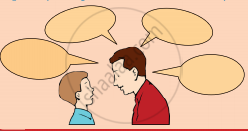
Why does the poet advise his son to have lazy days?
Explain the following line with reference to the context.
and guide him among sudden betrayals
and tighten him for slack moments.
Read the line given below and answer the question that follow.
Legs wide, arms locked behind As if to balance the prone brow Oppressive with its mind.
- Whose action is described here?
- What is meant by prone brow?
- What is his state of mind?
Read the line given below and answer the question that follow.
A film the mother eagles eye When her bruised eaglet breathes
- Who is compared to the mother eagle in the above lines?
- Explain the comparison.
