Advertisements
Advertisements
प्रश्न
How does the poem bring out the elusive nature of happiness in human existence?
Advertisements
उत्तर
The poem is an attempt to distinct happiness and true happiness, the real and imaginary, reality and dream, the pleasure and pain, the ideal, and the actual as Richard Fogle calls it. The everlasting and the momentary have been differentiated in the poem. The true pleasure as Keats defines lies not in the physical world which is full of miseries and pain and loss. We chase the beauty and happiness the way the poet chases the bird's song and still at a point the spell is bound to break like a bubble bursts and the human is thrown into the reality to realise the ultimate and inevitable, the death! Happiness is elusive and evanescent and can not be held forever. It is fickle and promiscuous. The poet when felt that he has found true happiness in the singing of the nightingale, which is beyond age and time; he wakes up to reality. He realises that it was just a vision of a dream, so is happiness, like a dream, not stationary! All that we can do is delay the inevitability of death through this beauty that gives transcendental happiness.
APPEARS IN
संबंधित प्रश्न
How did Helen display her passion for Radcliffe College?
Describe the role of Mr. Keith in the life of Helen in ‘The Story of My Life’.
Write a summary of the above passage in about 100 words.
The poet’s mother laughed at the snapshot. What did this laugh indicate?
Guess the meaning of the following word:
Drokba
In which language are these word found?
Discuss the following in pairs or in small groups.
Although Paul’s mother liked to be rich she did not approve of betting on horses.
How, according to you, can peace and liberty be maintained in a state?
'The author's treatment of the subject matter makes the readers identify themselves with the experience.' Comment on the statement.
Notice this word in the poem and guess its meaning from the context.
turquoise
The following common word is used in a different sense in the poem. Guess what it means.
Why do you think the poet has used so many 'negatives' to make his statement?
Comment on the subtlety with which the poet captures the general pattern of communication within a family.
Why have the words, 'pretended' and 'seemed' been used in the lines:
...Pretended to believe every single word
of what the tiger king said.
And seemed to be taken in by all the lies.
How does the sense of these lines connect with the line 'Ajamil wasn't a fool'?
Name the world-famous personality who reached great heights despite of humble circumstances.
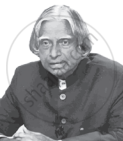
Name the world-famous personality who reached great heights despite of humble circumstances.
Read the story and complete the following.
At first, Revathi’s plants did not look normal and healthy because, ____________.
Add the appropriate Prefix to make the following word opposite in meaning.
continue
Say why the speaker of the poem wishes to be a -
watchman
Read the Preamble of the Constitution of India given in your textbook. Pick out a word that refers to the following.
Brotherhood
'Uttarayana' starts from Makar Sankranti onwards.
Think and answer in your own words.
'Beauty' in stanza 5 to 6 can refer to a beautiful maiden as well as nature itself. Explain when and how nature ‘dances’ and also 'smiles'.
Go through the poem and state whether the following statement is true or false.
Planners plan to construct buildings wherever they find a place.
Say WHY. . . . . .
Hardy invited Littlewood for a discussion.
Suggest what you would do in the following situation:
You are going through a crisis that is making you short-tempered and impatient, due to which you end up causing harm to your family and friends. They have started complaining about it quite often.
Read the passage and find the verbs used with the following nouns and phrases:
- volcano
- molten rock
- volcanic mountain
- dust
- 165 village and towns
- the wind and the sea
- seeds
- bird
What are the games/play activities, entertainments that use a wheel?
‘Smart Answers’: Form a large group. Each person asks the next one a question to get him to say ‘yes’ or ‘no’. He/She can use appropriate statements, requests, or even other questions as a response. But if he/she says ‘yes’ or ‘no’, he/she is out. Otherwise, he/she continues the game. Questions cannot be repeated.
Write a conversation between a donkey and a horse.
What do the following event/action tell us about the characters? Discuss.
The Archbishop announced that everyone was free to try his hand at the sword and called all the Lords to a Tournament.
Turn the story into a play as a group activity and present the scenes in the classroom.
Write the following:
The sights mentioned in the third stanza.
A parody is a playful, comic imitation of a writer’s style. A parody is like a verbal cartoon. Compare the original poem and its parody given on page 35 using the following points:
|
How doth the little busy bee |
How doth the little crocodile (parody) |
| Choice of a subject (an animal) | __________________ |
| __________________ | __________________ |
| Number of lines and stanzas | __________________ |
| __________________ | __________________ |
| Same or similar constructions | __________________ |
| __________________ | __________________ |
| Tone of the poem | __________________ |
| __________________ | __________________ |
How does the following character in the story live up to their name? Provide points from the story.
Tengumai Bopsulai
Guess the meaning of the following word.
novel
Name the following.
Hosts of the 1936 Olympic Games.
Find out how the following game is played.
Hockey
List the rhyming words in the (On the water) poem.
List all the words and phrases in this story that indicate 'time'.
What did the Judge tell Ahmad?
What is used to make Rangoli designs?
Complete the given tabular column with the suitable plural forms.
| chair | - | |
| box | - | |
| Eskimo | - | |
| lady | - | |
| radius | - | |
| formula | - | |
| child | - | |
| deer | - | |
| loaf | - | |
| hero | - |
Read the following line from the poem and answer the question given below.
| And so it were wisest to keep our feet From wandering into Complaining Street; |
- What is the wisest thing that the poet suggests?
- What does the phrase ‘to keep our feet from wandering’ refer to?
Read the story again and write how these character reacted in these situation:
You’re both quite mistaken.
Dr. Krishnan ........…………………….
Mrs. Krishnan……....…………………
In New York, Mr. Scotti left the plane because he thought he.
Read the comic strip and answer the following question.
Which website do you often access? Why?
How does the ability to question help us?
ashen – pale
His face was ashen.
Write a summary based on the story map.

What is as sharp as a blade?
We do not really see the landscape from a normal train because the______.
The villagers, built a _______ on his memory.
Kaliyan worked in a ______.
People ran off when the seawater receded.
Did Nandhini have fever?
Why did Bala go to Chennai with his father?
Write the word with same meaning.

purse- ______
Does the brush bend to her will?
Match the rhyming words.
| 1. | earn | day |
| 2. | fend | learn |
| 3. | glow | end |
| 4. | play | slow |
Write compound word using the pictures.
 |
+ |  |
| ____________ | ||
Look up the following entries in the Language Study pages given at the end.
- stress
- intonation
- sound
- consonant
- vowel
