Advertisements
Advertisements
प्रश्न
How does the poem bring out the elusive nature of happiness in human existence?
Advertisements
उत्तर
The poem is an attempt to distinct happiness and true happiness, the real and imaginary, reality and dream, the pleasure and pain, the ideal, and the actual as Richard Fogle calls it. The everlasting and the momentary have been differentiated in the poem. The true pleasure as Keats defines lies not in the physical world which is full of miseries and pain and loss. We chase the beauty and happiness the way the poet chases the bird's song and still at a point the spell is bound to break like a bubble bursts and the human is thrown into the reality to realise the ultimate and inevitable, the death! Happiness is elusive and evanescent and can not be held forever. It is fickle and promiscuous. The poet when felt that he has found true happiness in the singing of the nightingale, which is beyond age and time; he wakes up to reality. He realises that it was just a vision of a dream, so is happiness, like a dream, not stationary! All that we can do is delay the inevitability of death through this beauty that gives transcendental happiness.
APPEARS IN
संबंधित प्रश्न
A1. True or False
State whether the following statements are true or false:
(i) A new research suggests that eating healthy food and getting proper sleep helps children to succeed in school.
(ii) Kids in the age group of 6-12 years should get an average sleep of little less than 7 hours.
(iii) Kids should start their day with yogurt, fruits and veggies.
(iv) Children should have consistent sleeping habit.
A new research suggests that eating healthy food and getting proper sleep can help children succeed in school. According to research, when kids go to school without eating breakfast, their cognitive function can be affected.
According to study, kids should start the day with fruits, proteins and whole grains and they should avoid sugary cereals because they cause a sugar high. If the kids do need to eat something prior to dinner, parents should offer healthy choices like yogurt, fruits and veggies or baked chips. Children have also been advised to drink water instead of soda as-it lacks nutritional value. Moreover, research suggests that children need a good night's sleep for theiroverall school performance. It is said that. lack of sleep can lead to problems with attention and memory in the classroom, affect impulse control and mood regulation lead to.
anxiety and even depression.
While kids aged 6-12 years should get nine hours sleep nightly, adolescents from the age of 13 to 18 years should get an average sleep of little more than seven hours per night. However, the research suggests that catching up on lost sleep on the weekend can make matters worse and recommended a consistent bedtime seven days a week.
A2. Find
Fill in the blocks with the following given in the passage:
(i) Two things to be avoided by children:
(ii) Lack of sleep due to mood regulation leads to:
A3. Select
Select the correct word from the brackets and complete the statements given below:
(anxiety, consistent, impulse, attention)
(i) Last minutes study causes......... to the students.
(ii) Stress affects the.............. for a quick action.
(iii) Saina has shown ........... improvement in her performance.
(iv) Students should pay ..............in class.
A4. Language study
(i) Pick out anyone sentence from the passage where a modal auxiliary indicating advice is used.
(ii) Pick out the correct conjunctions from the given sentences:
(a) Kids should avoid sugary cereals because they cause a sugar high.
(b) It is said that lack of sleep can lead to problems.
A5. Personal response
We should eat healthy food. Explain..
Complete the following statements :
(ii) Maharashtra depends on India, because ................
Mention the odd way in which the author’s grandmother behaved just before she died.
Tick the statement if its true.
Rajendra Deshpande was a historian.
What is the central argument of the speaker?
'New Literature' is a misnomer for the wealth of the Indian Literary tradition. How does G. N. Devy explain this?
Comment on the capitalisation of all the words in the line:
'Children Must be Disciplined'.
What strong qualities possessed by them, could have helped them achieve success and fame, all over?
Find from the story one word for the following.
a small room just below a sloping roof - ...........
Think and answer in your own words.
Does the poet really wish to become a hawker/gardener/watchman? Justify your response.
Answer in your own words.
What are the provisions in the Declaration of the United Nations, to ensure the equality of men and women?
Breeding worms to use them to convert organic waste into fertilizer is called Vermiculture or vermicomposting.
Find out more about Vermiculture and how you can carry out the same in your garden/backyard, to fertilize your plants at home.
Think and answer in your own words in your notebook.
‘Live and let live’ is a famous proverb. Which lines from the poem support this proverb?
Pick out some sentences from the lesson that convey a general truth.
The cherry tree has inspired the poet to compose the poem. Such poems, describing Nature or aspects of Nature are called ‘Nature poems’. Find out some expressions from the poem that bring out the elements of the beauty of Nature.
Read the expression:
‘the blueprint of our past’s tomorrow’. Consider in a group why the poet has not mentioned ‘the present’. It is because of the planners who have possessed our ‘present’ in order to change ‘our past’ into the ‘future’ they desire. Go through the poem and write the lines which support this thought.
- The buildings are in alignment with the roads which meet at desired points.
- ____________________________________________
- ____________________________________________
- ____________________________________________
- ____________________________________________
- ____________________________________________.
Write 3 to 4 lines about the following in your own words.
First Cardiac Surgery
Read the given words and share with your friend what comes to your mind.

Draw a character sketch of Oberon as an enemy of his wife but a friend of the lovers.
Bassanio was very rich.
Write a short note on the following:
The ‘four signs’ that Prince Siddharth beheld.
Write one line about the following with the help of the poem.
wind in the autumn evening
Read the poem: ‘Home they brought her warrior dead’ by Alfred Lord Tennyson.
Colour, sound, and images from nature add to the beauty of a poem: 'Tartary' is a perfect example of the above. Pick outlines that contain –
- Colour
- Sound
- Images from nature
Form groups of 5-8. This passage tells us only what the compère says. Try to visualize and write what the other people on the dais must have said in their speeches (Write only the main points.)
- The School Principal
- The Chief Guest
- The Art teacher who offered a vote of thanks
Put the following expressions in a table of Do’s and Don'ts as expressed by the poet.
- Please listen
- give me advice
- tell me why
- solve my problem
- just hear me
- accept as a simple fact
- contribute to my fear
- wait a minute
| Do’s | Don'ts | |
| 1. | ||
| 2. | ||
| 3. |
Put the following events in proper order.
- Holmes and others go to the bank.
- Clay digs a tunnel.
- Ross closes the office of the 'Red-headed League'.
- Holmes catches the criminal Clay.
- Clay and Ross enter the cellar to steal the gold.
- The bank received a lot of gold from the Bank of France.
- Holmes visits the area around Mr. Wilson’s shop.
Write in your own words.
What does the poet hope for?
Pick out Archaic words from the poem and give their modern equivalents.
| Archaic Words | Modern Equivalents | |
| (a) | ||
| (b) | ||
| (c) | ||
| (d) | ||
| (e) |
Find the meaning of the following word.
starlets
Name the following.
Third-time winners of the Olympic gold medal for hockey.
Describe Gulliver’s home in Lilliput.
In what way can we help to reduce or minimize waste generation?
Discuss the issue in groups of 4 or 5 and note down all good suggestions.
Resolve to follow them yourself. Some have been given below for your reference.
- Don’t waste food.
- Take as much as you want but finish everything that’s on your plate.
- Don’t throw away broken or half-used things. Repair them and use them.
- Avoid things which can be used only once.
For example: thermocol (polysterene) cups, plastic glasses, etc. - Reuse!
- Recycle!
How did Helen overcome her handicaps?
Rearrange the following sentences in a coherent order.
- He ordered Ariel to torment the inmates of the ship.
- Miranda was attracted by Ferdinand and had more concern towards him.
- Prospero and Miranda came to an island and lived in a cave.
- Prospero forgave them and restored his dukedom, Milan.
- He raised a violent storm in the sea to wreck the ship of his enemies.
- Prospero wanted to test Ferdinand and gave a severe task to perform.
- Using his powers, Prospero released the good spirits from large bodies of trees.
- The King of Naples, and Antonio the false brother, repented the injustice they had done to Prospero.
- Ariel was instructed to bring Ferdinand, the prince of Naples to his cave.
- Ferdinand was the second human whom Miranda had seen after her father
Read the following line from the poem and answer the question given below.
Nothing goes right with the folks you meet
Down on that gloomy Complaining Street.
- What is the opinion about the folks you meet down the street?
- What does the word ‘gloomy’ mean here?
What should we learn from our teachers?
How can we make our life worth living?
He always had lunch with his family.
Neerja passed on the warning in a code to the pilots because she______.
The ______ is a biological relative of tortoises.
Why did the author leave town?
Who is Raj?
Women should not be compared with men in cricket, says Mithali.
Name some of the activities that the village children were doing on their vacation.
What did the first daughter do?
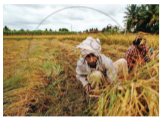
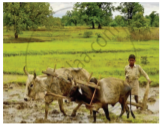
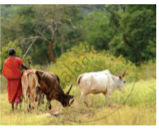
| Mr. Murugan is a farmer. He has a small piece of land and two bulls. He takes good care of his bulls as they help him in farming. Every morning, he takes the bulls for grazing. When it rains he ploughs the land with the bulls. As he has no one to help he starts sowing the seed before sunrise. He irrigates the crop till it grows. He reaps and binds the crop then takes it to thrash the paddy. Finally, with the help of the bulls, he takes the paddy to his house. |
Name the actions of Murugan.
 |
|
 |
|
 |
Look at the picture and Choose the correct word.

What is your hobby?
Anbu was talented in catching______.
Take out the correct rhyming pair from the poem and match with the given word.
| 1. | tall | |
| 2. | light | |
| 3. | might |
Try your own.
Why did Meena call the official 'Appa'? Do you think we need to be a family to care for others?
Write the word with same meaning.

pants- ______
Match the words with similar meaning.
| truck | subway |
| underground | lorry |
| tap | wallet |
| purse | faucet |
Do we worry when the progress is slow?
What was different about the rabbit that Alice saw?
What did the books in the library look like ?
Read the poem.
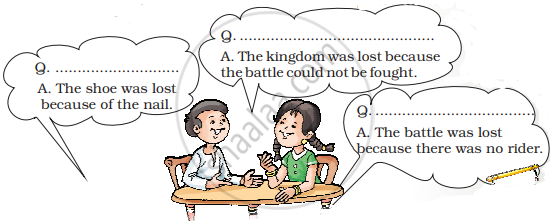
For Want of a Nail
For want of a nail, the shoe was lost,
For want of a shoe the horse was lost,
For want of a horse, the rider was lost,
For want of a rider, the battle was lost,
For want of a battle, the kingdom was lost,
And all for the want of a horseshoe nail!
[traditional rhyme]
Now form questions for the answers given in the speech bubbles.
Form groups of four to six.
Discuss whether and how you can improve English spelling.
