Advertisements
Advertisements
प्रश्न
Working with your partner, discuss the following adages and share your views with the class. You may need to give your ideas and justify your point of view. Remember to take turns while making your presentation/short speech.
War begets war
Advertisements
उत्तर
Mahatma Gandhi said, “If you are indictive and take an eye for an eye, the whole world will be blind”. Today most lethal weapons of mass destruction are being piled up in China, the USA, and North Korea, Russia, and Iran. The leaders of these countries claim that a balance of power is required in the North and South. But weapons of mass destruction will not create conditions of peace. Peace has to be created by dialogues between countries. War always begets war.
APPEARS IN
संबंधित प्रश्न
What happens to the poet when he visits someone for the third time?
What does the poet mean when he says ‘good bye’?
What pleasantries does the poet use to fake cordiality?
What does the poet long for?
Fill in the blanks choosing the words from the box given and complete the summary of the poem:
The poet Okara in this narrative monologue painfully condemns the (a)______ displayed by adults, both in their words and actions. Here, a father laments to his son about the negative changes that creep into the attitude and behaviour of humans, when they grow into (b)______. He says that people used to be (c)______ when they laugh and the honesty would be reflected in their eyes. But, people of modern times laugh (d)______. Their handshakes used to be warm and happy conveying a sense of togetherness, but nowadays the handshakes have become a mere (e)______. He warns his son that people are not trust-worthy and have become so selfish that they are concerned only about their own (f)______benefits. People utter words of welcome and exchange (g)______, but those words come only from the tip of their tongues and not from the depth of their hearts. Humans have learnt the art of changing their (h)______ expressions according to situations merely to ensure social acceptance. They wear(i)______ and exhibit multiple faces. The narrator admits that he has also changed into a hypocrite. However, he tells his son that though he (j)______ his expressions, he does all these against his will. He says he wants to become a (k)______ again and laugh genuinely. He wants to (l)______ the unreal things and (m)______how to laugh as he had done once upon a time. When he laughs before the (n)______, he sees no expression. His teeth are bare like that of the (o)______of a snake. So, he asks his son to show him how to laugh the way he used to laugh when he was a kid like him.
| relearn | adults | facial |
| personal | fangs | child |
| fakes | superficially | duplicity |
| genuine | unlearn | falsity |
| masks | mirror | pleasantries |
Interpret each of the following expression used in the poem, in one or two line.
like a fixed portrait smile
Read the given line and answer the question that follow in a sentence or two
When snaps the knee and cracks the wrist….
Identify and explain the use of the literary device in this line.
Explain the following with reference to the context in about 50–60 word each.
They do not ever in their dealings Consider one another’s feelings…
Find out the rhyme scheme of the given stanza.
One infant grows up and becomes a jockey
Another plays basketball or hockey
This one the prize ring hates to enter
That one becomes a tackle or center…
Why do accidents usually happen in the playground? Give your own examples and explain
Do you go for leisurely walks? If you are a city-dweller, what or who would you expect to see on your way?
Explain the following line with reference to the context in about four to five sentence each.
The birds around me hopp’d and play’d,
Their thoughts I cannot measure.
Read the following line and identify the figure of speech used in each extract.
What Man has made of Man?
Does Nature affect a person’s thoughts and feelings? Explain.
When humanity fails to live in harmony with Nature, its effects are felt around the world. Why and how?
Write a letter to the Councillor of your Ward, explaining why a park is necessary in your locality.
Describe Macavity’s appearance.
Where can you encounter Macavity?
Read the poem once again and complete the summary using the words given in the box.
‘Macavity – The Mystery Cat’ is a humorous poem, where the poet T.S. Eliot describes the mysterious (a) _______of a shrewd vile cat. He commits a crime at every possible opportunity. He is an elusive master (b)______who leaves no evidence after he commits a crime. Even the Scotland Yard, the London (c) ______ agency is unable to arrest him. The Flying Squad is (d) ______ because every time they rush to the crime spot to seize Macavity, he is not there. He breaks the human law as well as the law of (e) ______. He baffles even a (f) ______ with his powers of levitation. Macavity appears tall and thin with (g)______ eyes. He is always preoccupied with some serious (h) ______. His coat is dusty and his (i)______are unkempt. Macavity is a (j) ______in the guise of a cat. He appears to be outwardly (k) ______ but his actions disprove it. Macavity loots the (l)______, ransacks the jewel-case, and breaks the (m)______glass but wonder of wonders he is not to be found anywhere there. He is always a mile away from the scene of crime, happily relaxing or doing difficult (n) ______ sums. He is clever at making up an (o) ______every time he plots a crime. All the notorious cats are nothing but the (p) ______Macavity, the Napoleon of Crime.
| larder | whiskers |
| respectable | criminal |
| devil | thought |
| sunken | division |
| agents | detective |
| alibi | desperate |
| fakir | qualities |
| gravity | greenhouse |
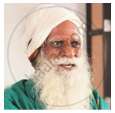
Identify the following personalities and their fields of achievement.
| Name | Field | |
 |
||
 |
||
 |
||
 |
||
 |
||
 |
||
 |
||
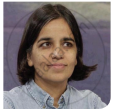 |
- Mention a remarkable achievement of any of these personalities.
- What quality do you admire the most in each of these achievers?
- What are the qualities that you may share with them?
- Name a few more popular personalities who have made our nation proud.
- ______.
- ______.
- ______.
- ______.
Which path should we follow in life?
Why does the speaker say ‘Everest is not the only peak’?
Discuss the following topic in groups of five and choose a representative to sum up the view and share them with the class.
‘Success is not final, failure is not fatal.’ It is the courage and perseverance that counts.
The historical background:
The poem is an extract from William Shakespeare’s play King Richard the Second. The play is based on true events that occurred towards the end of the 14th century.
Richard II was crowned the King of England in the year 1367. He continued to be the British Monarch until 1399, when he was deposed by his cousin, Henry of Bolingbroke, who crowned himself King Henry the Fourth in the same year. Shakespeare’s play is a dramatic rendition of the last two years of King Richard II’s life. In this brief span of time, he was ousted from his royal position and sent to prison, where he died in captivity.
The following extract is set in the Coast of Wales. King Richard and some of his followers awaited the arrival of the Welsh army [after facing defeat at the hands of his cousin, Bolingbroke], of about 10000 warriors. But to their shock and surprise, they received the message that the army was not coming to their rescue. His followers tried to boost their King’s courage against the news, only in vain. When Richard came face to face with the reality of his terrible fate, he spoke the following verse, famously known as the “Hollow Crown” speech in theatrical circles. In it, King Richard is reminded of the power of Death that overshadows everything else, including the power of rulers, and renders them as powerless as any commoner at a moment’s notice.
What do the three words, ‘graves, worms and epitaphs’, refer to?
What are the various functions and objects given up by a defeated king?
Explain the following line with reference to the context in about 5 to 8 line:
“How can you say to me, I am a king?”
Read the poem once again carefully and identify the figure of speech that has been used in each of the following line from the poem:
“And yet not so – for what can we bequeath
Save our deposed bodies to the ground?”
Read the poem once again carefully and identify the figure of speech that has been used in each of the following line from the poem:
“How can you say to me, I am a king?”
Pick out the alliteration from the following lines:
“And tell sad stories of the death of kings:”
