Advertisements
Advertisements
प्रश्न
Not everybody loves to play and participate in games, sports and other extra-curricular activities. Some of us wish to be mere spectators. List out the activities in which you like to be either a performer or a spectator. Share your views with the class.
| Activities | ||
| performer/player | spectator/audience | |
| e.g. | cricket | magician |
| a. | ||
| b. | ||
| c. | ||
| d. | ||
| e. | ||
Advertisements
उत्तर
| Activities | ||
| performer/player | spectator/audience | |
| e.g. | cricket | magician |
| a. | Football | hockey |
| b. | volleyball | kabbadi |
| c. | movie | chess |
| d. | music concert | dance |
| e. | karate | singing |
APPEARS IN
संबंधित प्रश्न
How does the poet compare his face with dresses?
What does the poet long for?
Mention the qualities the child in the poem symbolises.
Interpret each of the following expression used in the poem, in one or two line.
to unlearn all these muting things
Explain the following line with reference to the context.
There will be no thrice.
‘Face is the index of the mind.’ Does this adage concur with the views of the poet?
Read the given lines and answer the questions that follow in a sentence or two.
With all my heart I do admire
Athletes who sweat for fun or hire
- Whom does the poet admire?
- For what reasons do the athletes sweat?
Read the given line and answer the question that follow in a sentence or two
When snaps the knee and cracks the wrist….
Identify and explain the use of the literary device in this line.
Explain the following with reference to the context in about 50–60 word each.
I am just glad as glad can be That I am not them, that they are not me…
Underline the alliterated word in the following line.
They do not ever in their dealings…
Complete the summary of the poem by filling in the blanks with the words given below.
The poet, in a relaxed state of mind, is sitting in a (1) ______. He reflects on how his mood brings (2) ______thoughts, which are inevitably followed by (3)______ones. He feels connected to all of nature, and senses an inherent joy in all (4)______. He has faith in the fact that all the primroses and periwinkles around him (5)______ the air they breathe. He feels that every bird in the grove moves with (6)______. As the twigs catch the breezy air, they do so with the same pleasure (7)______ all life on earth. This joy of nature seems to be heaven-sent. Nature’s holy plan is to offer joy and peace to all forms of life on earth. The poet’s pleasant train of thought slowly leads to the sad reflection of how mankind alone has wrought sorrow and (8)______ upon itself. He firmly believes that man is meant to spend his days blissfully taking part in the vitality and joy surrounding him in (9)______. He therefore concludes rhetorically, emphasizing that he has good reason to (10)______ the distress, man unnecessarily brings upon himself.
| creations | abundance | savour |
| pleasant | suffering | grove |
| lament | pervading | sorrowful |
| ecstasy |
Read the lines given below and answer the question that follow.
And ‘tis my faith that every flower
Enjoys the air it breathes…
- What is the poet’s faith?
- What trait of Nature do we see here?
Read the following line and identify the figure of speech used in each extract.
And ‘tis my faith that every flower
Enjoys the air it breathes.
How do people bring grief and sorrow to one another?
Listening Activity
Some phrases have been left out in the poem below. First, read the poem. Then, fill in the missing words on listening to the reading or the recording of it in full. You may listen again, if required
To Autumn
O Autumn, laden with fruit, and stained
With the blood of the grape, pass not, but sit
Beneath my ______, there thou may’st rest,
And tune thy jolly voice to my ______;
And all the daughters of the year shall dance!
Sing now the ______of fruits and flowers.
“The ______opens her beauties to
The sun, and love runs in her ______;
Blossoms hang round the brows of morning and
Flourish down the ______of modest eve,
Till clust’ring Summer breaks forth into singing,
And ______strew flowers round her head.
The spirits of the air live on the smells
Of fruit; and joy, with ______, roves round
The gardens, or sits singing in the trees.”
Thus sang the ______as he sat,
Then rose, girded himself, and o’er the bleak
Hills fled from our sight; but left his ______.
William Blake
When humanity fails to live in harmony with Nature, its effects are felt around the world. Why and how?
People admire some of these animal qualities. What are they? Have you noticed some of them in yourself or in others? Share your views with the class.
Describe Macavity’s appearance.
Where can you encounter Macavity?
Who does the Secret Service suspect when a loss is reported?
Explain the following line with reference to the context.
And when you think he’s half asleep, he’s always wide awake
Give four instances where the poet has used alliteration in the poem.
Identify the following personalities and their fields of achievement.
| Name | Field | |
 |
||
 |
||
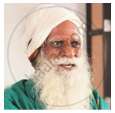 |
||
 |
||
 |
||
 |
||
 |
||
 |
- Mention a remarkable achievement of any of these personalities.
- What quality do you admire the most in each of these achievers?
- What are the qualities that you may share with them?
- Name a few more popular personalities who have made our nation proud.
- ______.
- ______.
- ______.
- ______.
Read the given line and answer the question that follow.
Honour is a property, common to all: In dignity and pride no one need to be poor.
- Who are considered rich?
- What is their asset?
In what way is every hillock similar to Everest?
Fill in the blank with appropriate word from the box and complete the statement suitably:
Alexander the Great, wished to conquer many lands and ______the entire world.
How does the king establish that he and his subjects are equal in the end?
Working with your partner, discuss the following adages and share your views with the class. You may need to give your ideas and justify your point of view. Remember to take turns while making your presentation/short speech.
Uneasy lies the head that wears a crown
Based on your reading of King Richard’s speech, answer the following questions in about 100 - 150 words each. You may add your own ideas if required to present and justify your point of view.
What are the causes for King Richard’s grief?
