Advertisements
Advertisements
प्रश्न
The poem does not focus on the destination but the journey towards it. Discuss
Advertisements
उत्तर
The poet discusses the merits of efforts, duty, and devotion and values of honesty, uprightness, and service-mindedness. He does not have any special appreciation for those who reach great peaks like the Himalayas. He appreciates the process, the journey, and not the destination. When the whole world has a perspective of seeking glory using any foul method of underhand dealing, the poet differs from it. For him, the means are more important than the end. However modest may be one’s position is, it is adorable if attained by competence and merit. Pride is not in heights one reaches but in a life that knows no bending or kneeling. The poet respects one who does not stoop as a king. Thus the poet pays importance to the journey of life, not the destination.
“The journey of life is not meant to be feared and planned; It is meant to be traveled and enjoyed. ”
APPEARS IN
संबंधित प्रश्न
Mention the qualities the child in the poem symbolises.
Fill in the blanks choosing the words from the box given and complete the summary of the poem:
The poet Okara in this narrative monologue painfully condemns the (a)______ displayed by adults, both in their words and actions. Here, a father laments to his son about the negative changes that creep into the attitude and behaviour of humans, when they grow into (b)______. He says that people used to be (c)______ when they laugh and the honesty would be reflected in their eyes. But, people of modern times laugh (d)______. Their handshakes used to be warm and happy conveying a sense of togetherness, but nowadays the handshakes have become a mere (e)______. He warns his son that people are not trust-worthy and have become so selfish that they are concerned only about their own (f)______benefits. People utter words of welcome and exchange (g)______, but those words come only from the tip of their tongues and not from the depth of their hearts. Humans have learnt the art of changing their (h)______ expressions according to situations merely to ensure social acceptance. They wear(i)______ and exhibit multiple faces. The narrator admits that he has also changed into a hypocrite. However, he tells his son that though he (j)______ his expressions, he does all these against his will. He says he wants to become a (k)______ again and laugh genuinely. He wants to (l)______ the unreal things and (m)______how to laugh as he had done once upon a time. When he laughs before the (n)______, he sees no expression. His teeth are bare like that of the (o)______of a snake. So, he asks his son to show him how to laugh the way he used to laugh when he was a kid like him.
| relearn | adults | facial |
| personal | fangs | child |
| fakes | superficially | duplicity |
| genuine | unlearn | falsity |
| masks | mirror | pleasantries |
This poem is nothing but a criticism of modern life. Justify this statement.
The poet is satisfied just watching the heroic deeds of others. What could be the reason?
Are the athletes conscious of the feelings of others? Why do you say so?
Read the given lines and answer the questions that follow in a sentence or two.
With all my heart I do admire
Athletes who sweat for fun or hire
- Whom does the poet admire?
- For what reasons do the athletes sweat?
Explain the following with reference to the context in about 50–60 word each.
Athletes, I’ll drink to you, Or eat with you, Or anything except compete with you…
Read the lines given below and answer the question that follow.
And ‘tis my faith that every flower
Enjoys the air it breathes…
- What is the poet’s faith?
- What trait of Nature do we see here?
Explain the following line with reference to the context in about four to five sentence each.
The birds around me hopp’d and play’d,
Their thoughts I cannot measure.
Read the following line and identify the figure of speech used in each extract.
What Man has made of Man?
How do people bring grief and sorrow to one another?
Why does the poet think that the birds were happy?
Answer in a paragraph of about 100−150 words.
Do you think the poet wants to say that man is unhappy because he has lost his link with nature and forgotten how to enjoy nature, or because man is cruel to other men?
When humanity fails to live in harmony with Nature, its effects are felt around the world. Why and how?
Why is Macavity called the ‘Napoleon of Crime’?
What are the mysterious ways in which Macavity acts?
Give an account of Macavity’s destructive mischief.
Explain the following line with reference to the context.
His powers of levitation would make a fakir stare
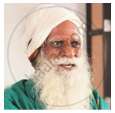
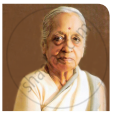
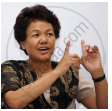
Identify the following personalities and their fields of achievement.
| Name | Field | |
 |
||
 |
||
 |
||
 |
||
 |
||
 |
||
 |
||
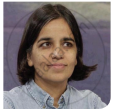 |
- Mention a remarkable achievement of any of these personalities.
- What quality do you admire the most in each of these achievers?
- What are the qualities that you may share with them?
- Name a few more popular personalities who have made our nation proud.
- ______.
- ______.
- ______.
- ______.
Read the given line and answer the question that follow.
Defeat we repel, courage our fort;
- How do we react to defeat?
- Which is considered as our stronghold?
Work with a partner and take this short quiz to find out how well-informed you are about history.
- Name a few wars and battles you have read about.
- What is the difference between a war and a battle?
- Why do rulers wage wars and battles?
- Is the outcome of a war always fair?
- Do you think rulers understand the true meaning of life – in defeat or in victory?
- Can you name a few kings and leaders who have fallen from glory to disgrace?
The historical background:
The poem is an extract from William Shakespeare’s play King Richard the Second. The play is based on true events that occurred towards the end of the 14th century.
Richard II was crowned the King of England in the year 1367. He continued to be the British Monarch until 1399, when he was deposed by his cousin, Henry of Bolingbroke, who crowned himself King Henry the Fourth in the same year. Shakespeare’s play is a dramatic rendition of the last two years of King Richard II’s life. In this brief span of time, he was ousted from his royal position and sent to prison, where he died in captivity.
The following extract is set in the Coast of Wales. King Richard and some of his followers awaited the arrival of the Welsh army [after facing defeat at the hands of his cousin, Bolingbroke], of about 10000 warriors. But to their shock and surprise, they received the message that the army was not coming to their rescue. His followers tried to boost their King’s courage against the news, only in vain. When Richard came face to face with the reality of his terrible fate, he spoke the following verse, famously known as the “Hollow Crown” speech in theatrical circles. In it, King Richard is reminded of the power of Death that overshadows everything else, including the power of rulers, and renders them as powerless as any commoner at a moment’s notice.
Fill in the blank with appropriate word from the box and complete the statement suitably:
The spectators died laughing at the ______of the clown.
Fill in the blank with appropriate word from the box and complete the statement suitably:
The business woman wished to ______all her riches to an orphanage, after her death.
Fill in the blank with appropriate word from the box and complete the statement suitably:
Alexander the Great, wished to conquer many lands and ______the entire world.
What does the crown of rulers stand for?
What does ‘flesh’ mean here?
Explain the following line with reference to the context in about 5 to 8 line:
“Our lands, our lives, and all are Bolingbroke’s,
And nothing can we call our own but death;”
Explain the following line with reference to the context in about 5 to 8 line:
“Comes at the last, and with a little pin
Bores through his castle wall, and farewell king!”
Based on your reading of King Richard’s speech, answer the following questions in about 100 - 150 words each. You may add your own ideas if required to present and justify your point of view.
Who does the future generations remember easily - the victor or the vanquished? Give reasons. Also, cite relevant references from King Richard’s speech.
