Advertisements
Advertisements
प्रश्न
Read the lines given below and answer the question that follow.
And I must think, do all I can,
That there was pleasure there…
- What did the poet notice about the twigs?
- What was the poet’s thought about then?
Advertisements
उत्तर
- The budding twigs spread out their fan to catch the breezy air.
- The poet thought the twigs were experiencing the joy of their contact with the breezy air.
APPEARS IN
संबंधित प्रश्न
What is the relationship between the narrator and the listener?
Explain the following lines with reference to the context.
I want to be what I used to be.
Do you think the narrator is heroic? Why?
The poet does not wish to exchange position with the runners. Why?
Why do accidents usually happen in the playground? Give your own examples and explain
Do you go for leisurely walks? If you are a city-dweller, what or who would you expect to see on your way?
Read the lines given below and answer the question that follow.
If this belief from heaven be sent,
If such be Nature’s holy plan.
- What does ‘heaven’ refer to?
- Why does the poet call it ‘holy’?
Read the following line and identify the figure of speech used in each extract.
What Man has made of Man?
Read the poem once again. Identify the rhyme scheme and pick out the rhyming pairs of words.
How do people bring grief and sorrow to one another?
What scene in nature gives you pleasure? Talk for a minute describing a natural scene that gave you a lot of joy. What did you see, hear, smell or feel, that gave you joy?
Why does the poet say Macavity is ‘outwardly’ respectable?
Give an account of Macavity’s destructive mischief.
Read the given lines and answer the question that follow.
He sways his head from side to
side, with movements like a snake;
And when you think he’s half asleep,
he’s always wide awake…
- Explain the comparison made here.
- What does he pretend to do?
Read the given lines and answer the question that follow.
For he’s a fiend in feline shape, a monster of depravity
- How is the cat described in this line?
- Explain the phrase ‘monster of depravity’.
Explain the following line with reference to the context.
And when you think he’s half asleep, he’s always wide awake
What is the rhyme scheme used in the poem?
Identify the following personalities and their fields of achievement.
| Name | Field | |
 |
||
 |
||
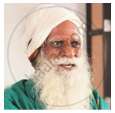 |
||
 |
||
 |
||
 |
||
 |
||
 |
- Mention a remarkable achievement of any of these personalities.
- What quality do you admire the most in each of these achievers?
- What are the qualities that you may share with them?
- Name a few more popular personalities who have made our nation proud.
- ______.
- ______.
- ______.
- ______.
Who are the ‘deserving ones’?
Which path should we follow in life?
What does ‘hillock’ refer to in the line ‘Every hillock has a summit to boast!’?
Why does the speaker say ‘Everest is not the only peak’?
Discuss the following topics in groups of five and choose a representative to sum up the views and share them with the class.
To succeed in life, one must have a single-minded devotion to duty.
Work with a partner and take this short quiz to find out how well-informed you are about history.
- Name a few wars and battles you have read about.
- What is the difference between a war and a battle?
- Why do rulers wage wars and battles?
- Is the outcome of a war always fair?
- Do you think rulers understand the true meaning of life – in defeat or in victory?
- Can you name a few kings and leaders who have fallen from glory to disgrace?
Are all deposed kings slain by the deposer?
Bring out King Richard’s feelings when he was defeated.
Working with your partner, discuss the following adages and share your views with the class. You may need to give your ideas and justify your point of view. Remember to take turns while making your presentation/short speech.
War begets war
Read the poem once again carefully and identify the figure of speech that has been used in each of the following line from the poem:
“Let’s talk of graves, of worms, and epitaphs;
Make dust our paper, and with rainy eyes Write sorrow on the bosom of the earth’’.
