Topics
The Wonderful World of Science
Components of Food
- Food and Its Types
- What Do Different Food Items Contain?
- Test for Carbohydrates/Starch
- Test for Protein
- Test for Fats
- Nutrients and Nutrition
- Component of Food
- Carbohydrates
- Fats (Lipids)
- Proteins
- Vitamin and Minerals
- Component of Food: Minerals
- A Balanced Diet
- Obesity and Its Prevention
- Deficiency Diseases
- Diseases Due to Deficiency of Vitamin
- Diseases Due to Deficiency of Minerals
Science
Food: Where Does It Come From?
- Food Variety
- Ingredients of Food
- Plant Sources
- Plant as Food (Plant Product)
- Animal Sources
- Animal Products used as Food
- Classification of Animal
- Food and Its Types
Diversity in the Living World
Sorting Materials into Groups
Separation of Substances
- Mixture
- Types of Mixtures
- Separation of Mixtures
- Methods of Separation
- Handpicking Method
- Threshing Method
- Winnowing Method
- Sieving Method
- Sedimentation Method
- Decantation Method
- Filtration Method
- Evaporation Method
- Simple Distillation Method
- Introduction to Solutions
- Water - a Universal Solvent
- Composition of a Solution
- Types of Solutions
- Saturated Solutions
Mindful Eating: A Path to a Healthy Body
Fibre to Fabric
- Fabrics
- Fibre
- Plant Fibres: Cotton
- Plant Fibre: Jute Fibre
- Fibre to Yarn to Fabric
- History of Clothing Material
Exploring Magnets
Getting to Know Plants
Measurement of Length and Motion
Body Movements
- Human Body and Its Movements
- Joints and Its Classification
- Human Skeleton System
- The Human Skeleton: Appendicular Skeleton
- The Human Skeleton: Axial Skeleton
- Bone and Its Types
- Muscles and Its Types
- Muscular System
- Movement in Different Animals
Changes Around Us
- Changes-Physical and Chemical
- Classification of Change: Reversible and Irreversible Changes
- Classification of Change: Desirable and Undesirable Changes
- Classification of Change: Natural and Man-made Changes
- Classification of Change: Periodic and Non-periodic Changes
- Classification of Change: Slow and Fast Changes
- Classification of Change: Physical Changes
- Effect of Heat on Solid, Liquid and Gases
Materials Around Us
The Living Organisms - Characteristics and Habitats
Temperature and its Measurement
Motion and Measurement of Distances
- Story of Transport
- Measurements
- Unit and Its Types
- Unit Systems
- The International System of Units (SI)
- Devices for Measuring Length
- Measuring the Length of a Curved Line
- Types of Motion
- Multiple Motion
Light, Shadows and Reflections
A Journey through States of Water
Electricity and Circuits
- Electricity
- A Bulb Connected to an Electric Cell
- Electric Circuit
- Switches
- Electrical Conduction in Solids
Methods of Separation in Everyday Life
Living Creatures: Exploring their Characteristics
Fun with Magnets
- Magnet
- Uses of Magnets
- Discovery of Magnets
- Classification of Magnets
- Magnetic and Non-magnetic Materials
- Magnetic Pole
- Finding Directions with a Magnet
- Making a Magnet
- Magnetic Properties of Materials
- Demagnetization of a Magnet
Nature’s Treasures
Air Around Us
- Air Around Us
- Composition and Components of Air
- Importance of Air
- How is the Oxygen in the Atmosphere Replaced?
Beyond Earth
Water
Garbage In, Garbage Out
- Waste and Its Categories
- Disposal of Waste Water
- Vermicomposting
- Waste Separation Exercise
- Recycling of Paper
- Man-made Fibre: Plastics
- Harmful Effects of Plastics
- Recycling of Plastic
Maharashtra State Board: Class 5
Substances and Objects
Objects have a definite shape and are made of parts that are put together in a certain way. Substances are the materials used to make objects, such as wood, metal, or plastic.
Example:
- A table (object) is made from wood (substance).
- A spoon (object) is made from metal (substance).
Related QuestionsVIEW ALL [9]
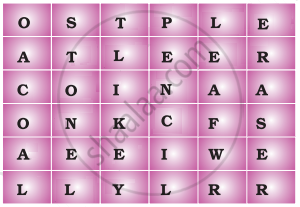
Match the objects given below with the materials from which they could be made. Remember, an object could be made from more than one material and a given material could be used for making many objects.
| Objects | Materials |
| Book | Glass |
| Tumbler | Wood |
| Chair | Paper |
| Toy | Leather |
| Shoes | Plastics |
