Topics
The Leaf
Plant Life
Unit 1 : Plant Life
The Leaf
- Root
- Types of Root
- Shoot System
- Stem
- The Structure of a Plant
- Types of Leaf
- Autotrophic Plants
- Insectivorous Plants
- Significance of Photosynthesis
- Modifications of Leaf
The Flower
Unit 2: The Cell
The Cell
The Flower
Human Body
Unit 3: Human Body
Cell - The Structure And Functions
Digestive System
- Food and Its Types
- Nutrients and Nutrition
- Component of Food
- Human Digestive System
- The Teeth and Its Structure
- The Salivary Glands
- The Food Pipe/Oesophagus
- The Stomach
- The Small Intestine
- Absorption of Food
- The Large Intestine
- Assimilation of Food
- The Aching Tooth
- Oral Health
Respiratory System
- Parts of Respiration
Circulatory System
Health and Hygiene
Unit 4 : Health and Hygiene
Digestive System
Unit 5: Adaptation
Habitat and Adaptation
- Habitat
- Adaptations of Plants
- Adaptation in Aquatic Plants (Hydrophytes)
- Adaptation in Desert Plants (Xerophytes)
- Adaptation in plants of snowy regions
- Adaptations in Seeds for Transport Through Air
- Adaptation in Animals
- Adaptation in Aquatic Animals
- Adaptation in Desert Animals
- Adaptation in Mountain Animal
- Adaptation in Aerial Animals
Respiratory System
The Circulatory System
Disease and Hygiene
Habitat and Adaptation
Maharashtra State Board: Class 7
Stem:
The stem is an important part of a plant that grows above the soil from the plumule of the sprouting seed. As the seed sprouts and grows, the length of the stem gradually increases. The stem has several parts:
- Nodes: These are specific points on the stem where leaves grow.
- Internode: The space between two nodes on the stem is called an internode.
- Bud: A bud is the growing tip of the stem. It can develop into a new leaf, flower, or shoot.
- Growing End: This is the top or apical part of the stem where most of the new growth occurs.
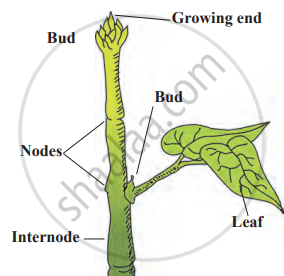
Parts of a stem
