Advertisements
Advertisements
प्रश्न
Who are the ‘deserving ones’?
Advertisements
उत्तर
Those who have merit and competence are the deserving ones.
APPEARS IN
संबंधित प्रश्न
How does the poet compare his face with dresses?
How is the poet’s laugh reflected in the mirror?
Interpret each of the following expression used in the poem, in one or two line.
shake hands without hearts
Interpret each of the following expression used in the poem, in one or two line.
hands search my empty pockets
Why does the poet feel glad that he does not play any game?
How does the poet establish the victory of common sense over ego?
According to the poet, what contributes most to the injuries sustained by the athletes?
Read the given lines and answer the questions that follow in a sentence or two.
Well, ego it might be pleased enough But zealous athletes play so rough…
- What pleases the ego?
- Why are athletes often rough during play?
Read the given line and answer the question that follow in a sentence or two
When snaps the knee and cracks the wrist….
Identify and explain the use of the literary device in this line.
Read the poem and complete the table with suitable rhyming words
| e.g. enter | center |
| hockey | |
| admire | |
| romp | |
| deeds | |
| score | |
| please | |
| wrist | |
| demands | |
| stadium |
Do you go for leisurely walks? If you are a city-dweller, what or who would you expect to see on your way?
Read the following line and identify the figure of speech used in each extract.
And ‘tis my faith that every flower
Enjoys the air it breathes.
Why does the poet think that the birds were happy?
The poet experiences sadness because ______.
Which two characters does the poet refer to as examples of wicked cats?
Give an account of Macavity’s destructive mischief.
Explain the following line with reference to the context.
There may be a scrap of paper in the hall or on the stair
But it’s useless to investigate…
Explain the following line with reference to the context.
He always has an alibi, and one or two to spare
Identify the following personalities and their fields of achievement.
| Name | Field | |
 |
||
 |
||
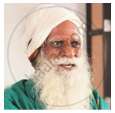 |
||
 |
||
 |
||
 |
||
 |
||
 |
- Mention a remarkable achievement of any of these personalities.
- What quality do you admire the most in each of these achievers?
- What are the qualities that you may share with them?
- Name a few more popular personalities who have made our nation proud.
- ______.
- ______.
- ______.
- ______.
The historical background:
The poem is an extract from William Shakespeare’s play King Richard the Second. The play is based on true events that occurred towards the end of the 14th century.
Richard II was crowned the King of England in the year 1367. He continued to be the British Monarch until 1399, when he was deposed by his cousin, Henry of Bolingbroke, who crowned himself King Henry the Fourth in the same year. Shakespeare’s play is a dramatic rendition of the last two years of King Richard II’s life. In this brief span of time, he was ousted from his royal position and sent to prison, where he died in captivity.
The following extract is set in the Coast of Wales. King Richard and some of his followers awaited the arrival of the Welsh army [after facing defeat at the hands of his cousin, Bolingbroke], of about 10000 warriors. But to their shock and surprise, they received the message that the army was not coming to their rescue. His followers tried to boost their King’s courage against the news, only in vain. When Richard came face to face with the reality of his terrible fate, he spoke the following verse, famously known as the “Hollow Crown” speech in theatrical circles. In it, King Richard is reminded of the power of Death that overshadows everything else, including the power of rulers, and renders them as powerless as any commoner at a moment’s notice.
Fill in the blank with appropriate word from the box and complete the statement suitably:
Alexander the Great, wished to conquer many lands and ______the entire world.
Who is Bolingbroke? Is he a friend or foe?
Explain the following line with reference to the context in about 5 to 8 line:
“How can you say to me, I am a king?”
Read the poem once again carefully and identify the figure of speech that has been used in each of the following line from the poem:
“Let’s talk of graves, of worms, and epitaphs;
Make dust our paper, and with rainy eyes Write sorrow on the bosom of the earth’’.
Pick out the alliteration from the following lines:
“Comes at the last, and with a little pin…”
Based on your reading of King Richard’s speech, answer the following questions in about 100 - 150 words each. You may add your own ideas if required to present and justify your point of view.
Death has been cited in many ways in this monologue. Identify the poetic devices used in those references.
