Advertisements
Advertisements
प्रश्न
Read the given lines and answer the question that follow.
He sways his head from side to
side, with movements like a snake;
And when you think he’s half asleep,
he’s always wide awake…
- Explain the comparison made here.
- What does he pretend to do?
Advertisements
उत्तर
- The poet compares the movement of the cat to that of a snake. He employs a simile here.
The movement is quiet but swift. - He pretends to be half asleep when he is fully awake. .
APPEARS IN
संबंधित प्रश्न
What do you associate with the title of the poem?
Pick out the expressions that indicate conflicting ideas.
Interpret each of the following expression used in the poem, in one or two line.
like a fixed portrait smile
Why would the referee ask whether there was a doctor in the stands? What stands is he referring to?
The poet does not wish to exchange places with the athletes. How does he justify his view?
Why do accidents usually happen in the playground? Give your own examples and explain
Everybody is special and everybody is a hero. Each one has a story to tell. In the light of this observation, present your views.
You are the School Pupil Leader. Mention some qualities that can be drawn from the field of sports to improve your leadership skills.
Find words from the poem that convey the following ideas:
- connected together
- spread over the surface of the ground in a straggling manner
- make out or understand
- slender woody shoots growing from branches or stems of trees
Read the lines given below and answer the question that follow.
And ‘tis my faith that every flower
Enjoys the air it breathes…
- What is the poet’s faith?
- What trait of Nature do we see here?
Read the following line and identify the figure of speech used in each extract.
To her fair works did Nature link
The human soul that through me ran.
Read the poem once again. Identify the rhyme scheme and pick out the rhyming pairs of words.
How do people bring grief and sorrow to one another?
Answer in a paragraph of about 100−150 words.
Do you think the poet wants to say that man is unhappy because he has lost his link with nature and forgotten how to enjoy nature, or because man is cruel to other men?
Listening Activity
Some phrases have been left out in the poem below. First, read the poem. Then, fill in the missing words on listening to the reading or the recording of it in full. You may listen again, if required
To Autumn
O Autumn, laden with fruit, and stained
With the blood of the grape, pass not, but sit
Beneath my ______, there thou may’st rest,
And tune thy jolly voice to my ______;
And all the daughters of the year shall dance!
Sing now the ______of fruits and flowers.
“The ______opens her beauties to
The sun, and love runs in her ______;
Blossoms hang round the brows of morning and
Flourish down the ______of modest eve,
Till clust’ring Summer breaks forth into singing,
And ______strew flowers round her head.
The spirits of the air live on the smells
Of fruit; and joy, with ______, roves round
The gardens, or sits singing in the trees.”
Thus sang the ______as he sat,
Then rose, girded himself, and o’er the bleak
Hills fled from our sight; but left his ______.
William Blake
What makes the fakir stare in wonder?
Mention any two qualities of Macavity.
Read the given lines and answer the question that follow.
Macavity’s a Mystery Cat: he’s called the Hidden Paw…
- Does the poet talk about a real cat?
- Why is he called the Hidden Paw?
Explain the following line with reference to the context.
There may be a scrap of paper in the hall or on the stair
But it’s useless to investigate…
What is the rhyme scheme used in the poem?
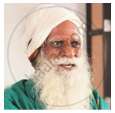
Identify the following personalities and their fields of achievement.
| Name | Field | |
 |
||
 |
||
 |
||
 |
||
 |
||
 |
||
 |
||
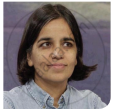 |
- Mention a remarkable achievement of any of these personalities.
- What quality do you admire the most in each of these achievers?
- What are the qualities that you may share with them?
- Name a few more popular personalities who have made our nation proud.
- ______.
- ______.
- ______.
- ______.
What does the ladder symbolize?
Creative Activity
- Write eight words you associate with success.
- Use the words to write eight lines that mean success to you or how success makes you feel.
- Arrange your lines into a poem.
- Share your poem with the class and post a copy on the notice board.
Discuss the following topic in groups of five and choose a representative to sum up the view and share them with the class.
Successful people neither brood over the past nor worry about the future.
Fill in the blank with appropriate word from the box and complete the statement suitably:
The fortress was ______and could not be conquered by the enemies.
What does the crown of rulers stand for?
What hides within the crown and laughs at the king’s grandeur?
Explain the following line with reference to the context in about 5 to 8 line:
“Comes at the last, and with a little pin
Bores through his castle wall, and farewell king!”
Read the poem once again carefully and identify the figure of speech that has been used in each of the following line from the poem:
“And yet not so – for what can we bequeath
Save our deposed bodies to the ground?”
Based on your reading of King Richard’s speech, answer the following questions in about 100 - 150 words each. You may add your own ideas if required to present and justify your point of view.
Who does the future generations remember easily - the victor or the vanquished? Give reasons. Also, cite relevant references from King Richard’s speech.
