Advertisements
Advertisements
प्रश्न
Read the given line and answer the question that follow.
Our nature it is that whatever we try We do with devotion deep and true.
- Who does ‘we’ refer to?
- How should we carry out our duties?
Advertisements
उत्तर
- ‘We refer to ordinary people.
- We must do our duty with sincerity and deep devotion.
APPEARS IN
संबंधित प्रश्न
What do you associate with the title of the poem?
What pleasantries does the poet use to fake cordiality?
How is the poet’s laugh reflected in the mirror?
Do you think the narrator is heroic? Why?
Why does the poet prefer to buy tickets worth their weight in radium? Bring out the significance of the metal referred to here.
Read the poem again and complete the summary using the words given in the box.
In the poem ‘Confessions of a Born Spectator,’ Ogden Nash talks about how people choose different sports in their lives or decide to become athletes. While admiring the talents of athletes and sportsmen, the poet (i)______he is glad that he is neither a sportsman nor an athlete. Children have different (ii)______and wish to play various games. Each child has in mind something in particular, but the narrator is (iii)______he is not one of the players. Though the narrator (iv) ______the talents of all athletes, he derives satisfaction from watching them, but does not wish to (v) ______places with them. He also sometimes regrets that (vi)______athletes play rough games without caring for the feelings of their sporting rivals. He feels that good sense and caution win over ego. The narrator wholeheartedly offers (vii) ______the modest (viii) ______of athletes. Ultimately the narrator is (ix)______that he himself is not an athlete.
|
thanksgiving exchange glad confesses physiques zealous satisfied aims admires |
Explain the following with reference to the context in about 50–60 word each.
I am just glad as glad can be That I am not them, that they are not me…
Underline the alliterated word in the following line.
They do not ever in their dealings…
Would you like to exchange your place with someone else? Why/why not?
Do you go for leisurely walks? If you are a city-dweller, what or who would you expect to see on your way?
If you go to a village, what scenes would you observe?
Find words from the poem that convey the following ideas:
- connected together
- spread over the surface of the ground in a straggling manner
- make out or understand
- slender woody shoots growing from branches or stems of trees
Read the lines given below and answer the question that follow.
And I must think, do all I can,
That there was pleasure there…
- What did the poet notice about the twigs?
- What was the poet’s thought about then?
Read the following line and identify the figure of speech used in each extract.
To her fair works did Nature link
The human soul that through me ran.
Read the following line and identify the figure of speech used in each extract.
And ‘tis my faith that every flower
Enjoys the air it breathes.
Does Nature affect a person’s thoughts and feelings? Explain.
‘Nature can nurture’. Describe how this process happens.
A French proverb goes thus: ‘The dog may be wonderful prose, but only the cat is poetry.’ You may have observed that all animals possess a number of unique qualities. Fill in the columns with words and phrases associated with each of the following animals.
| DOG | CAT | WOLF | ELEPHANT |
People admire some of these animal qualities. What are they? Have you noticed some of them in yourself or in others? Share your views with the class.
Give an account of Macavity’s destructive mischief.
Read the given lines and answer the question that follow.
‘It must have been Macavity!’ but he’s a mile away.
- What is Macavity blamed for?
- Where is he?
Identify the literary devices used in the following lines:
- He sways his head from side to side, with movements like a snake.
- They say he cheats at cards.
Identify the following personalities and their fields of achievement.
| Name | Field | |
 |
||
 |
||
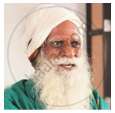 |
||
 |
||
 |
||
 |
||
 |
||
 |
- Mention a remarkable achievement of any of these personalities.
- What quality do you admire the most in each of these achievers?
- What are the qualities that you may share with them?
- Name a few more popular personalities who have made our nation proud.
- ______.
- ______.
- ______.
- ______.
Which path should we follow in life?
Who is Bolingbroke? Is he a friend or foe?
What are the various functions and objects given up by a defeated king?
Bring out King Richard’s feelings when he was defeated.
Pick out the alliteration from the following lines:
“Our lands, our lives, and all, are Bolingbroke’s,…”
Based on your reading of King Richard’s speech, answer the following questions in about 100 - 150 words each. You may add your own ideas if required to present and justify your point of view.
Death has been cited in many ways in this monologue. Identify the poetic devices used in those references.
