Advertisements
Advertisements
प्रश्न
Explain the following line with reference to the context.
I have learned to wear my faces Like dresses …
Advertisements
उत्तर
- Reference: These lines are from the poem “Once Upon a Time” written by Gabriel Okara.
- Context: The poet says these words while admitting how he himself started putting on appearances to conform to the changed attitude of people
in modem times. - Explanation: The poet registers his displeasure over the negative changes that have influenced the behaviour of adults. The adults have mastered the art
APPEARS IN
संबंधित प्रश्न
Fill in the blanks choosing the words from the box given and complete the summary of the poem:
The poet Okara in this narrative monologue painfully condemns the (a)______ displayed by adults, both in their words and actions. Here, a father laments to his son about the negative changes that creep into the attitude and behaviour of humans, when they grow into (b)______. He says that people used to be (c)______ when they laugh and the honesty would be reflected in their eyes. But, people of modern times laugh (d)______. Their handshakes used to be warm and happy conveying a sense of togetherness, but nowadays the handshakes have become a mere (e)______. He warns his son that people are not trust-worthy and have become so selfish that they are concerned only about their own (f)______benefits. People utter words of welcome and exchange (g)______, but those words come only from the tip of their tongues and not from the depth of their hearts. Humans have learnt the art of changing their (h)______ expressions according to situations merely to ensure social acceptance. They wear(i)______ and exhibit multiple faces. The narrator admits that he has also changed into a hypocrite. However, he tells his son that though he (j)______ his expressions, he does all these against his will. He says he wants to become a (k)______ again and laugh genuinely. He wants to (l)______ the unreal things and (m)______how to laugh as he had done once upon a time. When he laughs before the (n)______, he sees no expression. His teeth are bare like that of the (o)______of a snake. So, he asks his son to show him how to laugh the way he used to laugh when he was a kid like him.
| relearn | adults | facial |
| personal | fangs | child |
| fakes | superficially | duplicity |
| genuine | unlearn | falsity |
| masks | mirror | pleasantries |
Why does the poet feel glad that he does not play any game?
Read the poem and answer the following in a short paragraph of 8–10 sentences each.
When officialdom demands Is there a doctor in the stands?
- Why are doctors called from stands by the sponsors?
- Why does the poet make such an observation?
Explain the following with reference to the context in about 50–60 word each.
I am just glad as glad can be That I am not them, that they are not me…
Read the lines given below and answer the question that follow.
If this belief from heaven be sent,
If such be Nature’s holy plan.
- What does ‘heaven’ refer to?
- Why does the poet call it ‘holy’?
Explain the following line with reference to the context in about four to five sentence each.
In that sweet mood when pleasant thoughts
Bring sad thoughts to the mind.
How does the poet feel while enjoying the beauty of Nature?
How do people bring grief and sorrow to one another?
Why does the poet think that the birds were happy?
The poet finds joy in various objects of Nature. Explain.
The poem speaks of ______.
A French proverb goes thus: ‘The dog may be wonderful prose, but only the cat is poetry.’ You may have observed that all animals possess a number of unique qualities. Fill in the columns with words and phrases associated with each of the following animals.
| DOG | CAT | WOLF | ELEPHANT |
What is Macavity’s nickname?
What makes the fakir stare in wonder?
Read the given lines and answer the question that follow.
For he’s a fiend in feline shape, a monster of depravity
- How is the cat described in this line?
- Explain the phrase ‘monster of depravity’.
Identify the following personalities and their fields of achievement.
| Name | Field | |
 |
||
 |
||
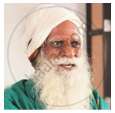 |
||
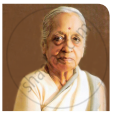 |
||
 |
||
 |
||
 |
||
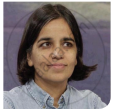 |
- Mention a remarkable achievement of any of these personalities.
- What quality do you admire the most in each of these achievers?
- What are the qualities that you may share with them?
- Name a few more popular personalities who have made our nation proud.
- ______.
- ______.
- ______.
- ______.
Why does the speaker say ‘Everest is not the only peak’?
Read the given line and answer the question that follow.
We are proud of the position we hold; humble as we are
- What is the speaker proud of?
- How is the speaker both humble and proud?
- Pick out the alliteration in these lines.
In what way is every hillock similar to Everest?
Creative Activity
- Write eight words you associate with success.
- Use the words to write eight lines that mean success to you or how success makes you feel.
- Arrange your lines into a poem.
- Share your poem with the class and post a copy on the notice board.
Work with a partner and take this short quiz to find out how well-informed you are about history.
- Name a few wars and battles you have read about.
- What is the difference between a war and a battle?
- Why do rulers wage wars and battles?
- Is the outcome of a war always fair?
- Do you think rulers understand the true meaning of life – in defeat or in victory?
- Can you name a few kings and leaders who have fallen from glory to disgrace?
Fill in the blank with appropriate word from the box and complete the statement suitably:
Alexander the Great, wished to conquer many lands and ______the entire world.
Complete the passage given below, with suitable words from the box:
Lima, a (a)______and (b)______woman, kept (c)______at her colleagues and went on taxing them with hard labour. Though they were (d) ______to her, she being their head, they were offended and filled with (e)______. It so happened, that Lima was (f)______from her high position due to a serious blunder she had committed. Lima, having lost all her (g)______and glory, realized how arrogant she had been. She gave up her pride and with (h)______sought an apology from everyone. She thus turned over a new leaf and bid (i)______to them.
| farewell | ceremonious | deposed |
| reverence | vain | pomp |
| conceited | sorrow | scoffing |
Read the poem once again carefully and identify the figure of speech that has been used in each of the following line from the poem:
“Scoffing his state and grinning at his pomp,…”
Read the poem once again carefully and identify the figure of speech that has been used in each of the following line from the poem:
“Bores through his castle wall, and farewell king!”
Pick out the alliteration from the following lines:
“Our lands, our lives, and all, are Bolingbroke’s,…”
Pick out the alliteration from the following lines:
“And tell sad stories of the death of kings:”
Based on your reading of King Richard’s speech, answer the following questions in about 100 - 150 words each. You may add your own ideas if required to present and justify your point of view.
Death has been cited in many ways in this monologue. Identify the poetic devices used in those references.
