Advertisements
Advertisements
प्रश्न
What does he desire to unlearn and relearn?
Advertisements
उत्तर
The poet desires to unlearn the hypocrisies or unreal things he has learned to keep up appearances. He wants to relearn how to laugh and smile as he had done early during his own childhood days.
APPEARS IN
संबंधित प्रश्न
Mention the qualities the child in the poem symbolises.
Interpret each of the following expression used in the poem, in one or two line.
laugh with their eyes
Interpret each of the following expression used in the poem, in one or two line.
shake hands without hearts
Read the line given below and answer the question that follow.
‘But now they only laugh with their teeth, While their ice-block-cold eyes…’
- Who are ‘they’?
- Explain: ice-block-cold eyes
- Identify the figure of speech used here.
‘Face is the index of the mind.’ Does this adage concur with the views of the poet?
Read the poem again and complete the summary using the words given in the box.
In the poem ‘Confessions of a Born Spectator,’ Ogden Nash talks about how people choose different sports in their lives or decide to become athletes. While admiring the talents of athletes and sportsmen, the poet (i)______he is glad that he is neither a sportsman nor an athlete. Children have different (ii)______and wish to play various games. Each child has in mind something in particular, but the narrator is (iii)______he is not one of the players. Though the narrator (iv) ______the talents of all athletes, he derives satisfaction from watching them, but does not wish to (v) ______places with them. He also sometimes regrets that (vi)______athletes play rough games without caring for the feelings of their sporting rivals. He feels that good sense and caution win over ego. The narrator wholeheartedly offers (vii) ______the modest (viii) ______of athletes. Ultimately the narrator is (ix)______that he himself is not an athlete.
|
thanksgiving exchange glad confesses physiques zealous satisfied aims admires |
Read the given line and answer the question that follow in a sentence or two
When snaps the knee and cracks the wrist….
Identify and explain the use of the literary device in this line.
Why do accidents usually happen in the playground? Give your own examples and explain
What sort of encouragement should an athlete in India be given? Give a few suggestions.
If you go to a village, what scenes would you observe?
Read the lines given below and answer the question that follow.
And I must think, do all I can,
That there was pleasure there…
- What did the poet notice about the twigs?
- What was the poet’s thought about then?
The poem speaks of ______.
Answer in a paragraph of about 100−150 words.
Do you think the poet wants to say that man is unhappy because he has lost his link with nature and forgotten how to enjoy nature, or because man is cruel to other men?
When humanity fails to live in harmony with Nature, its effects are felt around the world. Why and how?
Write a letter to the Councillor of your Ward, explaining why a park is necessary in your locality.
People admire some of these animal qualities. What are they? Have you noticed some of them in yourself or in others? Share your views with the class.
Describe Macavity’s appearance.
Who does the Secret Service suspect when a loss is reported?
Mention any two qualities of Macavity.
Give an account of Macavity’s destructive mischief.
Describe the appearance and qualities of Macavity.
Read the given lines and answer the question that follow.
For he’s a fiend in feline shape, a monster of depravity
- How is the cat described in this line?
- Explain the phrase ‘monster of depravity’.
Read the given lines and answer the question that follow.
There never was a Cat of such deceitfulness and suavity.
- Which cat is being talked of here?
- How is he different from the rest?
Identify the following personalities and their fields of achievement.
| Name | Field | |
 |
||
 |
||
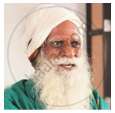 |
||
 |
||
 |
||
 |
||
 |
||
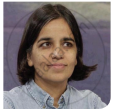 |
- Mention a remarkable achievement of any of these personalities.
- What quality do you admire the most in each of these achievers?
- What are the qualities that you may share with them?
- Name a few more popular personalities who have made our nation proud.
- ______.
- ______.
- ______.
- ______.
Fill in the blank with appropriate word from the box and complete the statement suitably:
Alexander the Great, wished to conquer many lands and ______the entire world.
Are all deposed kings slain by the deposer?
Explain the following line with reference to the context in about 5 to 8 line:
“Comes at the last, and with a little pin
Bores through his castle wall, and farewell king!”
Read the poem once again carefully and identify the figure of speech that has been used in each of the following line from the poem:
“Let’s talk of graves, of worms, and epitaphs;
Make dust our paper, and with rainy eyes Write sorrow on the bosom of the earth’’.
Read the poem once again carefully and identify the figure of speech that has been used in each of the following line from the poem:
“Bores through his castle wall, and farewell king!”
