Advertisements
Advertisements
प्रश्न
Interpret each of the following expression used in the poem, in one or two line.
to unlearn all these muting things
Advertisements
उत्तर
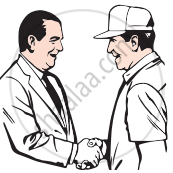
The hypocrisies of people who feign to have love and respect for fellow humans need to be dispensed with. The poet realizes that he must unlearn all superficial and unnatural behaviors like portrait smiles and heartless handshakes.
APPEARS IN
संबंधित प्रश्न
Guess what friendly words these two gentlemen exchange when shaking hands.
What does he desire to unlearn and relearn?
Mention the qualities the child in the poem symbolises.
Read the line given below and answer the question that follow.
‘But now they only laugh with their teeth, While their ice-block-cold eyes…’
- Who are ‘they’?
- Explain: ice-block-cold eyes
- Identify the figure of speech used here.
This poem is nothing but a criticism of modern life. Justify this statement.
According to the poet, what contributes most to the injuries sustained by the athletes?
Read the given lines and answer the questions that follow in a sentence or two.
Well, ego it might be pleased enough But zealous athletes play so rough…
- What pleases the ego?
- Why are athletes often rough during play?
Explain the following with reference to the context in about 50–60 word each.
I am just glad as glad can be That I am not them, that they are not me…
Explain the following with reference to the context in about 50–60 word each.
They do not ever in their dealings Consider one another’s feelings…
Why do accidents usually happen in the playground? Give your own examples and explain
Do you go for leisurely walks? If you are a city-dweller, what or who would you expect to see on your way?
Find words from the poem that convey the following ideas:
- connected together
- spread over the surface of the ground in a straggling manner
- make out or understand
- slender woody shoots growing from branches or stems of trees
Read the poem once again. Identify the rhyme scheme and pick out the rhyming pairs of words.
How does the poet feel while enjoying the beauty of Nature?
‘Nature can nurture’. Describe how this process happens.
When humanity fails to live in harmony with Nature, its effects are felt around the world. Why and how?
Write a letter to the Councillor of your Ward, explaining why a park is necessary in your locality.
Which two characters does the poet refer to as examples of wicked cats?
Read the given lines and answer the question that follow.
He sways his head from side to
side, with movements like a snake;
And when you think he’s half asleep,
he’s always wide awake…
- Explain the comparison made here.
- What does he pretend to do?
What is the rhyme scheme used in the poem?
Read the given line and answer the question that follow.
Defeat we repel, courage our fort;
- How do we react to defeat?
- Which is considered as our stronghold?
Work with a partner and take this short quiz to find out how well-informed you are about history.
- Name a few wars and battles you have read about.
- What is the difference between a war and a battle?
- Why do rulers wage wars and battles?
- Is the outcome of a war always fair?
- Do you think rulers understand the true meaning of life – in defeat or in victory?
- Can you name a few kings and leaders who have fallen from glory to disgrace?
Fill in the blank with appropriate word from the box and complete the statement suitably:
Shravan never keeps his promises. His friends know that his words are ______.
Fill in the blank with appropriate word from the box and complete the statement suitably:
Alexander the Great, wished to conquer many lands and ______the entire world.
Read the poem once again carefully and identify the figure of speech that has been used in each of the following line from the poem:
“Bores through his castle wall, and farewell king!”
