Advertisements
Advertisements
प्रश्न
The author is a humorist
a. How does the story reflect his sense of humour?
b. What makes his lady friend remark - 'You are quite a humorist'?
c. Give instances of the author's ability to laugh at himself.
Advertisements
उत्तर
a. The author is a humorist. Humour is a device which is employed to evoke laughter. The author has very deftly employed this device in the story The Luncheon from the beginning to the end. At the beginning of the story, the author brings out a humorous situation when he was tactfully suggested by a lady to offer her a little luncheon at a highly expensive restaurant Foyot. Given the economic condition of the author at that time, visiting Foyot was beyond his budget line. Driven by flattery, the author made all possible calculations and decided to go along with the lady to Foyot only to experience some embarrassing moments. These embarrassing moments are very humorous to the readers.
The author was taken aback at the very beginning after visiting the restaurant when the lady in the name of little luncheon ordered salmon, then caviare and champagne and asparagus. These situations are humorous and testify to the sense of humour of the author. The way he avoided placing orders for himself in order not to reveal his budget line is also very humorous. The way he describes the lady in the beginning as a woman of forty who was imposing rather than attractive is humorous.
In the end, when the lady recommended the author to follow her example of having a so-called little luncheon, the author humorously replied that he would do better than that by eating nothing for the night that day.
Thus, the story unfolds the author's sense of humour from the beginning to the end. Every situation depicted in the story amply expresses his sense of humour.
b. The story The Luncheon narrates how the author's lady friend tactfully managed to have lunch in a highly expensive restaurant Foyot from the author. The author with all his monetary constraints decided to visit the restaurant where senators usually go only to come across some embarrassing situations. The author carefully chalked out a plan to order for some items in the highly expensive restaurant which would not affect his monthly budget. However, the irony unfolded when he found his lady friend placing the order one after another without bothering about the budget of the author. In the end, when the author's lady friend recommended him to follow her path to have the so-called little luncheon, the author humorously replied that he would do better than that by not taking dinner that night. In this context, the lady friend made the quoted remark.
c. The story The Luncheon is full of instances to show the author's ability to laugh at himself.
At the beginning of the story, the author admits that he was flattered to visit Foyot by the lady. The author admits that as he was young he could not say no to the invitation of the lady. In the restaurant when the lady started ordering costly items one after another he could see the irony. He laughed at himself as to why he agreed to the proposal of having lunch in Foyot. In fact, from the beginning to the end the author shows his ability to laugh at himself.
APPEARS IN
संबंधित प्रश्न
Wrestling mostly a male sport – Sakshi born in conservative surroundings – most unfavourable gender ratio for females – parental encouragement – one can't forget the look of determination on her face in the last three minutes of the bout.
Write an original short story in which two children and their Grandfather are the main characters.
Your class had to conduct a Morning Assembly. Write an account of how you prepared for it, what your role was and what you gained from the experience.
Who holds ‘all the growth of our land’? Which land has the poet in mind?
What is universal about the theme – that is, what can we all learn from the poem?
What brought the six humans together? Where were they?
Why were the children confused about their grandfather’s claims about the war?
Dahl is annoyed that people – including children – watch too much television. Do you agree, or disagree? Why, or why not?
Why does the poet use the word ‘wandered’?
What does the word “clipped” mean in this poem?
What is the message of Maya Angelou’s poem?
Explain, ‘Just a palsied few at the windows set;’
It was roses, roses, all the way,
With myrtle mixed in my path like mad;
The house-roofs seemed to heave and sway,
The church-spires flamed, such flags they had,
A year ago on this very day.
Read the above lines and answer the question that follow.
By which flower was the patriot welcomed?
Thus I entered, and thus I go!
In triumphs, people have dropped down dead,
"Paid by the world, what dost thou owe
Me?"....God might question; now instead,
'Tis God shall repay: I am safer so.
Read the above lines and answer the question that follow.
What does the rain imagery signify?
Discuss how the author uses comic irony to describe the incident surrounding the statue?
Can we say that it is a story about heroism and a true soldier?
Write a composition (350 – 400 words) on the following:
Write an original story that begins with the words : “He was the funniest boy I had ever met. He would make everyone laugh………”
Re-write the following sentences according to the instructions given after each. Make other changes that may be necessary, but do not change the meaning of each sentence.
- As soon as we lit the candle, the power supply was restored.
(Begin: No sooner………. ) - The bee is more industrious than all other creatures.
(Use: ‘most industrious’) - The old woman was too slow to catch the bus.
(Begin : The old woman was so……… ) - “I’ll do it tomorrow,” he promised.
(Rewrite in indirect speech) - Though Reema got an expensive gift she was not happy.
(Begin: In spite of……… ) - I prefer reading a book to watching a movie.
(Begin: I would rather…….. ) - I have never seen Mr. Roy lose his temper.
(Begin: Never…….. ) - She found your keys in the garage.
(Begin: The keys……… )
Join the following sentence to make one complete sentence without using and, but or so.
The child helped her mother to make breakfast. She washed the tomatoes.
Narrate an incident from your own experience when you helped a friend who was in trouble. Explain what happened. What did you do to make the situation better ?
She shouted angrily_________ the disobedient boy.
The movement words
Distinguish between the following pairs of sentences.
Green and black stripes were used alternately.
Entomologist and lepidopterists are mentioned in the text and you must have guessed the meanings of these words or found them out in the dictionary.
Now match the kinds of scientists given with the work they do:
|
A |
B |
|
ornithologist |
study of the skin |
|
gerontologist |
study of cells |
|
ergonomist |
study of birds |
|
dermatologist |
study of old age |
|
cytologist |
study of the design of equipment |
Multiple Choice Question:
The poet had a quarrel with her ______
The words in the box are all words that describe movement. Use them to fill in the blanks in the sentence below.
The snake _______________ his head ______________ to strike at the crow.
Look at these sentences.
|
|
| ‘Would’ tells us what the author used to do, or what used to happen. | ‘Could’ tells us what the author was usually able to do, or grandfather is now not able to do. |
Choose would and could to replace the italicised words in the following sentences.
Choose would and could to replace the italicised words in the following sentences.
Grandfather says, in the old days,
1. elephants were able to fly in the sky, like clouds. They were also able to change their shapes. They used to fly behind clouds and frighten them. People used to look up at the sky in wonder.
2. because there was no electricity, he used to get up with the sun, and he used to go to bed with the sun, like the birds.
3. like the owl, he was able to see quite well in the dark. He was able to tell who was coming by listening to their footsteps.
Find out more career opportunities in the field of agriculture, organic farming, sales, storage, distribution, and marketing research.
| Educational qualifications | Job opportunities | Work Profile |
| 1. | ||
| 2. | ||
| 3. | ||
| 4. |
Rewrite the given statements in their order of occurrence.
The most difficult task of maintaining the hold on Tiger Hill was achieved in this way:
- 8 Sikh was ordered to attack and capture Helmet and India Gate.
- Bodies of the Pakistani soldiers were collected and buried appropriately.
- During the ferocious artillery duels, the Grenadiers hung on their precarious perch with grit and determination.
- Sikh fought back successfully two counterattacks with forty to fifty personnel.
- An ad-hoc column of 8 Sikh climbed the steep rock and captured India Gate.
- In spite of heavy casualties, 8 Sikh captured Helmet on 5 July.
Would you like to join the Indian Army/Navy/ Air force? If not, suggest other ways in which you could serve your nation.
You have just returned after your first experience of the kite - festival in Gujarat/Ahmedabad. You were thrilled with the festivities.
Write a short report about the kite - festival for your local newspaper. Give an attractive headline, a dateline, and an account of the kite - festive. Write the report in the third person with more use of Passive voice.
Identify the incorrect statements from the following and correct them.
Listen carefully and write the word in the appropriate column.
| Positive Feelings | Negative Feelings |
Teacher: hopeful, lonely, happy, jealous, surprised, shy, loving, proud, cheerful, anxious, nervous, excited, embarrassed, scared, silly, comfortable, peaceful, depressed, enthusiastic, motivated, inspired, threatened, crushed, angry.
Say ‘WHY’?
The writer claims that all false beliefs need not be replaced by cold science.
Discuss in pairs and write what your father and mother do for your family.
|
Father |
Mother |
|
|


Discuss with your friend/brother/sister/your classmate and write your list of wishes to make your village/town/city people happy.
You can use the following words.
- great
- wish
- share
- talk
- help
- cooperate
- communicate
Create a Personal Particular for your class with support from your teacher and collect personal and educational information.
Write a news report on the ‘Environment Day’ celebrated in your school.
You are a volunteer in your locality to serve people who are affected by floods. How will you caution them to move to a safer place taking only their bare necessities? Describe.
Dinesh and Divya have been assigned homework on non-finite. They are not sure when to use a gerund and when to use an infinitive. They decide to meet their teacher and get their doubts cleared. The teacher introduces them to Mr. Gerund and Ms. Infinitive.
Fill in the value trees with the best qualities you like to follow in your life from the given list. Write a few lines about your favourite quality in the box.
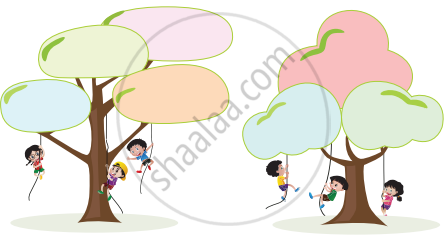
| Best qualities in life | ||||
| Affectionate | Cooperative | Gratitude | Loving | Responsible |
| Ambitious | Courageous | Happiness | Loyal | Self-confident |
| Brave | Dependability | Helpfulness | Good manners | Self-control |
| Calm | Diligence | Honest | Patriotic | Self-esteem |
| Caring | Enthusiastic | Humble | Peaceful | Sensitive |
| Cheerful | Fairness | Imaginative | Perseverance | Sincerity |
| Committed | Faithfulness | Intelligent | Polite | Successful |
| Compassionate | Flexible | Joyful | Positive | Tolerant |
| Concerned | Forgiveness | Kind | Rational | Truthful |
| Confident | Generosity | Leader | Resourceful | Versatile |
| Contented | Giving | Logical | Respect | Witty |
| My favourite quality is... __________________________________________________________________________________ __________________________________________________________________________________ |
||||
Look at the picture and write a paragraph using the clues in the picture.
| GROW AND PROTECT TREES |

Punctuate the following sentences using capital letters, full stops (.) commas (,) question marks (?) apostrophe ( ' ) exclamation mark (!) wherever necessary.
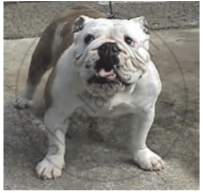
dear samir,
i am sending you a photograph of my newest pet frisky is a bulldog and a very playful puppy by next summer he should be old enough to go with us on our long walks i m sure you are looking forward to seeing him I know you will like him
warm regards
sanju
Find out the following from ten families living in your neighbourhood.
| Count the number of F1* F2 F3 F4 F5 F6 F7 F8 F9 F10 Total |
| children below 5 years of age |
| children from 5-14 years |
| grown-up children from 15-20 |
| elders from 21-50 years |
| old people who are above 50 years |
| total number of people in the family |
*F = Family
- How many members are educated in each family?
- From amongst the ten families, how many are educated?
Now talk to your partner and then write a report about your neighbourhood.
Connect the pairs of sentences below using and or but.
- Raju plays cricket.
- He also plays hockey.
Do you know a fish breathes from its gills? Write two sentences about other animals which can breathe under water.
Do you know that there are seven wonders in the world? Can you tell the name of the one which is in India? Find out and write the names of all the seven wonders and the countries they are located in.
| Wonders of the world | Countries | |
| (i) | The Taj Mahal | |
| (ii) | The Great Wall of China | |
| (iii) | ||
| (iv) | ||
| v) | ||
| (vi) | ||
| vii) |
I can do the sum ________. [easy}
What would you do in this situation, if you were Jimmy Wells? Substantiate your reason.
What was her first impression of America?
Why did the author go to the photo studio?
“To me, it is but a worthless bauble.” Why did the photographer’s touch of technical expertise appear a worthless bauble to Leacock?
Using the given informal letter as a model, write a letter on the topic given below.
Write a letter to your father asking permission to go on an educational tour.
The line 'The house-roofs seemed to heave and sway' in Browning's poem 'The Patriot' means ______.
"A Daniel come to judgement! Yea a Daniel" Who is being described in these words? By whom?
- What do you like best about your school?
- Do you think school is fun?
- Which is the part that you don’t like?
- How often should the teacher give you a test?
Your younger sister wants to eat something tasty. You are telling her the recipe of one such food item. Prepare a dialogue about it.
Write a composition (in approximately 400-450 words) on the following subject:
Music
How do Prospero, Ferdinand and Caliban perceive Miranda? Give one example of each of their perceptions, from the Acts studied, to support your answer. Write your answer in a short paragraph of about 100-150 words.
