Advertisements
Advertisements
प्रश्न
Identify the following personalities and their fields of achievement.
| Name | Field | |
 |
||
 |
||
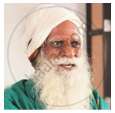 |
||
 |
||
 |
||
 |
||
 |
||
 |
- Mention a remarkable achievement of any of these personalities.
- What quality do you admire the most in each of these achievers?
- What are the qualities that you may share with them?
- Name a few more popular personalities who have made our nation proud.
- ______.
- ______.
- ______.
- ______.
Advertisements
उत्तर
| Name | Field | |
|
Kailash Satyarthi | Child Rights |
|
Mithali Raj | Cricket |
|
Nammalvar | Organic Farming |
|
Dr. V. Shantha | Founded Adyar Cancer Institute |
|
Sunder Pichai | Computers |
|
Bachendri Ral | Mountain Climbing |
|
Amartya Sen | Economics |
|
Kalpana Chawla | Space Science |
- Kailash Satyarthi has rescued thousands of child labourers and gave them new life.
- They were persistent and never accepted failure.
- Each one has concern for the country.
- Name a few more popular personalities who have made our nation proud.
- Rabindranath Tagore
- Mother Teresa
- Sarojini Naidu
- Sania Mirza
- Mary Kom
- Virat Kohli
- Saina Nehwal
- Abhinav Bindra
- MS Dhoni
- AR Rahman
APPEARS IN
संबंधित प्रश्न
What do you associate with the title of the poem?
How is the poet’s laugh reflected in the mirror?
Interpret each of the following expression used in the poem, in one or two line.
shake hands without hearts
Explain the following lines with reference to the context.
I want to be what I used to be.
The poet is satisfied just watching the heroic deeds of others. What could be the reason?
Read the poem again and complete the summary using the words given in the box.
In the poem ‘Confessions of a Born Spectator,’ Ogden Nash talks about how people choose different sports in their lives or decide to become athletes. While admiring the talents of athletes and sportsmen, the poet (i)______he is glad that he is neither a sportsman nor an athlete. Children have different (ii)______and wish to play various games. Each child has in mind something in particular, but the narrator is (iii)______he is not one of the players. Though the narrator (iv) ______the talents of all athletes, he derives satisfaction from watching them, but does not wish to (v) ______places with them. He also sometimes regrets that (vi)______athletes play rough games without caring for the feelings of their sporting rivals. He feels that good sense and caution win over ego. The narrator wholeheartedly offers (vii) ______the modest (viii) ______of athletes. Ultimately the narrator is (ix)______that he himself is not an athlete.
|
thanksgiving exchange glad confesses physiques zealous satisfied aims admires |
Read the given lines and answer the questions that follow in a sentence or two.
With all my heart I do admire
Athletes who sweat for fun or hire
- Whom does the poet admire?
- For what reasons do the athletes sweat?
Read the given lines and answer the questions that follow in a sentence or two.
Well, ego it might be pleased enough But zealous athletes play so rough…
- What pleases the ego?
- Why are athletes often rough during play?
Underline the alliterated word in the following line.
For this most modest physiques…
Find out the rhyme scheme of the given stanza.
One infant grows up and becomes a jockey
Another plays basketball or hockey
This one the prize ring hates to enter
That one becomes a tackle or center…
Why do accidents usually happen in the playground? Give your own examples and explain
Would you like to exchange your place with someone else? Why/why not?
What sort of encouragement should an athlete in India be given? Give a few suggestions.
Explain the following line with reference to the context in about four to five sentence each.
In that sweet mood when pleasant thoughts
Bring sad thoughts to the mind.
The poem is set in a ______.
Work in groups of 4−6. Discuss how you would preserve the environment and protect Nature. One or two representatives may share their ideas with the class.
Which two characters does the poet refer to as examples of wicked cats?
Give an account of Macavity’s destructive mischief.
Read the given lines and answer the question that follow.
He’s the bafflement of Scotland
Yard, the Flying Squad’s despair:
For when they reach the scene of crime
— Macavity’s not there!..
- What is ‘Scotland Yard’?
- Why does the flying squad feel disappointed?
Give four instances where the poet has used alliteration in the poem.
Read the given line and answer the question that follow.
Honour is a property, common to all: In dignity and pride no one need to be poor.
- Who are considered rich?
- What is their asset?
Creative Activity
- Write eight words you associate with success.
- Use the words to write eight lines that mean success to you or how success makes you feel.
- Arrange your lines into a poem.
- Share your poem with the class and post a copy on the notice board.
Fill in the blank with appropriate word from the box and complete the statement suitably:
The business woman wished to ______all her riches to an orphanage, after her death.
Complete the passage given below, with suitable words from the box:
Lima, a (a)______and (b)______woman, kept (c)______at her colleagues and went on taxing them with hard labour. Though they were (d) ______to her, she being their head, they were offended and filled with (e)______. It so happened, that Lima was (f)______from her high position due to a serious blunder she had committed. Lima, having lost all her (g)______and glory, realized how arrogant she had been. She gave up her pride and with (h)______sought an apology from everyone. She thus turned over a new leaf and bid (i)______to them.
| farewell | ceremonious | deposed |
| reverence | vain | pomp |
| conceited | sorrow | scoffing |
What does the crown of rulers stand for?
Bring out King Richard’s feelings when he was defeated.
Read the poem once again carefully and identify the figure of speech that has been used in each of the following line from the poem:
“And yet not so – for what can we bequeath
Save our deposed bodies to the ground?”
