Advertisements
Advertisements
Question
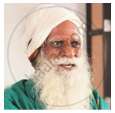
Identify the following personalities and their fields of achievement.
| Name | Field | |
 |
||
 |
||
 |
||
 |
||
 |
||
 |
||
 |
||
 |
- Mention a remarkable achievement of any of these personalities.
- What quality do you admire the most in each of these achievers?
- What are the qualities that you may share with them?
- Name a few more popular personalities who have made our nation proud.
- ______.
- ______.
- ______.
- ______.
Advertisements
Solution
| Name | Field | |
|
Kailash Satyarthi | Child Rights |
|
Mithali Raj | Cricket |
|
Nammalvar | Organic Farming |
|
Dr. V. Shantha | Founded Adyar Cancer Institute |
|
Sunder Pichai | Computers |
|
Bachendri Ral | Mountain Climbing |
|
Amartya Sen | Economics |
|
Kalpana Chawla | Space Science |
- Kailash Satyarthi has rescued thousands of child labourers and gave them new life.
- They were persistent and never accepted failure.
- Each one has concern for the country.
- Name a few more popular personalities who have made our nation proud.
- Rabindranath Tagore
- Mother Teresa
- Sarojini Naidu
- Sania Mirza
- Mary Kom
- Virat Kohli
- Saina Nehwal
- Abhinav Bindra
- MS Dhoni
- AR Rahman
APPEARS IN
RELATED QUESTIONS
What happens to the poet when he visits someone for the third time?
Read the poem and answer the following in a short paragraph of 8–10 sentences each.
When officialdom demands Is there a doctor in the stands?
- Why are doctors called from stands by the sponsors?
- Why does the poet make such an observation?
Read the poem and complete the table with suitable rhyming words
| e.g. enter | center |
| hockey | |
| admire | |
| romp | |
| deeds | |
| score | |
| please | |
| wrist | |
| demands | |
| stadium |
Underline the alliterated word in the following line.
They do not ever in their dealings…
Why do accidents usually happen in the playground? Give your own examples and explain
Do you go for leisurely walks? If you are a city-dweller, what or who would you expect to see on your way?
Find words from the poem that convey the following ideas:
- connected together
- spread over the surface of the ground in a straggling manner
- make out or understand
- slender woody shoots growing from branches or stems of trees
Read the lines given below and answer the question that follow.
And I must think, do all I can,
That there was pleasure there…
- What did the poet notice about the twigs?
- What was the poet’s thought about then?
Read the lines given below and answer the question that follow.
If this belief from heaven be sent,
If such be Nature’s holy plan.
- What does ‘heaven’ refer to?
- Why does the poet call it ‘holy’?
Explain the following line with reference to the context in about four to five sentence each.
In that sweet mood when pleasant thoughts
Bring sad thoughts to the mind.
Read the following line and identify the figure of speech used in each extract.
To her fair works did Nature link
The human soul that through me ran.
Read the following line and identify the figure of speech used in each extract.
And ‘tis my faith that every flower
Enjoys the air it breathes.
Why does the poet think that the birds were happy?
The poem is set in a ______.
What scene in nature gives you pleasure? Talk for a minute describing a natural scene that gave you a lot of joy. What did you see, hear, smell or feel, that gave you joy?
Describe Macavity’s appearance.
Why does the poet say Macavity is ‘outwardly’ respectable?
Describe the appearance and qualities of Macavity.
Read the given lines and answer the question that follow.
And his footprints are not found in any file of Scotland Yard’s.
- What seems to be a challenge for the Scotland Yard?
- Why do they need his footprints?
Read the given lines and answer the question that follow.
There never was a Cat of such deceitfulness and suavity.
- Which cat is being talked of here?
- How is he different from the rest?
Give four instances where the poet has used alliteration in the poem.
What is the rhyme scheme used in the poem?
Read the given line and answer the question that follow.
Defeat we repel, courage our fort;
- How do we react to defeat?
- Which is considered as our stronghold?
Read the given line and answer the question that follow.
Honour is a property, common to all: In dignity and pride no one need to be poor.
- Who are considered rich?
- What is their asset?
The historical background:
The poem is an extract from William Shakespeare’s play King Richard the Second. The play is based on true events that occurred towards the end of the 14th century.
Richard II was crowned the King of England in the year 1367. He continued to be the British Monarch until 1399, when he was deposed by his cousin, Henry of Bolingbroke, who crowned himself King Henry the Fourth in the same year. Shakespeare’s play is a dramatic rendition of the last two years of King Richard II’s life. In this brief span of time, he was ousted from his royal position and sent to prison, where he died in captivity.
The following extract is set in the Coast of Wales. King Richard and some of his followers awaited the arrival of the Welsh army [after facing defeat at the hands of his cousin, Bolingbroke], of about 10000 warriors. But to their shock and surprise, they received the message that the army was not coming to their rescue. His followers tried to boost their King’s courage against the news, only in vain. When Richard came face to face with the reality of his terrible fate, he spoke the following verse, famously known as the “Hollow Crown” speech in theatrical circles. In it, King Richard is reminded of the power of Death that overshadows everything else, including the power of rulers, and renders them as powerless as any commoner at a moment’s notice.
Fill in the blank with appropriate word from the box and complete the statement suitably:
Shravan never keeps his promises. His friends know that his words are ______.
Fill in the blank with appropriate word from the box and complete the statement suitably:
The business woman wished to ______all her riches to an orphanage, after her death.
Read the poem once again carefully and identify the figure of speech that has been used in each of the following line from the poem:
“Keeps Death his court, and there the antic sits,…”
Pick out the alliteration from the following lines:
“And tell sad stories of the death of kings:”
