Advertisements
Advertisements
प्रश्न
How did the narrator adjust to the ways of life first in London and then in Cambridge, U.S.A.?
Advertisements
उत्तर
The narrator has seen various shifts in his life. Firstly, during his bachelorhood, he adjusted a great deal surviving under very absurd and unfavourable conditions. He started working in a library to meet his expenses while he was attending lectures at the LSE. He adjusted his accommodation with other people like him, sharing food, toilet, etc. He led a reckless life eating with hands, soaking dirty dishes in the tub, lounging barefoot, doing things only expected from aimless and lethargic people. Next came a phase in his life when he got married and found a permanent job in America. He shifted because he was given a full-time job in the processing department of the library at MIT. This, however, did not mean that he had started living lavishly. His budget remained just the same it was when he was a student. The aspect that changed drastically was the pace of life in America. Every person was in a hurry to get to the top. Even in his new accommodation, he adjusted to various noises such as flashing sirens, a fleet of buses rumbling along all night, distracting and suffocating him. Life wasn't as peaceful and calm as he had expected with no “glittering ocean to thrill” him or no “breeze to cool” his face. His change in schedule can be reflected at various incidents such as buying milk, etc. His life at the YMCA building turned to be stifling and intolerable with the inconvenient living conditions and unbearable noise because of which he had disturbed sleep.
APPEARS IN
संबंधित प्रश्न
Sounds are tiny vibrations that can travel through air and other materials. The loudness of a sound is measured in decibels (db).
Typical sound level in decibels:
(1) Silence 0db
(2) Rustle of leaves 10 db
(3) Breathing 10 db
(4) Radio music inside home 50-60 db
(5) Loud television 70 db
(6) Road traffic Noise 60-90 db
(7) Powerful rock music 100 db
(8) Motor cycle 105 db
(9) Heavy truck traffic 90-100 db
(10) Wind in the trees 20 db
OR
Read the following information and prepare a fact life:
Delhi, capital of India, has an area of 1,483 sq.km. Haryana and U.P are its neighbours. It has a literacy rate of 81.7%: (males 87.3 %, females 74.7%). People generally speak Hindi, Punjabi, Urdu and English. It is known for its Roshnara festival Shalimar, Qutab, mango festivals, garden Tourism and winter carnival.
Punctuation
Use capital letter, full stops, question marks, commas and inverted commas wherever necessary in the following paragraph. an arrogant lion was wandering though the jungle one day he asked the tiger who is stronger than you you O lion replied the tiger who is more fierce than a leopard asked the lion you sir replied the leopard he marched upto an elephant and asked the same question the elephant picked him up in his trunk swung him in the air and threw him down look said the lion there is no need to get mad just because you don’t know the answer.
Fill in the blank with the suitable word.
He ran _____________ from home at the age of ten.
Who is the narrator? What has been described earlier?
Define the following terms from the poem: rivulet, plough share (plowshare), yon, and childing.
What do you think is the poet’s attitude towards the following 3 things: nature, memory, loneliness?
What is the rhyme of ‘The Patriot: An Old Story’?
Who is reminded of his past? Why?
Which is the turning point in the poem?
One day a millionaire went to a hotel in New York and________(ask) for the cheapest room they________(have)."What________(be) the price of the room?" he________(ask). The manager________(tell) him."Is that that the cheapest room you________(have)? I________(stay) by myself and only________(need) a small room." The manager said, "Why do you choose a poor room like that? Your son always_______(stay) in our most expensive room.""Yes," said the millionaire, "but his father________(be) a wealthy man; mine is not."
Sergius tells Bluntschli in the play "you're not a man, you're a machine." Do you agree with Sergius' assessment of Blunts ii? Give your views.
With close reference to the novel Ivanhoe discuss how the central plot revolves around the conflicts and tensions between the Normans and the Saxons.
Join the following sentence to make one complete sentence without using and, but or so.
Mala is not in the classroom. Mala is not in the library.
Read the extract given below and answer the questions that follow:
NEXT MORNING, I HAD AN IDEA. IT WAS nothing clear cut, merely speculative, But I considered it all the way to school. Then, after assembly, as soon as they were quiet I waded in. This might be a bit rough, I thought, but here goes.
“I am your teacher, and I think it right and proper that I should let you know something of my plans-for this class.”
(i) Who is ‘I’ in the above lines? Where is he? In what mood was he when he entered the class?
(ii) What did the narrator expect from his students at this moment?
(iii) Who entered soon after this? What did she do that made the narrator angry? What challenges did he give her?
(iv) What was the effect of the challenge on her? What plan did the narrator have in mind regarding the conduct of the young ladies? Whose help did he seek for this?
(v) What did the narrator expect from the boy? What was the reaction of the children when they heard the narrator’s expectations?
Write an original short story that begins with the words: "It was raining hard that night. In my hurry to get into the house, I didn't notice the black car parked across the road. I realized something was, wrong when .........
The following three compound words end in-ship. What does each of them mean?
| airship | flagship | lightship |
Which local bird is like the goldfinch.
Discuss the following statement in groups of four.
“The Emperor may rule over the territory he has conquered, but only the artist knows the way within.”
What does the phrase “strange to tell” mean?
What does the notice 'The world's most dangerous animal' at a cage in the zoo at Lusaka, Zambia, signify?
What kind of relationship did Mrs. Croft share with her daughter Helen?
Find out the information about the qualification and eligibility required in the profession related to wildlife such as:
Environmentalist
The use of personal pronoun ‘I’ is evident and prominent in this poem. Give reasons.
We add ‘un-’ to make opposites. For example, true — untrue. Add ‘un’– to the word below to make its opposite. Then look up the meaning of the word you have formed in the dictionary.
important: ____________
Imagine you are journeying through a desert. Write a couple of paragraphs describing what you see and hear.
Notice the use of ‘there’ in the following sentences.
-
There was a big crowd at the fair.
-
There were many things I’d have liked to buy.
Now rewrite the following sentences using ‘there’ in the beginning. Look at the following examples.
-
I can do nothing to help you.
-
There is nothing I can do to help you.
-
A man at the door is asking to see you.
-
There is a man at the door asking to see you.
1. This park has beautiful roses.
2. Your story has no fun in it.
3. We have no secrets between us.
4. My village has two primary schools.
5. This problem can be solved in two ways.
Discuss with your partner the various hazards and risks that a mountaineer/ trekker has to face in an expedition.
______________________________________________________
______________________________________________________
______________________________________________________
Glance through the text again and explain the qualities of Tenzing Norgay. Pick lines that show his unique qualities. One is done for you.
| Sr No. | Qualities | Lines |
| 1. | Patriotic | I told Colonel Hunt that I was carrying the Indian flag with me and I would like it to be on the top with other flags. |
|
2. |
||
| 3. | ||
| 4. |
Planting and growing more crops a year seems to be progressed by normal standards, but the chapter makes a case against it. Give reasons.
Imagine that you are the fellow pilgrim and you wish to share your experience of the incident in the poem.
Write a short article about it for a magazine/journal. Also, convey what change it has brought in your life.
Narrate in your own words a similar based on text to the class.
Read the following lines. Imagine it is the beginning of an instance you have experienced. Complete the incident using your imagination. Give it a positive ending.
I had often noticed that in my neighbour’s family, the son was greatly pampered, but the daughter was treated unfairly. I could not bear this. So one day I decided to ............................
Continue the write-up, with your own ideas, in about 12 - 15 lines.
Complete Dr. APJ Abdul Kalam’s profile with information picked from the lesson.
PROFILE - Dr APJ Abdul Kalam
- Title:
- Profession:
- Branch of science:
- Important position in Government held:
- His three visions for India:
Agricultural is the principal occupation in Maharashtra that has many career opportunities.
| (a) | Agriculture Correspondent |
| (b) | Marketing Communications Manager |
| (c) | Agricultural Policy Analyst |
| (d) | Farm Management |
| (e) | Soil Conservationist |
| (f) | Scientist- Krishi Vigyan Kendra |
| (g) | Machine Design Engineer |
| (h) | Zoologist |
| (i) | Veterinarian |
| (j) | Food Microbiologist |
| (k) | Horticulturist |
| (l) | Agricultural Economics |
Write in brief about the various career opportunities given above. You can collect the information from the following universities.
- Indian Institute of Technology, Kharagpur
- Mahatma Phule Krishi Vidyapeeth, Pune.
- Dr. Panjabrao Deshmukh Krishi Vidyapeeth, Akola.
Write a letter to your friend about the Great Indian Bustard. You may use the following points:
- Why we need to protect the bird.
- What you plan to do to help the bird.
List all possible sources of light which enable you to see. Try to list at least 10 to 15. You may add the following to your list: Different kinds of lamps in your house, different sources you see in nature, different sources used by man in the past, etc.
What is your favourite source of light? Write its autobiography. (10 - 15 lines)
Discuss in groups about the procedure of planting a tree. Write the steps in bullet points and present them before the class.
Look at the image of the familiar advertisement given below. Identify the product and try to frame your own slogan.
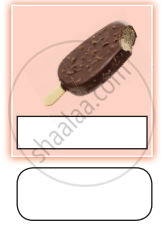
Create a poster for the following.
Good handwriting is the index of an individual. Design a poster on the importance of good handwriting. Use catchy slogans or phrases. Your poster should not exceed 50 words.
Your friend is coming to your city/town to spend a week with you. He/she wants to visit some tourist places and enjoy the special food items of the place. Prepare a two-day itinerary for the visit.
| Day | Timing | Stopover | Stopover | Mode of Transport |
| Day 1 Sunday | 8.00 am | Market | Go shopping for | Auto |
| clothes/curios | ||||
| Day 2 Monday | ||||
How do you cook rice in your house?
Fill in the gaps in this recipe for cooking rice. Use the words in the box
|
boil |
water |
heat |
keep |
rice |
lid |
low |
water |
more |
ready |
What you'll need
- 1 cup uncooked white rice
- 2 cups water
- pinch of salt
How to make it
- ______the rice until the ______runs clear.
- Drain the water and ______ aside.
- In a medium sized pan, bring water to ______.
- Add the salt, stir, and then add the rinsed and drained ______.
- Reduce the heat, cover the rice, and let it simmer on ______ heat for 20 minutes.
- Check after 15 minutes to see if all the ______ has evaporated. If it has, the rice is ______.
- If not, replace the ______ and let the rice simmer for 5 ______
- Remove from ______ and serve
Write a short paragraph on 'summer' using the hints given.
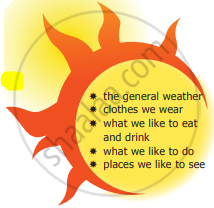
you can begin like this
I live in Chennai. The weather is...
Fill in the blank by choosing the preposition from the option.
The birds were caught ______ the net.
Some word have similar sound, but different meaning. Choose the correct word from the option and fill in the blank.
The King sits on the ______.
Add ‘–er’ or ‘–r’ to the doing words below to make new words.
- stiff - ______
- fight - ______
- juggle - ______
- speak - ______
- write - ______
- strange - ______
- dance - ______
- ride - ______
- use - ______
- joke - ______
What made the dogs follow the grandmother after school hours?
State whether the following statement are true or false
The friends could not keep in touch because they lost each other’s phone numbers.
Was Bob hopeful of his friend’s arrival? How do you know?
What made her feel confident about the competitive players? Explain.
How did Sletherby’s judgment of Bertie turn out to be a wrong one?
What was the only similarity between Leacock’s face and his photograph?
What kind of relationship existed between Miss Meadows and the Science Mistress?
How did Miss Meadows express her joy, when she returned to the music class?
What advice did Aunt Jane offer the couple?
The Government of Tamil Nadu has imposed a ban on the use of plastic. Effective implementation of this ban depends on public awareness and individual responsibility.
Write an article of 150 words for your school magazine to create an awareness of the dangers posed by indiscriminate use of plastic. Expand the ideas given below as notes.
Notes:
a. Introduction
(i) Plastic – synthetic material – doesn’t decompose in soil
(ii) Inevitable role of plastic – man’s day-to-day life
b. Human Health Hazard
(i) Leeching of plastic into food – micro plastic entering food chain
(ii) Human body’s inability to deal with this unnatural substance
(iii) Reaction of microplastic in human body and ill effects
c. Adverse Effects on Plants and Animals
(i) Plastic particles choking waterways – affect aquatic animals
(ii) Ingestion by aquatic and terrestrial animals–blocking of intestines and respiratory passages
d. Environmental Degradation
(i) Manufacturing process and burning of plastics–pollute atmosphere
(ii) Plastic–non-biodegradable – interferes with soil microorganisms – affects soil fertility
e. Conclusion
(i) Suggestions for restricted use – alternatives for one-time use of plastics
(ii) Segregation of plastic waste – for recycling
What is the conflict between Margot and the other children in the story, “All Summer in a day”?
Imagine someone has invited your family to a program and you were the only person at home when the invitation was given orally.
Write a composition on humor.
What leads Mathew Arnold to tell his beloved, “Ah, love, let us be true’, in the last stanza of the poem, The Dover Beach? Write your answer in a short paragraph of 100-150 words.
