Advertisements
Advertisements
प्रश्न
Discuss the following statement in groups of two pairs, each pair in a group taking opposite points of view.
The methods of inquiry of history, science, and philosophy are similar.
Advertisements
उत्तर
|
In favour of the motion |
Against the motion |
|
The methods of inquiry of History, Science, and Philosophy are similar. In the story The Adventure one can find the perspectives of History, Philosophy, and Science converging towards a focal point. History employs the methods of observation, analysis, and rationalism in understanding the course of past events. Science is based on observation, experimentation, and analysis. Rationalism is the most fundamental principle that Science follows. Philosophy is thoroughly critical in methodology. Philosophy examines everything including the assumptions and methodology of science and other disciplines like History. In the story, The Adventure History, Science, and Philosophy converge. Prof. Gaitonde experienced an altogether different version of the outcome of the Battle of Panipat. Contrary to the version as provided in History textbooks, the Marathas emerged as victorious in this battle. Prof. Gaitonde tried to understand this rationally but he failed to get any clue. In this context, Rajendra intervened to explain this phenomenon in the light of the Catastrophic theory which is being employed by Physicists in understanding the behaviour of atoms. Here we find Science and History converging. A similar perspective is seen in Philosophy that truth is relative and not absolute. In fact, the philosophical movement of post Modernism is based on this. In other words, the methods of inquiry of History, Science, and Philosophy are similar. |
It is a misnomer that the methods of inquiry of History, Science, and Philosophy are similar. The similarity is at a superficial level and not at the core. In the story, The Adventure Rajendra tried to rationalise the experience of Prof Gaitonde by applying the Catastrophic theory. But this explanation is not convincing though it convinced the professor. Catastrophic theory can best explain the phenomenon of the physical world but History deals with the behavioural world. It is concerned with the behaviour of society and individuals. The methods of inquiry will also vary accordingly. The method of inquiry of Philosophy is speculative. Philosophy even questions rationalism. Philosophy is highly critical of the methods of Science and History. In other words, the methods of History, Science, and Philosophy are not similar. The story The Adventure by Jayant Vishnu Narlikar is, in fact, a science fiction that is trying to show the convergence of Science History and Philosophy. In reality, the three disciplines, namely, Science, History, and Philosophy have to employ different methodologies of inquiry vis-a-vis the subject matter. |
APPEARS IN
संबंधित प्रश्न
Helen's struggle has become a source of inspiration for all less fortunate. Comment.
Answer any four of the following questions in 30-40 words each:
(a) How could the peddler enter the forge without being noticed by the blacksmith?
(b) At Champaran what did the British landlords want from the sharecroppers?
(c) How does the poet show the futility of Aunt Jennifer's efforts?
(d) Stephen Spender in his poem, 'An elementary School Classroom in a Slum' paints a dismal picture of poverty. Comment.
(e) How did Evans have the last laugh at the Governor?
(f) How did the General plan to get rid of the American POW?
(i) The interest of Maharashtra and that of India should be one for the progress of Maharashtra state, because ................
Discuss the following in pairs
Empathy and understanding are going out of modern society. The individual experiences intense alienation from the society around him or her.
Discuss in small groups.
‘Poets are the unacknowledged legislators of the world’.
The Cloud ‘fuses together a creative myth, a scientific monograph, and a gay picaresque tale of cloud adventure': explain.
Comment on the capitalisation of all the words in the line:
'Children Must be Disciplined'.
Try rewriting the lecture as a formal essay and examine Forster’s statement: 'since the novel is itself often colloquial, it may possibly withhold some of its secrets from the graver and grander streams of criticism’.
The title, 'Refugee Blues' encapsulates the theme of the poem. Comment.
How does the nightingale's song plunge the poet into a state of ecstasy?
Make sentence of your own using the following expression.
put up with:
Make sentence of your own using the following expression.
bargain:
Say why the speaker of the poem wishes to be a-
hawker
When a poet/writer attempts to describe something in words, so that it appeals to our five senses (sight, smell, hearing, touch, taste) he/she has used a device called Imagery.
For example: ‘a host of golden daffodils’.
‘to a chasm, deep and vast and wide’.
Go through other poems in your textbook or other books and find outlines that contain Imagery. Write them down along with the name of the poem and line/stanza number.
How do we realize that animals are not feeling well?
Say WHY. . . . . .
Mother agreed to send Ramanujan to England.
Answer the following question in short.
How did Tenali Raman outwit Pundit Shahane?
Find at least five other Akbar and Birbal stories and share them with your friends. Make a list of the stories collected by the entire class. Put your list in alphabetical order.
Read the following conversation and complete the activities given below:
| Minnie: | Exams are over. I feel so relaxed! Let us plan something interesting. |
| Ritu: | How about a movie? |
| Paddy: | Great! Let’s go for “Aladdin”! |
| Minnie: | Oh, no! I have seen it. It has only a ‘one star’ rating. |
| Ritu: | How about that new release ummm... yes, “Harry Potter? |
| Della: | It is boring. I have read the review this morning. I don’t want to waste my time. |
| Paddy: | Wait, friends. I will check. Let’s decide later. |
(i) Choose the correct alternative from the following-
From one star given to the movie we conclude that-
- The movie is very short.
- The movie is not worth watching.
- The movie is serious.
- The movie is in black and white.
(ii) Discuss with your teacher how/why are ‘stars’ given to a movie.
(iii) The word ‘Review’ is different from summarizing and appeal writing. Choose the correct statements of the following.
- A film review is an expression of your personal views towards a particular film, documentary or movie.
- A film review gives you an opportunity to express opinions about the movie, including its characters, plot and background.
- A film review gives appealing sentences that make your reader curious or anxious about the film.
- A review means explanation of each and every event of the film.
Visit a library:
This story is a fable. Find two more fables. Share them with your friends.
Draw a character sketch of Oberon as an enemy of his wife but a friend of the lovers.
Explain the use of the following property in the development of the play.
Stick
Relate the themes of the Fair to your science textbook by writing the relevant chapter numbers under each theme.
We all follow a class time table made by the school. Imagine for a minute what will happen if there was no time table for your class.
Read the following sentence aloud. Write who said it and to whom.
“Look, here’s something for you.”
Write about Malti and Rima using the following points:
 |
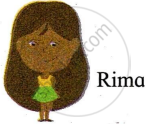 |
| Appearance... | Appearance... |
| Studies... | Studies... |
| Singing... | Singing... |
| Attitude to others... | Attitude to others... |
| Weak points... | Weak points... |
Use details from the story and your own imagination when you write the above descriptions.
This story takes an unexpected turn when the lion decides to spare the camel’s life. Choose any fable, a story that you like, and rewrite it giving it an unexpected turn.
Read the following:
- Charging along like troops in a battle.
- Fly as thick as driving rain.
Using your imagination, write one or two comparisons each with -
- like ______
- as ______ as
Identify one example of a main clause and one example of a dependent clause from the content below:
Troy was filled with the sight of leaping flames and the sound of shouting and the noise of weapons and the cries of weeping women. The sleeping Trojans sprang out of their beds, but they were taken by surprise. Their enemies were right inside their walls, and many of the Trojans were killed before they could put on their armour and seize their weapons.
A bright light lit up the night sky as palaces and houses, temples and towers, went up in flames. The Trojans fought as well as they could, but it was all in vain. Old King Priam was killed with all his brave sons. Hector’s wife and his old mother and sister were carried off as slaves by the conquerors. Their fate was in contrast to Helen’s when King Menelaus rushed through the city, looking for her, and found her in her palace. She hung her head in shame and sorrow as she faced her former husband. Her voice was choked with emotion and she could not speak. But Menelaus forgave her and she went back with him, for it was only Aphrodite who had turned her heart away from her home and her husband and her child.
When morning came, nothing was left of the proud, rich city that had resisted attack for ten years.
A parody is a playful, comic imitation of a writer’s style. A parody is like a verbal cartoon. Compare the original poem and its parody given on page 35 using the following points:
|
How doth the little busy bee |
How doth the little crocodile (parody) |
| Choice of a subject (an animal) | __________________ |
| __________________ | __________________ |
| Number of lines and stanzas | __________________ |
| __________________ | __________________ |
| Same or similar constructions | __________________ |
| __________________ | __________________ |
| Tone of the poem | __________________ |
| __________________ | __________________ |
Which other things in nature can say –
'For men may come and men may go,
But I go on for ever.'
‘And calls our Best away’ is a gentle way of expressing the unpleasant idea of a loved one dying. It is an example of euphemism. Think and write down 3 or 4 ways in which we can express the idea of ‘death’ in a tactful and gentle manner.
- _________________
- _________________
- _________________
- _________________
Gather more information about cold winters in Russia.
Find the meaning of the following word.
rated
Read the poem aloud using proper intonation.
Who were the inhabitants of the island?
The narrator searched for three days to buy ceramic paint.
In New York, Mr. Scotti left the plane because he thought he.
Based on your reading, rearrange the following sentences in the correct sequence.
- Since all her methods failed, finally she gave him a pain-killer.
- He told his aunt that Peter had no aunt, so he gave him the medicine.
- The pain-killer triggered adverse reactions on Peter.
- It jumped out of the open window.
- Tom was dull and depressed.
- This incident upset Aunt Polly and she questioned him.
- But, Tom gave that painkiller to the cat Peter.
- So, Aunt Polly tried different types of remedies on him.
The parents noticed some changes in the child. What were they?
What kind of learning brings joy to you?
Take a stanza from the poem. Write it in the blanks and find the rhyme scheme.
| Lines from the poem | Rhyme scheme (a/b/c/d) |
Read the line and answer the question.
And quiet sleep and a sweet dream when the long trick’s over
What does the poet want to do after his voyage is over?
Read the incidents. Work in small groups to role play the situations in which they showed their presence of mind. Each group should perform the skit for the rest of the class. Share similar situations in the class.
Who helped Jaswant in the battle against Chinese?
How did Vicky change at the end?
It keeps the sack in every little______.
It never takes ______ and ______.
How will you treat your guest?
Why did she pick up her pace?
Anbu was a ________ old boy.
Leafcutter ants drink______.
What are things that we can save? Why should we save them?
The monster tree was protecting the ______.
What did Ani's parents teach her?
Choose the word with same meaning.
Kingdom- ______
Which problem do you think you can solve with art? How?
Choose the right word.
This famous tree is in ______.
What did the animals do when they saw the blue jackal?
Arrange a ‘Jokes’ session in the classroom where each student tells a joke. The jokes must be told in English.
