Parameter 1: Cause of Problem
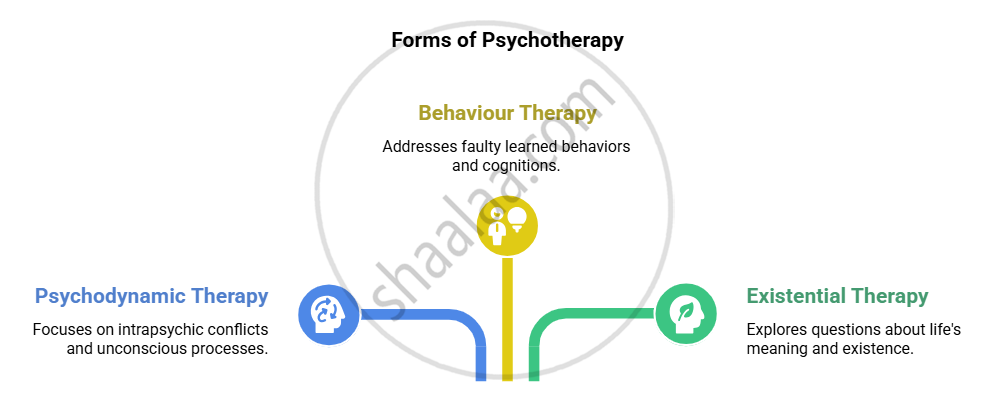
- Psychodynamic therapy: Problems arise from intrapsychic conflicts.
- Behaviour therapy: Problems result from faulty learning of behaviour and cognition.
- Existential therapy: Problems arise from a lack of meaning in life and existential concerns.
Parameter 2: Origin of Cause
- Psychodynamic therapy: Origin lies in unfulfilled childhood desires and unresolved fears.
- Behaviour therapy: Origin lies in faulty conditioning, learning, thinking, and beliefs.
- Existential therapy: Origin lies in present feelings of loneliness, alienation, and lack of life meaning.
Parameter 3: Chief Treatment Method
- Psychodynamic therapy: Uses free association and dream analysis with therapist interpretation.
- Behaviour therapy: Identifies faulty behaviours and replaces them with healthier patterns using cognitive methods.
- Existential therapy: Provides a supportive, accepting environment to help the client grow and find meaning.
Parameter 4: Therapeutic Relationship
- Psychodynamic therapy: Therapist interprets the client’s conflicts and understands them better.
- Behaviour therapy: Therapist guides and teaches correct behaviours and thoughts.
- Existential therapy: Therapist provides a warm, empathic space for self-exploration.
Parameter 5: Chief Client Benefit
- Psychodynamic therapy: Gives emotional insight into inner conflicts.
- Behaviour therapy: Develops healthy behaviours and thinking patterns.
- Existential therapy: Promotes personal growth and deeper self-understanding.
Parameter 6: Treatment Duration
- Psychodynamic therapy: Usually long-term (years), though modern forms may take 10–15 sessions.
- Behaviour therapy: Usually completed in a few months.
- Existential therapy: Also finished within a few months.