- A nonverbal projective method used to assess self-image and interpersonal perceptions.
- Uses blank paper and a pencil as the stimulus.
- Participants are asked to draw a person of any gender, then a person of the opposite gender.
- A story is narrated about each drawing.
- Similar to illustrating comic characters and describing their traits.
- Nonverbal expression reveals emotional themes.
- Cultural adaptations enhance relevance and accuracy.
- Artistic projection offers insight into personality.
- Qualitative interpretation is essential for analysis.
- Scoring can vary due to the subjective nature of interpretation.
Topics
Psychology : A Scientific Discipline
- Science of Psychology
- Key Features of Science
- History of Psychology as a Science
- Research Methods in Psychology> Experimental Method
- Research Methods in Psychology> Survey Method
- Research Methods in Psychology> Observation Method
- Research Methods in Psychology> Case Study Method
- Research Methods in Psychology> Correlation Studies
- Challenges in Establishing Psychology as a Science
- Importance of Rationality
Intelligence
- Concept of Intelligence
- Perspectives on Intelligence
- Intelligence as a Single, General Ability
- Theories of Intelligence
- E. L. Thorndike's Theory
- Louis Thurstone’s Multifactor Theory
- Charles Spearman's Two Factor Theory
- Theory of Intelligence by Cattell
- Howard Gardner's Multiple Intelligence Theory
- Measurement of Intelligence
- History of Measurement of Intelligence
- Mental Age
- Intelligence Quotient
- Types of Intelligence Tests
- Individual Test
- Group Test
- Verbal Test
- Non-Verbal Test
- Applications of Intelligence Testing
- New Trends in Intelligence> Social Intelligence
- New Trends in Intelligence> Emotional Intelligence
- New Trends in Intelligence> Artificial Intelligence
Personality
Cognitive Processes
Emotions
- Concept of Emotions
- History of Emotions
- Basic Emotions
- Plutchik’s Model
- Physiological Changes During Emotions
- Emotional Well-Being
- Achieving Emotional Well Being
- Benefits of Emotional Well-Being
- Emotional Abuse
- Managing Emotions
- Anger Management
- Anticipating and Managing Anger
- The 3 R's: Relax, Reassess, and Respond
Psychological Disorders
- Concept of Abnormal Behaviour
- Nature of Psychological Disorders
- Criteria for Psychological Disorders
- Concept of Mental Wellness
- Mental Disorders - Its Classification
- Major Psychological Disorder> Anxiety Disorders
- Depressive Disorders
- Major Psychological Disorder> Bipolar Disorder
- Major Psychological Disorder> Trauma and Stress Related Disorders
- Major Psychological Disorder> Substance-Related and Addictive Disorders
- Major Psychological Disorder> Schizophrenia
- Identifying and Treating Psychological Disorders
First Aid in Mental Health
Positive Psychology
Estimated time: 29 minutes
- Introduction
- Rorschach’s Ink-Blot Test
- Thematic Apperception Test (TAT)
- Sentence-Completion Test
- Activity: Sentence Completion Test
- Draw-a-Person Test
- Comparative Overview
- Key Points: Projective Techniques
CISCE: Class 12
Introduction
Projective methods are indirect personality assessments using ambiguous stimuli to elicit unconscious emotions, desires, and conflicts. Individuals project their inner thoughts onto unstructured materials, which trained examiners interpret to reveal aspects of personality.
CISCE: Class 12
Rorschach's Ink-Blot Test
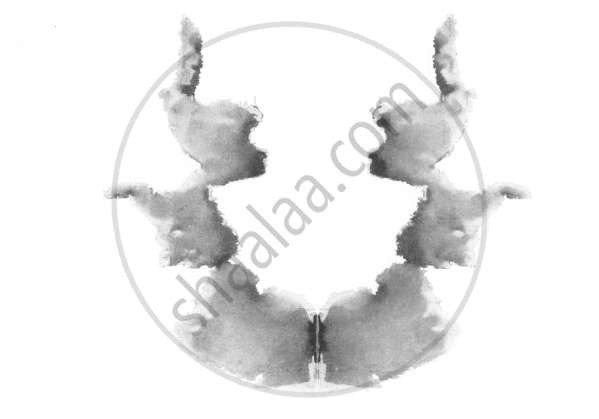
- A projective test using inkblot images to assess perception and emotional functioning.
- Includes ten inkblot cards: five black-and-white, five colored.
- Cards can be shown in any orientation during presentation.
- Participant is asked: “Where did you see that shape and why?”
- Similar to identifying shapes or figures in cloud formations.
- Requires an extensively trained examiner for accurate interpretation.
- Responses reveal patterns of thought organization and emotional condition.
Summary Points:
- Unstructured stimulus → projection of the inner world.
- Two-phase administration.
- Subjective scoring requires expertise.
CISCE: Class 12
Thematic Apperception Test (TAT)
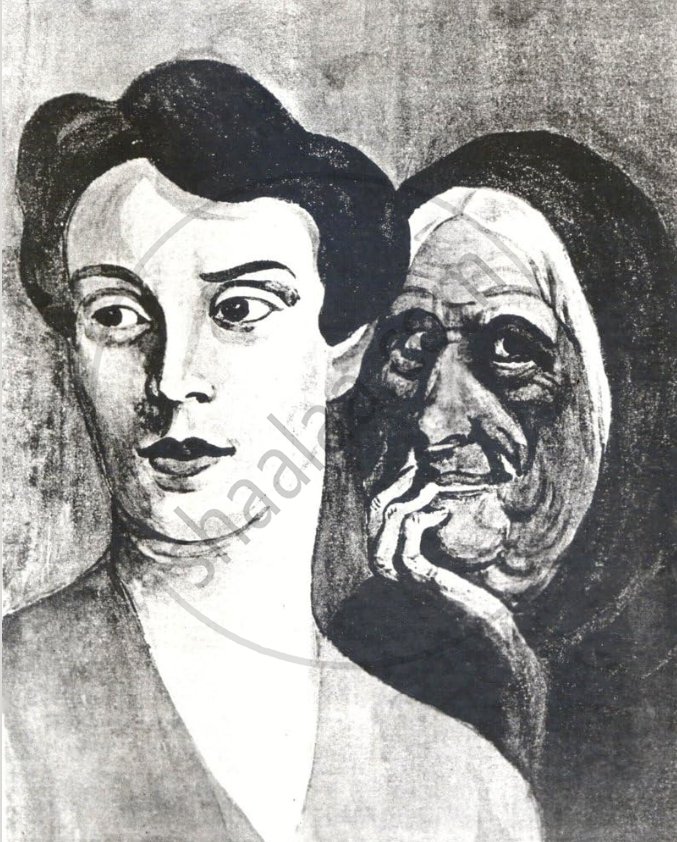
- A narrative-based projective test used to explore underlying motives and conflicts.
- Involves 30 black-and-white picture cards and one blank card.
- Cards are presented one at a time.
- Participant is prompted: “Describe a story: What led up to this scene? What is happening? What will happen next?”
- Similar to crafting a backstory for a film scene.
- Narrative responses help reveal inner drives, emotions, and conflicts.
- It can be adapted for different age groups and cultural backgrounds.
Summary Points:
- Structured storytelling prompts.
- Flexible card selection.
- Standardized scoring categories.
CISCE: Class 12
Sentence-Completion Test
- A verbal projective technique using incomplete sentence stems to uncover attitudes and motivations.
- Typically includes 15–30 sentence beginnings (e.g., “I feel anxious when…”).
- Participants are given stems and asked to respond with the first thought that comes to mind.
- Similar to freewriting thoughts based on prompts.
- Sample items include “My greatest fear is ______.” and “When someone troubles me, I ______.”
- Allows for quick administration and scoring.
- Reveals personal conflicts, desires, and emotional patterns.
Summary Points:
- Quick insights into unconscious concerns.
- Minimal examiner training required.
- Limited depth compared to other projective tests.
CISCE: Class 12
Activity: Sentence Completion Test
Sentence completion test may have such sentences :
- I feel afraid of failing in front of others.
- When something goes wrong, I try to stay calm and find a solution.
- When someone troubles me, I prefer to talk it out peacefully.
- For me, my college is a place to learn, grow, and make memories.
- I wish I could travel the world and explore different cultures.
CISCE: Class 12
Draw-a-Person Test
CISCE: Class 12
Comparative Overview
| Test | Stimulus | Response Format | Strength | Limitation |
|---|---|---|---|---|
| Rorschach Ink-Blot | Inkblots | Verbal description | In-depth perception | High subjectivity |
| Thematic Apperception (TAT) | Picture scenes | Narrative story | Motive exploration | Time-intensive |
| Sentence-Completion | Sentence stems | Written completion | Speed and simplicity | Surface-level insights |
| Draw-a-Person | Drawing task | Artistic expression | Nonverbal cues | Interpretation variability |
CBSE: Class 12
Maharashtra State Board: Class 12
CISCE: Class 12
Maharashtra State Board: Class 12
CISCE: Class 12
Key Points: Projective Techniques
- Projective Tests: Use unclear tasks (like pictures or sentences) to uncover hidden thoughts, emotions, and conflicts.
- Rorschach Ink-Blot Test: 10 inkblots → person describes what they see → reveals thinking and emotions. Needs an expert to score.
- TAT (Thematic Apperception Test): 30 pictures → person makes up a story → shows motives, feelings, and conflicts.
- Sentence-Completion Test: Fill in blanks (e.g., “I feel…”), which gives quick ideas about feelings and thoughts. Easy to use.
- Draw-a-Person Test: Draw a person and tell a story → shows self-image and feelings through art. Interpretation can vary.
