Topics
Introduction of Commerce and Business
Trade
- Concept of Trade
- Internal Trade
- Wholesale Trade
- Retail Trade
- Types of Retailers> Itinerant Retailers
- Types of Retailers> Fixed Shop Retailer
- Small Scale Fixed Retailer
- Large Scale Fixed Retailers
- Departmental Stores
- Super Market Shop
- Chain Stores or Multiple Shops
- One Price Shop
- Concept of Mall
- International Trade
- Export Trade
- Procedure of Export Trade
- Import Trade
- Procedure of Import Trade
- Entrepot Trade
- Comparison of Different Types of Retailers and Trade Practices
Small Scale Industry and Business
Forms of Business Organisation - 1
- Private Sector Organisations
- Sole Trading Concern
- Partnership Firm
- Types of Partners
- Types of Partnerships Firms
- Hindu Undivided Family Business Or Joint Hindu Family Business
- Co-operative Society
- Types of Cooperative Societies
- Joint Stock Company
- Amul: A Successful Co-operative Movement in India
- Private Limited Company
- Public Limited Company
- Comparison of Different Forms of Business Organization
Forms of Business Organisation - 2
Institutes Supporting Business
Business Environment
- Concept of Business Environment
- Importance of Business Environment
- Dimensions of Business Environment
- Internal Factors
- External Factors> Natural Environment
- External Factors> Social Environment
- External Factors> Political Environment
- External Factors> Economic Environment
- External Factors> Technological Environment
- External Factors> Legal Environment
- New Economic Policy and Business
- Liberalisation
- Privatisation
- Globalisation
- Impact of New Economic Policy on Business
Introduction to Management
- Introduction
- Major Factors and Their Effects
- Environmental Impact on Business
- Modern Environmental Challenges
- Real-Life Application
- Key Point Summary
Maharashtra State Board: Class 11
Introduction
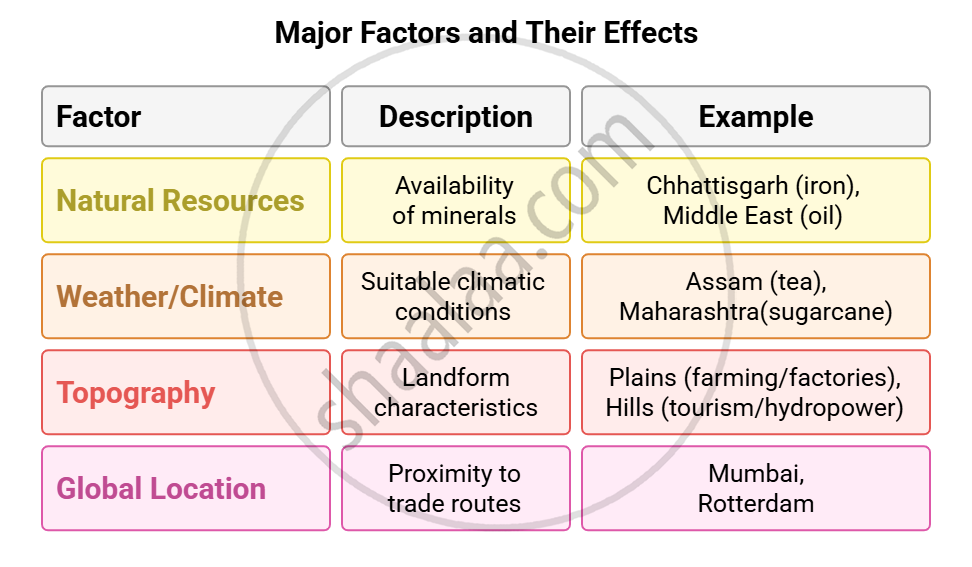
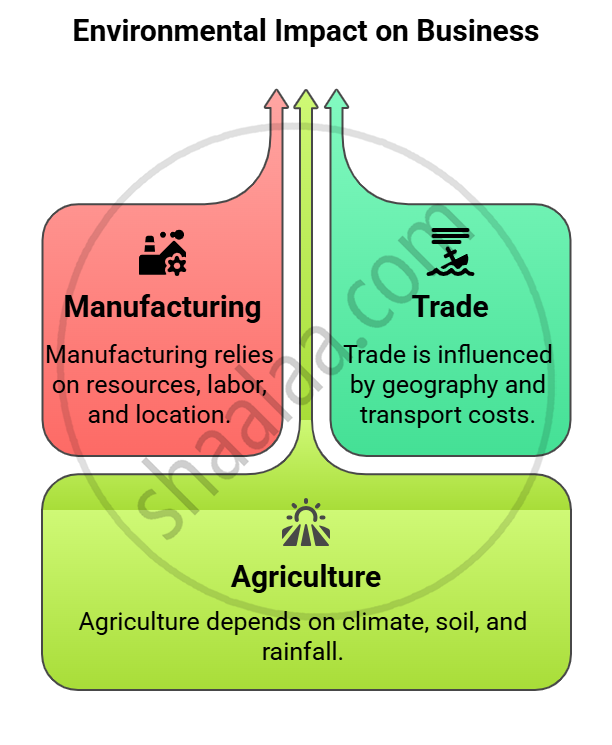
Business activities and their growth are closely linked to the physical (geographical) and ecological (environmental) characteristics of a region. Understanding these factors helps explain why certain industries thrive in some areas but not in others.
Maharashtra State Board: Class 11
Major Factors and Their Effects
Maharashtra State Board: Class 11
Environmental Impact on Business
Maharashtra State Board: Class 11
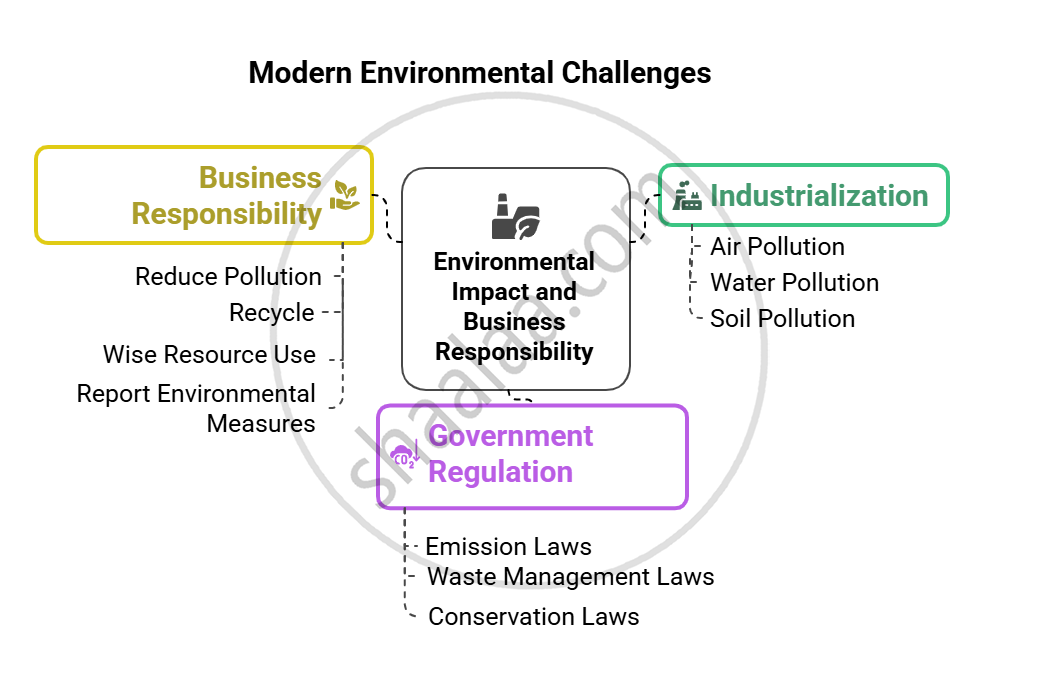
Modern Environmental Challenges
Maharashtra State Board: Class 11
Real-Life Application
- Mumbai’s port and flat land make it a hub for trade, industry, and services.
- Punjab’s fertile plains support wheat, while Rajasthan’s dry, sunny climate suits solar energy and handicrafts.
- The IT industry flourished in Pune and Bangalore due to favorable climate, skilled workforce, and good connectivity.
Maharashtra State Board: Class 11
Key Point Summary
- Geography and ecology decide what types of businesses succeed where.
- A good location and access to resources can reduce costs and boost business growth.
- Modern laws require businesses to maintain ecological balance.
- All sectors, including agriculture, industry, and trade, are affected by the environment.
