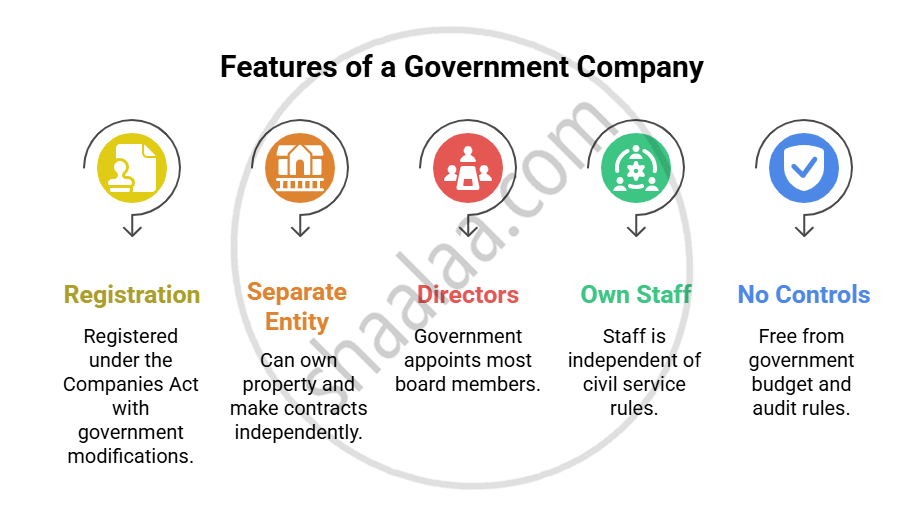
- Annual Reports: Presented to Parliament or the state legislature.
- Appointment of Auditors: Appointed by the government on the Comptroller’s advice.
- Shareholding: The government holds 51%, and the private can hold 49%.
- Management: Managed by a board of government and private appointees.
Topics
Introduction of Commerce and Business
Trade
- Concept of Trade
- Internal Trade
- Wholesale Trade
- Retail Trade
- Types of Retailers> Itinerant Retailers
- Types of Retailers> Fixed Shop Retailer
- Small Scale Fixed Retailer
- Large Scale Fixed Retailers
- Departmental Stores
- Super Market Shop
- Chain Stores or Multiple Shops
- One Price Shop
- Concept of Mall
- International Trade
- Export Trade
- Procedure of Export Trade
- Import Trade
- Procedure of Import Trade
- Entrepot Trade
- Comparison of Different Types of Retailers and Trade Practices
Small Scale Industry and Business
Forms of Business Organisation - 1
- Private Sector Organisations
- Sole Trading Concern
- Partnership Firm
- Types of Partners
- Types of Partnerships Firms
- Hindu Undivided Family Business Or Joint Hindu Family Business
- Co-operative Society
- Types of Cooperative Societies
- Joint Stock Company
- Amul: A Successful Co-operative Movement in India
- Private Limited Company
- Public Limited Company
- Comparison of Different Forms of Business Organization
Forms of Business Organisation - 2
Institutes Supporting Business
Business Environment
- Concept of Business Environment
- Importance of Business Environment
- Dimensions of Business Environment
- Internal Factors
- External Factors> Natural Environment
- External Factors> Social Environment
- External Factors> Political Environment
- External Factors> Economic Environment
- External Factors> Technological Environment
- External Factors> Legal Environment
- New Economic Policy and Business
- Liberalisation
- Privatisation
- Globalisation
- Impact of New Economic Policy on Business
Introduction to Management
- Introduction
- Important Concept
- Features
- Merits
- Demerits
- Real-Life Application
- Key Point Summary
Maharashtra State Board: Class 11
Introduction
A government company is a company registered under the Companies Act, 2013, where the government (central, state, or both) owns at least 51% of the paid-up share capital. This means the government is the main owner.
Examples:
- NTPC (National Thermal Power Corporation)
- BHEL (Bharat Heavy Electricals Limited)
- HMT (Hindustan Machine Tools)
The shares are held in the name of the President of India or the Governor of a State.
Maharashtra State Board: Class 11
Important Concepts
Maharashtra State Board: Class 11
Features
Maharashtra State Board: Class 11
Merits
- Easy Formation: Formed easily through a government decision.
- Internal Autonomy: Operates independently with minimal political interference.
- Easy to Alter: Objectives can be changed by modifying the Memorandum of Association.
- Discipline: Follows the Companies Act, ensuring active and disciplined management.
- Professional Management: Can hire qualified managers with its own personnel policies.
- Public Accountability: Annual reports are presented and debated in Parliament or the State Legislature.
Maharashtra State Board: Class 11
Demerits
Maharashtra State Board: Class 11
Real-life Application
NTPC, a government company, supplies electricity across India. While it aims to make a profit, it must also ensure that power reaches even the most remote villages, thereby fulfilling both business and social goals.
Maharashtra State Board: Class 11
Key Point Summary
- Government Company: At least 51% government-owned, registered under the Companies Act, operates independently but under government control.
- Advantages: Easy setup, professional management, autonomy, transparency.
- Disadvantages: May face government interference and lack complete independence.
