Advertisements
Online Mock Tests
Chapters
1: Cell Division
2: Structure of Chromosomes
3: Principles of Genetics
Unit-2 Plant Physiology
4: Absorption by Roots
5: Transpiration
6: Photosynthesis
7: Chemical Coordination in Plants
8: Circulatory System
Unit-3 Human Anatomy and Physiology
9: Excretory System
10: Nervous System
11: Endocrine System
12: Reproductive System
13: Human Population
▶ 14: The Evolution of Man
15: Theories of Evolution
16: Types of Pollution
17: Sources of Pollution and Major Pollutants
18: Effects of Pollution
19: Abatement of Pollution
20: Greenhouse Effects, Global Warming, Ozone Layer Depletion and Acid Rain
![Frank solutions for Biology Part 2 [English] Class 10 ICSE chapter 14 - The Evolution of Man - Shaalaa.com](/images/biology-part-2-english-class-10-icse_6:4cd9978ddb1c4f42b0b0e9ec6f09c057.jpg "Frank solutions for Biology Part 2 [English] Class 10 ICSE chapter 14 - The Evolution of Man")
Advertisements
Solutions for Chapter 14: The Evolution of Man
Below listed, you can find solutions for Chapter 14 of CISCE Frank for Biology Part 2 [English] Class 10 ICSE.
Frank solutions for Biology Part 2 [English] Class 10 ICSE 14 The Evolution of Man Exercises [Pages 198 - 200]
Choose the correct alternative from the choices given below each statement.
Ancestor of man who showed bipedal movement.
Cro-magnon
Australopithecus
Java ape-man
Peking man
Homo erectus is the biological name of ______.
Modern man
Neanderthal man
Java man
Peking and Java man
Scientific name of human is ______.
Canis familiaris
Homo habilis
Homo erectus
Homo sapiens
The first ancestor of humans was ______.
Pithecanthropus
Zinjanthropus
Australopithecus
Neanderthal man
The probable direct ancestor of modern man is ______.
Java man
Peking man
Cro-magnon man
Neanderthal man
On which continent have maximum fossils of prehistoric man been found?
Africа
Europe
Asia
America
Most recent fossil of humans was ______.
Java man
Peking man
Cro-magnon man
Heidelberg man
What was the cranial capacity of Java man?
400 cc
650 cc
900 cc
1450 cc
Who discovered Java ape man?
Leakey
Mayr
Davidson Black
Dubois
The proper burial of dead for the first time started with which prehistoric man?
Peking man
Neanderthal man
Java man
Cro-magnon man
Evolution of humans was possible because our ape-like ancestors ______.
Showed bipedal movement on open land
Used fire
Felt difficulty in nutrition
Developed community hunting
Cranial capacity of Cro-magnon man was ______.
900 cc
1075 cc
1450 cc
1600 cc
A male gorilla has 48 chromosomes in each of its body cells. How many chromosomes will each of the sperms have?
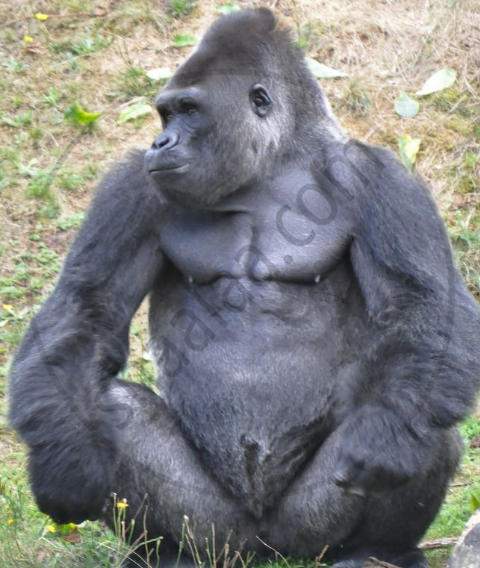
24
48
17
16
Assertion-Reason Type Questions Following questions consist of two statements - Assertion (A) and Reason (R). Answer these questions by selecting the appropriate option given below:
Assertion (A): Human evolution is part of the human history of growth as decline of civilisations.
Reason (R): Prehistoric caves are developed about 10 mya.
Both A and R are true and R is the correct explanation of A.
Both A and R are true but R is not the correct explanation of A.
A is true but R is false.
A is false but R is true.
Assertion (A): In India, the human population is currently undergoing the lag phase.
Reason (R): A major portion of Indian population is still below poverty line.
Both A and R are true and R is the correct explanation of A.
Both A and R are true but R is not the correct explanation of A.
A is true but R is false.
A is false but R is true.
Assertion (A): From evolutionary point of view, human gestation period is believed to be shortening.
Reason (R): One major evolutionary trend in humans has been larger head undergoing faster growth rate in the foetal stage.
Both A and R are true and R is the correct explanation of A.
Both A and R are true but R is not the correct explanation of A.
A is true but R is false.
A is false but R is true.
Name the following.
The biological name of Java man.
Name the following.
The probable direct ancestor of modern man.
Name the following.
Most recent fossil of man.
Name the following.
Cranial capacity of Cro-magnon man.
Name the following.
The biological name of Cro-magnon man.
Name the following.
The new world monkey with narrow nose.
Name the following.
Smallest and most primitive ape.
Name the following.
Most intelligent ape.
Name the following.
The family to which humans belong.
Name the following.
First ape man.
Name the following.
The tool maker or handy man.
Fill in the blanks.
Cranial capacity of Cro-magnon man was ______.
Biological name of modern man is ______.
In ______ continent maximum fossils of prehistoric man have been found.
______ discovered Java ape man.
Homo sapiens belong to the family ______.
Apes belong to the family ______.
Maximum cranial capacity of Cro-magnon man is ______.
Distinguish between ape and man.
Differentiate between:
Java man and Peking man
Differentiate between:
Cro-magnon man and Modern man
Differentiate between:
Neanderthal man and Cro-magnon man
Write the similarities between:
Ape and Modern man
Write the similarities between:
Neanderthal man and Cro-magnon man
Write the similarities between:
Java man and Peking man
Write the similarities between:
Cro-magnon and Modern man
Where in the world did human being originate and in what form?
What do you mean by human evolution?
Write any four special features of humans during their evolution.
Write down any four similarities between ape and man.
What were the similarities in Java man and Peking man?
What traits (or characteristics) are unique to humans among the primates?
Write the taxonomic position of modern man.
Draw a line sketch to classify the order primates.
Write the characteristic features of Homo habilis.
Write the ape-like characteristics of australopithecus man.
Write the man-like characteristics of australopithecus man.
Name the living genera of apes.
Name the Prosimians.
Name the Anthropoids.
Write a short note on:
Java man
Write a short note on:
Peking man
Write a short note on:
Primates
Write a short note on:
Cro-magnon man
Differentiate between Australopithecus and Modern man based on body hair.
Arrange and rewrite the terms in group in correct order to be in a logical sequence, beginning with the term that is underlined:
Australopithecus, Cro-Magnon, Homo erectus, Neanderthal man.
Arrange and rewrite the terms in group in correct order to be in a logical sequence, beginning with the term that is underlined:
Australopithecus, Cro-Magnon, Homserectus, Neanderthal man, Homs sapiens
Give the biological reasons for the following statement:
Homo sapiens is the most highly evolved form of man.
Given below are two stages in the evolution of man. Study them and answer the questions that follow:
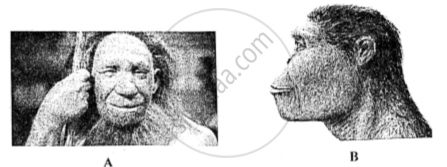
- Identify Australopithecus and Neanderthal man from the above pictures.
- Mention two characteristic features each for the two stages.
- Who proposed the theory of ‘Natural Selection’?
- Name the organism used as an example to explain ‘Industrial Melanism’.
- Give two examples of vestigial organs in humans.
Solutions for 14: The Evolution of Man
Frank solutions for Biology Part 2 [English] Class 10 ICSE chapter 14 - The Evolution of Man
Shaalaa.com has the CISCE Mathematics Biology Part 2 [English] Class 10 ICSE CISCE solutions in a manner that help students grasp basic concepts better and faster. The detailed, step-by-step solutions will help you understand the concepts better and clarify any confusion. Frank solutions for Mathematics Biology Part 2 [English] Class 10 ICSE CISCE 14 (The Evolution of Man) include all questions with answers and detailed explanations. This will clear students' doubts about questions and improve their application skills while preparing for board exams.
Further, we at Shaalaa.com provide such solutions so students can prepare for written exams. Frank textbook solutions can be a core help for self-study and provide excellent self-help guidance for students.
Concepts covered in Biology Part 2 [English] Class 10 ICSE chapter 14 The Evolution of Man are Evolution, Theories of Biological Evolution, Evidences of Evolution > Vestigial Organs, Lamarck's Theory Vs Darwin's Theory, Human Ancestors, Homo Sapiens Sapiens (Modern Man).
Using Frank Biology Part 2 [English] Class 10 ICSE solutions The Evolution of Man exercise by students is an easy way to prepare for the exams, as they involve solutions arranged chapter-wise and also page-wise. The questions involved in Frank Solutions are essential questions that can be asked in the final exam. Maximum CISCE Biology Part 2 [English] Class 10 ICSE students prefer Frank Textbook Solutions to score more in exams.
Get the free view of Chapter 14, The Evolution of Man Biology Part 2 [English] Class 10 ICSE additional questions for Mathematics Biology Part 2 [English] Class 10 ICSE CISCE, and you can use Shaalaa.com to keep it handy for your exam preparation.
