Advertisements
Advertisements
Question
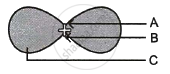
Observe the figure below. Write functions of the labelled parts.

Advertisements
Solution
- Gynoecium (Carpel): It is an essential whorl. It is consists of stigma, style and ovary. It acts as a female reproductive part of the flower. It is responsible for the production of female gametes.
- Androecium (Stamen): It is an essential whorl. It is consists of anther and filament. It acts as a male reproductive part of the flower. It is responsible for the production of male gametes.
- Calyx and corolla: Calyx and corolla are accessory whorls. They are responsible for the protection of inner (essential) whorls.
- Pedicel: Pedicel is a small stalk which supports the flower.
APPEARS IN
RELATED QUESTIONS
Match the following:
| Column A | Column B |
| (i) Stigma | (a) Neuron |
| (ii) Pepsin | (b) Carpel |
| (iii) Dendrites | (c) Protein |
| (d) Stamen |
A student has to perform the experiment "To identify the different parts of an embryo of a dicot seed." Select from the following an appropriate group of seeds:
(a) Pea, gram, wheat
(b) Red kidney bean, maize, gram
(c) Maize, wheat, red kidney bean
(d) Red kidney bean, pea, gram
A student identified the various parts of an embryo of a gram seed and listed them as given below :
(I) Testa
(II) Plumule
(III) Radicle
(IV) Cotyledon
(V) Tegmen
Out of these the actual parts of the embryo are :
(A) I, II, III
(B) II, III, IV
(C) III, IV, V
(D) II, IV, V
State the function of flowers in the flowering plants.
How does the process of fertilisation take place in flowers?
The process of fusion of the male and female gametes is called ______.
Mature ovary forms the ______.
Name the part made up of the stigma, style and ovary.
Name the male part of the flower.
What is the name of female part of a flower?
What is the name of female organ of a flower (other than carpel)?
Fill in the following blank with suitable word :
The ovary of a flower becomes ....... after fertilisation.
What is seed? What are the parts of a seed? Explain with the help of a labelled diagram.
What is pollination? How does pollination occur?
Which of the following statements are true for flowers?
(i) Flowers are always bisexual.
(ii) They contain sexual reproductive organs.
(iii) They are produced in all groups of plants.
(iv) after fertilization they give rise to fruits.
Fill in the blank:
Seeds are formed from________.
Give one example each of unisexual and bisexual flowers. Differentiate between the two types of pollination that occur in flowers. What happens when a pollen lands on a suitable stigma? Write about the events that occur till the seed formation in the ovary.
Distinguish between unisexual and bisexual flowers giving one example of each. Draw a diagram showing process of germination of pollen grains on stigma and label the following parts:
(a) Female germ cell
(b) Male germ cell
(c) Ovary
Draw a diagram of the longitudinal section of a flower and label on it sepal, petal, ovary and stigma.
What is phototropism?
Which of the following is not an unisexual flower?
a) Coconut
b) Papaya
c) Gulmohor
d) Maize
Sketch the labelled diagram.
Flower with its sexual reproductive organs.
Prepare a slogan for campaign against female foeticide.
Fill in the blank by selecting suitable word:
Transfer of pollen grains from the anther to the stigma is known as______________.
What is cleistogamy? Write one advantage and one disadvantage of it, to the plant.
Find the odd one out:
__________ is present in unisexual flower.
Pollen tube reaches the embryo sac via style.
Give scientific reason.
Fertilization in plants is called double fertilization.
Identify the parts A, B, C, and D?
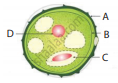
The 3-celled egg apparatus at the micropylar end comprises of ______
Which among the following statements are true for unisexual flowers?
- They possess both stamen and pistil
- They possess either stamen or pistil
- They exhibit cross pollination
- Unisexual flowers possessing only stamens cannot produce fruits
Which among the following statements are true for sexual reproduction in flowering plants?
- It requires two types of gametes
- Fertilisation is a compulsory event
- It always results in formation of zygote
- Offspring formed are clones
Where is the zygote located in the flower after fertilization?
What is the function of calyx?
Triple fusion involves ______.
Given below is a diagram of a germinating seed. Label the parts that:
- gives rise to future shoot.
- gives rise to future root system.
- stores food.