Advertisements
Advertisements
Question
Prepare a slogan for campaign against female foeticide.
Advertisements
Solution
Avoid female foeticide, save girl child
APPEARS IN
RELATED QUESTIONS
Name the parts A, B and C shown in the diagram and write their functions.

Name the parts labelled as A, B, C and D in the diagram given below:-

What is pollination?
You are asked by your teacher to study the different parts of an embryo of a gram seed. Given below are the steps to be followed for the experiment:
I. Soak the gram seeds in plain water and keep them overnight.
II. Cut open a soaked seed and observe its different parts.
III. Take some dry gram seeds in a petri dish.
IV. Drain the excess water.
V. Cover the soaked seeds with a wet cotton cloth and leave them for a day.
The correct sequence of these steps is :
(A) III, I, V, IV, II
(B) III, I, II, IV, V
(C) III, IV, V, I, II
(D) III, I, IV, V, II
Name the male part of the flower.
What is the function of a flower?
Where is the male gamete formed in flowering plants?
Fill in the following blank with suitable word :
Ovules contain ......... gametes of a plant.
Fill in the following blank with suitable word :
The male organ of reproduction in the flower is the.......... .
What type of plants reproduce by sexual reproduction method?
Name the part of a seed which grows into root.
Describe the process of fertilisation in a flower with the help of labelled diagrams.
One of the following occurs in the reproductive system of flowering plants as well as that of humans. This is :
(a) vas deferens
(b) anther
(c) ovary
(d) style
Which of the following statements are true for sexual reproduction in flowering plants?
(i) it requires two types of gametes
(ii) fertilisation is a compulsory event
(iii) it always results in the formation of zygote
(iv) offsprings formed are clones
(a) (i) and (iv)
(b) (i), (ii) and (iv)
(c) (i), (ii) and (iii)
(d) (ii), (iii) and (iv)
The correct sequence of reproductive stages occurring in flowering plants is ______.
The flask-shaped organ A at the centre of a flower is surrounded by a number of little stalks B having swollen tops which lie just inside the ring of petals.
(a) Name A. What are the various parts of A?
(b) Which part of A contains gametes?
(c) Name B. What is the swollen top of B known as?
(d) What does the swollen top of b contain?
(e) Out of A and B, which one is (i) male part, and (ii) female part of the flower?
In a bisexual flower, inspite of the young stamens being removed artificially, the flower produces fruit. Explain.
Fill in the blank by selecting suitable word:
A flower bearing only male or female parts is known as __________ flower.
Explain the process of fertilisation in flowers.
Identify the odd. Stigma, Style, Pollen, Ovary.
Fill in the blanks and rewrite the completed statements:
Lymph flows in _______________ direction.
Mention pollination types.
Answer the following question.
How does suitable pollination lead to fertilization?
What is cleistogamy? Write one advantage and one disadvantage of it, to the plant.
What is meant by pollination?
Identify the parts A, B, C, and D?
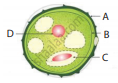
How many middle layers are generally present in the wall of the anther lobes?
Gloriosa superba exhibits ______.
What would be the number of chromosomes in the cells of the aleurone layer in a plant species with 8 chromosomes in its synergids?
The figure below shows the concept of double fertilization. Complete the flow chart showing the progress at each step:

Triple fusion involves ______.
Name the reproductive parts of an angiosperm. Where are these parts located? Explain the structure of its male reproductive part.
Explain the post fertilization changes that occur in the ovary of a flower.
Given below is a diagram of a germinating seed. Label the parts that:
- gives rise to future shoot.
- gives rise to future root system.
- stores food.
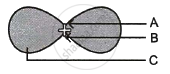
The number of pollen sacs in a dithecous anther is ______.
