Advertisements
Advertisements
Question
Calyx : Sepals : : Corolla : ________________
Advertisements
Solution
Calyx : Sepals : : Corolla : Petals
APPEARS IN
RELATED QUESTIONS
A student was asked to observe and identify the various parts of an embryo of a red kidney bean seed. He identified the parts and listed them as under:
I. Tegmen
II. Testa
III. Cotyledon
IV. Radicle
V. Plumule
The correctly identified parts among these are
(A) I, II and III
(B) II, III and IV
(C) III, IV and V
(D) I, III, IV and V
How does fertilisation occur in flowers? Name the parts of the flower that develop into (i) seed, and (ii) fruit after fertilisation.
A student identified the various parts of an embryo of a gram seed and listed them as given below :
(I) Testa
(II) Plumule
(III) Radicle
(IV) Cotyledon
(V) Tegmen
Out of these the actual parts of the embryo are :
(A) I, II, III
(B) II, III, IV
(C) III, IV, V
(D) II, IV, V
You are asked by your teacher to study the different parts of an embryo of a gram seed. Given below are the steps to be followed for the experiment:
I. Soak the gram seeds in plain water and keep them overnight.
II. Cut open a soaked seed and observe its different parts.
III. Take some dry gram seeds in a petri dish.
IV. Drain the excess water.
V. Cover the soaked seeds with a wet cotton cloth and leave them for a day.
The correct sequence of these steps is :
(A) III, I, V, IV, II
(B) III, I, II, IV, V
(C) III, IV, V, I, II
(D) III, I, IV, V, II
The process of fusion of the male and female gametes is called ______.
Where are the pollen grains produced?
What are the reproductive organs in a flower?
Fill in the following blank with suitable word :
Pollen grains contain ............ gametes of a plant.
Draw a neat sketch of the stamen of a flower. Mark in it filament and anther.
Explain the terms 'cross-pollination'?
How do the insects help in cross-pollination?
Describe the process of fertilisation in a flower with the help of labelled diagrams.
The length of pollen tube depends on the distance between :
(a) pollen grain and upper surface of stigma
(b) pollen grain on upper surface of stigma and ovule
(c) pollen grain in anther and upper surface of stigma
(d) upper surface of stigma and lower part of style
Which among the following statements are true for unisexual flowers?
(i) They possess both stamen and pistil
(ii) They possess either stamen or pistil
(iii) They exhibit cross pollination
(iv) Unisexual flower possessing only stamens cannot produce fruits
(a) (i) and (iv)
(b) (ii), (iii) and (iv)
(c) (ii) and (iii)
(d) (i), (iii) and (iv)
Mention the function of Anther.
The students of a class were asked by the teacher to study the different parts of an embryo of an angiosperm. Given below are the essential steps for the experiment :
A. Soak the seeds in plain water and keep them overnight.
B. Cut open the soaked seed and observe its different parts.
C. Take some healthy seeds in a petri-dish.
D. Drain the excess water, cover the seeds with a wet cotton cloth and leave them as it is for a day.
The correct sequence of these steps is
(a) C, A, D, B
(b) C, D, A, B
(c) A, C, D, B
(d) A, C, B, D
Explain the process of fertilisation in flowers.
A student is asked to study the different parts of an embryo of pea seeds. Given below are the essential steps for the experiment :
(I) Soak the pea seeds in plain water and keep them overnight.
(II) Cut open the soaked seed and observe its different parts.
(III) Take some pea seeds in a petri dish.
(IV) Drain the excess water. Cover the seeds with a wet cotton cloth and leave them as it is for a day.
The correct sequence of these steps is
(A) III, I, IV, II
(B) III, IV, I, II
(C) III, I, II, IV
(D) III, II, I, IV
Write the names of male and female reproductive parts of a flower.
What is phototropism?
Prepare a slogan for campaign against female foeticide.
Fill in the blanks and rewrite the completed statements:
Lymph flows in _______________ direction.
Mention pollination types.
A student is observing the temporary mount of a leaf peel under a microscope. Draw a labelled diagram of the structure of stomata as seen under the microscope
Find the odd one out:
Find an odd one out.
Explain the sexual reproduction process in plants with a diagram.
Identify the parts A, B, C, and D?
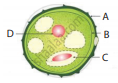
Where does the endothecium layer of anther lobes is present?
Which of the following are the chemical components of the wall of pollen tube?
Which out of the following processes does not lead to the formation of clones.
Which among the following statements are true for sexual reproduction in flowering plants?
- It requires two types of gametes
- Fertilisation is a compulsory event
- It always results in formation of zygote
- Offspring formed are clones
Double fertilization is exhibited by ______
What are the agents for pollination?
The figure below shows the concept of double fertilization. Complete the flow chart showing the progress at each step:

In flowering plants, the pollen grains are transferred to stigma by pollination but the female germ cells are present in the ovary.
Explain with the help of a labelled diagram (only concerned parts), how the male germ cell reaches the ovary.
- Assertion: Primary endosperm nucleus is diploid.
- Reason: It is the product of double fertilisation.
In male reproductive whorl of a flower the archesporial cells are formed by ______.
The number of pollen sacs in a dithecous anther is ______.
