Advertisements
Advertisements
Question
A student identified the various parts of an embryo of a gram seed and listed them as given below :
(I) Testa
(II) Plumule
(III) Radicle
(IV) Cotyledon
(V) Tegmen
Out of these the actual parts of the embryo are :
(A) I, II, III
(B) II, III, IV
(C) III, IV, V
(D) II, IV, V
Advertisements
Solution
Plumule, radicle and cotyledon are the actual parts of the embryo of a gram seed. Testa and tegmen are the parts of the seed coat.
Hence, the correct option is B.
APPEARS IN
RELATED QUESTIONS
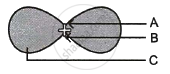
Name the parts A, B and C shown in the diagram and write their functions.

Where is the female gamete formed in flowering plants?
How do the insects help in cross-pollination?
In tobacco plant, the male gametes have 24 chromosomes.
What is the number of chromosomes in the zygote?
Draw a diagram of the longitudinal section of a flower and label the following parts.
Which type of development is observed in male gametophytes of plants?
Draw the diagram of a flower and label the four whorls. Write the names of gamete producing organs in the flower.
What is the structural unit of sexual reproduction in plant?
Given below is a diagram of a germinating seed. Label the parts that:
- gives rise to future shoot.
- gives rise to future root system.
- stores food.
- Assertion: Primary endosperm nucleus is diploid.
- Reason: It is the product of double fertilisation.
