Advertisements
Advertisements
Question
You are asked by your teacher to study the different parts of an embryo of a gram seed. Given below are the steps to be followed for the experiment:
I. Soak the gram seeds in plain water and keep them overnight.
II. Cut open a soaked seed and observe its different parts.
III. Take some dry gram seeds in a petri dish.
IV. Drain the excess water.
V. Cover the soaked seeds with a wet cotton cloth and leave them for a day.
The correct sequence of these steps is :
(A) III, I, V, IV, II
(B) III, I, II, IV, V
(C) III, IV, V, I, II
(D) III, I, IV, V, II
Advertisements
Solution
First of all, take some dry gram seeds in a Petri dish. Now, soak the seeds in plain water and keep them overnight. Drain the excess water. After that, cover the soaked seeds with a wet cotton cloth and leave them for a day. Finally, cut open a soaked seed and observe its different parts.
Hence, the correct option is D.
APPEARS IN
RELATED QUESTIONS
Write the names of those parts of a flower which serve the same function as the following do in the animals :
(i) testis,
(ii) sperm,
(iii) ovary,
(iv) egg
State the function of flowers in the flowering plants.
State the name of the functional unit concerned with sexual reproduction.
In a bisexual flower, inspite of the young stamens being removed artificially, the flower produces fruit. Explain.
What is meant by pollination?
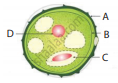
Identify the parts A, B, C, and D?
The anther wall consists of four wall layers where ______
In which of the following manner the arrangement of megaspores in a tetrad is observed in angiosperms?
Antipodal cells are present towards the ______ in an anatropous ovule.
Give any two examples of agents of pollination.
