Advertisements
Advertisements
प्रश्न
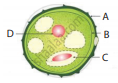
Observe the figure below. Write functions of the labelled parts.

Advertisements
उत्तर
- Gynoecium (Carpel): It is an essential whorl. It is consists of stigma, style and ovary. It acts as a female reproductive part of the flower. It is responsible for the production of female gametes.
- Androecium (Stamen): It is an essential whorl. It is consists of anther and filament. It acts as a male reproductive part of the flower. It is responsible for the production of male gametes.
- Calyx and corolla: Calyx and corolla are accessory whorls. They are responsible for the protection of inner (essential) whorls.
- Pedicel: Pedicel is a small stalk which supports the flower.
APPEARS IN
संबंधित प्रश्न
How does fertilisation occur in flowers? Name the parts of the flower that develop into (i) seed, and (ii) fruit after fertilisation.
Name and differentiate between the two modes of pollination in flowering plants.
Name the parts labelled as A, B, C and D in the diagram given below:

Write the names of those parts of a flower which serve the same function as the following do in the animals :
(i) testis,
(ii) sperm,
(iii) ovary,
(iv) egg
Name the swollen lower part of the carpel.
Fill in the following blank with suitable word :
Ovules contain ......... gametes of a plant.
Fill in the following blank with suitable word :
The ovary of a flower becomes ....... after fertilisation.
What is made in ovary of a flower?
Explain the terms 'self pollination'
What type of plants reproduce by sexual reproduction method?
Which among the following statements are true for unisexual flowers?
(i) They possess both stamen and pistil
(ii) They possess either stamen or pistil
(iii) They exhibit cross pollination
(iv) Unisexual flower possessing only stamens cannot produce fruits
(a) (i) and (iv)
(b) (ii), (iii) and (iv)
(c) (ii) and (iii)
(d) (i), (iii) and (iv)
Which of the following statements are true for sexual reproduction in flowering plants?
(i) it requires two types of gametes
(ii) fertilisation is a compulsory event
(iii) it always results in the formation of zygote
(iv) offsprings formed are clones
(a) (i) and (iv)
(b) (i), (ii) and (iv)
(c) (i), (ii) and (iii)
(d) (ii), (iii) and (iv)
Multiple choice question. Tick (✓) the correct choice:
Unisexual flowers are found in
- mulberry
- mustard
- pea
- sunflower
State whether the following statement is true (T) or false (F):
Stamens make egg cells.
Find the odd-one out, giving reason:
Anther, pollen grain, ovule male gamete
Mention the function of Stigma.
“Cell division is a type of reproduction in unicellular organism.” Justify.
A student is observing the temporary mount of a leaf peel under a microscope. Draw a labelled diagram of the structure of stomata as seen under the microscope
Define.
Inflorescence
Give scientific reason.
Flower is a structural unit of sexual reproduction in plants.
Match the following
| 1. | Petal | Opuntia |
| 2. | Fern | Chrysanthemum |
| 3. | Phylloclade | Attracts insect |
| 4. | Hooks | Spore |
| 5. | Sucker | Bignonia |
Identify the parts A, B, C, and D?
Which type of development is observed in male gametophytes of plants?
Sperm and egg nuclei fuse due to ______.
The flower of the Hibiscus plant is ______
The process of release of eggs from the ovary is called ______
Complete the table
| Carly x | ______ | ______ |
| ______ | petal | attract insects |
| Androecium | ______ | Male reproductive part |
| ______ | ______ | Female reproductive part. |
The ovaries of different flowers may contain ______.
State the number of sets of chromosomes present in a zygote.
Double fertilization means ______.
Sketch and label the essential and accessory whorls of flower.
Give any two examples of agents of pollination.
The pollen tube usually enters the embryo sac ______.
Explain the post fertilization changes that occur in the ovary of a flower.
