Advertisements
Advertisements
प्रश्न
Find an odd one out.
पर्याय
Stigma
Style
Pollens
Ovary
Advertisements
उत्तर
Pollens
APPEARS IN
संबंधित प्रश्न

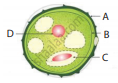
(i) Name the part marked 'A' in the diagram.
(ii) How dose 'A' reachese part 'B'?
(iii) State the importance of the part 'C'.
(iv) What happens to the part marked 'D' after fertilisation is over?
A student while observing an embryo of a pea seed in the laboratory listed various parts of the embryo as given below:
Testa, Tegmen, Radicle, Plumule, Micropyle, Cotyledon.
On examining the list the teacher remarked that only three parts are correct. Select three correct parts from the above list:
(a) Testa, Radicle, Cotyleddon
(b) Tegmen, Radicle, Micropyle
(c) Cotyledon, Plumule, Testa
(d) Radicle, Cotyledon, Plumule
A student identified the various parts of an embryo of a gram seed and listed them as given below :
(I) Testa
(II) Plumule
(III) Radicle
(IV) Cotyledon
(V) Tegmen
Out of these the actual parts of the embryo are :
(A) I, II, III
(B) II, III, IV
(C) III, IV, V
(D) II, IV, V
A flower may have either male or female reproductive parts. Such a flower is called ______.
The fusion of male and female gametes is termed as ______.
What is the function of a flower?
What are the reproductive organs in a flower?
What is the name of female organ of a flower (other than carpel)?
Fill in the following blank with suitable word :
The ovary of a flower becomes ....... after fertilisation.
Explain the terms 'cross-pollination'?
In tobacco plant, the male gametes have 24 chromosomes.
What is the number of chromosomes in the female gamete?
In tobacco plant, the male gametes have 24 chromosomes.
What is the number of chromosomes in the zygote?
In a bisexual flower, inspite of the young stamens being removed artificially, the flower produces fruit. Explain.
Fill in the blank by selecting suitable word:
A flower that bears both the male and the female parts is known as __________ flower.
Fill in the blank by selecting suitable word:
A flower bearing only male or female parts is known as __________ flower.
Multiple choice question. Tick (✓) the correct choice:
The male gamete is present inside the which germinates.
- the style
- the stigma
- the anther
- the ovary
Fill in the blank:
Seeds are formed from________.
Write one main difference between asexual and sexual mode of reproduction. Which species is likely to have comparatively better chances of survival – the one reproducing asexually or the one reproducing sexually? Give reason to justify your answer.
Prepare a slogan for campaign against female foeticide.
Fill in the blank by selecting suitable word:
Transfer of pollen grains from the anther to the stigma is known as______________.
What is cleistogamy? Write one advantage and one disadvantage of it, to the plant.
Find the odd one out:
__________ is present in unisexual flower.
Calyx : Sepals : : Corolla : ________________
Accessory whorls : Calyx and corolla : : essential whorls : ______________
Match the following
| 1. | Petal | Opuntia |
| 2. | Fern | Chrysanthemum |
| 3. | Phylloclade | Attracts insect |
| 4. | Hooks | Spore |
| 5. | Sucker | Bignonia |
Identify the parts A, B, C, and D?
Which of the following are the chemical components of the wall of pollen tube?
How many middle layers are generally present in the wall of the anther lobes?
The flower of the Hibiscus plant is ______
The seed that contains the future plant is called the ______
Give reason for the following:
Fertilization cannot take place in flowers if pollination does not occur.
Draw the diagram of a flower and label the four whorls. Write the names of gamete producing organs in the flower.
State the number of sets of chromosomes present in a zygote.
Double fertilization is exhibited by ______
Double fertilization is essential for formation of ______.
Triple fusion involves ______.
The number of pollen sacs in a dithecous anther is ______.
