Advertisements
Advertisements
प्रश्न
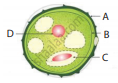
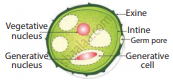
Identify the parts A, B, C, and D?
Advertisements
उत्तर
The parts A, B, C, and D are:
APPEARS IN
संबंधित प्रश्न
Draw a neat sketch of the carpel of a flower. Mark in it stigma, style and ovary.
Name the part of a seed which contains stored food.
Name the part of a seed which grows into root.
The correct sequence of reproductive stages occurring in flowering plants is ______.
The male reproductive part of a flower is ______.
Flowers showing ornithophily show few characteristic like ______.
Variations occur as a result of ______
Double fertilization is exhibited by ______
In flowering plants, the pollen grains are transferred to stigma by pollination but the female germ cells are present in the ovary.
Explain with the help of a labelled diagram (only concerned parts), how the male germ cell reaches the ovary.
In male reproductive whorl of a flower the archesporial cells are formed by ______.
