Advertisements
Advertisements
प्रश्न
__________ is present in unisexual flower.
पर्याय
Both androecium and gynoecium
Only androecium
Only gynoecium
Androecium or gynoecium
Advertisements
उत्तर
Androecium or gynoecium is present in unisexual flower.
APPEARS IN
संबंधित प्रश्न
A student was asked to observe and identify the various parts of an embryo of a red kidney bean seed. He identified the parts and listed them as under:
I. Tegmen
II. Testa
III. Cotyledon
IV. Radicle
V. Plumule
The correctly identified parts among these are
(A) I, II and III
(B) II, III and IV
(C) III, IV and V
(D) I, III, IV and V
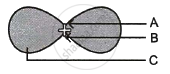
Name the parts labelled as A, B, C and D in the diagram given below:-

What is pollination?
State significance of pollination.
Name the parts labelled as A, B, C and D in the diagram given below:

"The chromosomal number of the sexually producing parents and their offspring is the same." Justify this statement.
State the function of flowers in the flowering plants.
How is the process of pollination different from fertilization?
A flower may have either male or female reproductive parts. Such a flower is called ______.
Mature ovary forms the ______.
State the name of the functional unit concerned with sexual reproduction.
Name the swollen lower part of the carpel.
Explain the terms 'self pollination'
Name the part of a seed which grows into shoot.
In tobacco plant, the male gametes have 24 chromosomes.
What is the number of chromosomes in the zygote?
Which of the following statements are true for flowers?
(i) Flowers are always bisexual.
(ii) They contain sexual reproductive organs.
(iii) They are produced in all groups of plants.
(iv) after fertilization they give rise to fruits.
One of the following occurs in the reproductive system of flowering plants as well as that of humans. This is :
(a) vas deferens
(b) anther
(c) ovary
(d) style
Multiple choice question. Tick (✓) the correct choice:
The male gamete is present inside the which germinates.
- the style
- the stigma
- the anther
- the ovary
What is phototropism?
Explain sexual reproduction in plants.
Fill in the blank by selecting suitable word:
Transfer of pollen grains from the anther to the stigma is known as______________.
Fill in the blanks and rewrite the completed statements:
Lymph flows in _______________ direction.
What is cleistogamy? Write one advantage and one disadvantage of it, to the plant.
Pollen grains are formed by _________ division in locules of anthers.
Bisexual : Hibiscus : : Unisexual : ___________
Pollen grains from anther are transferred to the stigma.
Explain the sexual reproduction process in plants with a diagram.
The essential parts of a flower are ______.
Identify the parts A, B, C, and D?
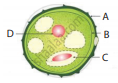
How many middle layers are generally present in the wall of the anther lobes?
Sperm and egg nuclei fuse due to ______.
Conidia are formed endogenously while zoospores are formed endogenously.
Trace the path a male gamete takes to fertilise a female gamete after being released from the penis.
In flowering plants, the pollen grains are transferred to stigma by pollination but the female germ cells are present in the ovary.
Explain with the help of a labelled diagram (only concerned parts), how the male germ cell reaches the ovary.
Given below is a diagram of a germinating seed. Label the parts that:
- gives rise to future shoot.
- gives rise to future root system.
- stores food.
- Assertion: Primary endosperm nucleus is diploid.
- Reason: It is the product of double fertilisation.
