Advertisements
Advertisements
प्रश्न
Name and differentiate between the two modes of pollination in flowering plants.
Advertisements
उत्तर
Two types of pollination can be found in flowering plants:-
- Self-pollination
- Cross-pollination
Differences between the two are given below:-
| Self-Pollination | Cross-Pollination |
| The pollen needs to be transferred from the stamen to the stigma. If this transfer of pollen occurs in the same flower, it is referred to as self-pollination. | The pollen is transferred from one flower to another, it is known as cross-pollination. |
| It occurs in bisexual flowers. | It occurs in both bisexual and unisexual flowers. |
| It refers to the transfer of pollen grains from anther to stigma of the same flower or to another flower of the same plant. | It refers to the transfer of pollen grains from anther to stigma of flowers belonging to two different plants. |
| It is not necessary to use pollinators. | This transfer of pollen from one flower to another is achieved by agents like wind, water or animals. |
APPEARS IN
संबंधित प्रश्न
Where is the male gamete formed in flowering plants?
In tobacco plant, the male gametes have 24 chromosomes.
What is the number of chromosomes in the zygote?
Answer the following question.
List two agents of pollination?
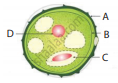
Identify the parts A, B, C, and D?
In which part of the flower germination of pollen grains takes place?
Where does the endothecium layer of anther lobes is present?
In human beings, fertilization occurs in the ______
Pollen grains are produced by ______
Trace the path a male gamete takes to fertilise a female gamete after being released from the penis.
Type of sexual reproduction is ______.
