Advertisements
Advertisements
प्रश्न
How is the process of pollination different from fertilization?
Advertisements
उत्तर १
- Pollination is the process of transfer of pollens from anther to stigma. It occurs with the help of certain pollinators such as air, water, birds, or some insects.
- Fertilization is the fusion of the male and female gametes. It occurs inside the ovule and leads to the formation of a zygote.
उत्तर २
| Pollination | Fertilization |
| The transport of pollen grains from the anther to the stigma is called pollination. | The funion of male and female games is called fertilization. |
| In this, the cells are not attached. | In this, the male and female cells are joined. |
| Usually, one has to wait for carriers to complete this action. | This action is transactional. |
संबंधित प्रश्न

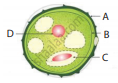
(i) Name the part marked 'A' in the diagram.
(ii) How dose 'A' reachese part 'B'?
(iii) State the importance of the part 'C'.
(iv) What happens to the part marked 'D' after fertilisation is over?
A student while observing an embryo of a pea seed in the laboratory listed various parts of the embryo as given below:
Testa, Tegmen, Radicle, Plumule, Micropyle, Cotyledon.
On examining the list the teacher remarked that only three parts are correct. Select three correct parts from the above list:
(a) Testa, Radicle, Cotyleddon
(b) Tegmen, Radicle, Micropyle
(c) Cotyledon, Plumule, Testa
(d) Radicle, Cotyledon, Plumule
Mention the changes a flower undergoes after fertilisation.
Mature ovary forms the ______.
Fill in the following blank with suitable word :
The.......... at the base of the carpel contains egg cells.
In a bisexual flower, inspite of the young stamens being removed artificially, the flower produces fruit. Explain.
In what ways is fertilisation in a plant different from fertilisation in a human?
Put a tick mark (✓) against the correct alternative in the following statement
Pollen is produced in the:
Fill in the blank by selecting suitable word:
A flower that bears both the male and the female parts is known as __________ flower.
Write the names of male and female reproductive parts of a flower.
Prepare a slogan for campaign against female foeticide.
Match the following
| 1. | Petal | Opuntia |
| 2. | Fern | Chrysanthemum |
| 3. | Phylloclade | Attracts insect |
| 4. | Hooks | Spore |
| 5. | Sucker | Bignonia |
Identify the parts A, B, C, and D?
In which part of the flower germination of pollen grains takes place?
Where does the endothecium layer of anther lobes is present?
Identify the female gametophyte in angiosperms.
In a flowering plant, archesporium gives rise to ______.
What is the function of calyx?
Triple fusion involves ______.
