Advertisements
Advertisements
Question
Briefly explain the following statement from the text.
“You neither travelled to the past nor the future. You were in the present experiencing a different world.”
Advertisements
Solution
The statement is from the text The Adventure written by Jayant Vishnu Narlikar. These words were said by Rajendra to Professor Gaitonde in the context of his entering into a different state of consciousness, which revealed a different version of the outcome of the Battle of Panipat. According to this version as revealed to Prof. Gaitonde, the Marathas emerged victorious in the battle, which is contrary to the facts as presented in the History books. The statement reveals that one can experience an altogether different world without travelling to the past or the future. Prof. Gaitonde was witnessing a different set of events remaining in the present. It was not a matter of fantasy or imagination on the part of Prof. Gaitonde but a different reality as revealed to him. Such alternative realities occur due to bifurcation leading to a different course of events simultaneously. In the present context, the bifurcation took place in the Battle of Panipat so that in one course of the event the Marathas emerged victoriously and in another, they lost the battle. The History books mention that the Marathas lost the battle of Panipat, which is also true and the other version as revealed to Prof. Gaitonde is also true.
APPEARS IN
RELATED QUESTIONS
Anne's relationship with her mother was never simple. What created the tension and discord? Why
Answer any four of the following questions in 30-40 words each:
(a) Why did Franz not want to go to school that day?
(b) What was Sophie's ambition in life? How did she hope to achieve that?
(c) What kind of pain does Kamala Das feel in 'My Mother at Sixty-six'?
(d) How can 'mighty dead' be things of beauty?
(e) Why was the Maharaja once in danger of losing his kingdom?
(f) What was the basic plot of each story told by Jack?
Read the following passage and complete the activities given below:
Read the following passage and do the activities:
B1 Match:
Match the areas given in Column ‘A’ with the description of Mehendi design given in Column ‘B’:
| 'A' | 'B" | ||
| (i) | North African | (a) | A mix of Indo-Pakistani and Arabic design |
| (ii) | Indian | (b) | Delicate loops and curves, paisleys, teardrops |
| (iii) | Arabic | (c) | Geometrical images |
| (iv) | South Asian | (d) | Local textiles, paintings, and architecture |
Henna comes from the leaves of the plant Lawsonia inertias. The plant grows in hot and dry climes and is native to North Africa, the Indian subcontinent and the Middle East. The leaves of the plant are dried and crushed to powder. Various additives such as coffee decoction, tea, lime juice, Mehendi and eucalyptus oil are mixed with the henna powder to increase the potency of the dry, this also helps to bind the powder to a paste-like consistency. The mixture is applied through cones in intricate patterns depending on the region of use.
Album of Patterns
Four major styles can be found in the vast dictionary of Mehendi designs. Earlier the application was restricted to hand and feet, but the adoption of Mehendi by different cultures throughout the world has seen experimentation on different body parts including the neck naval and back.
North African patterns rely on geometrical images to trace the shape of hands and feet, Arabic designs borrow heavily from local textiles, paintings, and architecture. These are more spaced out, to allow the design to stand out boldly from the skin parts left untouched by henna. The Indian style comprises of delicate loops and curves, paisleys, teardrops and flowers that give a dainty filigreed glow-like effect. Though intricate patterning is the name of the game today, this trend took off in India only during the 20th century. The patterns preferred by the South Asian countries are mixed with Indo-Pakistani and Arabic design schemes. Chinese and Celtic symbols now find a place in the vast repertoire of Mehendi designs as well.
B2 Complete:
Complete the following and write:
(i) The procedure before applying henna _______
(ii) The reasons for using additives _______
(iii) The suitable climatic conditions for the henna plant _______
(iv) Mehendi is used on _______
B3 Find words:
Look at the following description and find out proper words from the passage and write:
(i) Existing naturally in the place : - n _______
(ii) Consist of something: - c _______
(iii) Delicate decoration made from gold, silver and copper wire: - f _______
(iv) Substance that is added in small quantity : - a _______
B4 Language study:
Fill in the blanks with suitable subordinators given in the box:
| as well as, so that, however, which |
(i) The mixture is applied through cones in intricate patterns _______ depend on the region of use.
(ii) The intricate pattern is the name of the game of today _______, this trend took off in India, recently.
(iii) North African pattern relies on geometrical images ______ they can trace the shape of hands and feet.
(iv) The patterns preferred by the South Asian countries are mixed with Indo-Pakistani _______ Arabic design schemes.
B5 Personal Response:
Which Mehendi design do you like? Why?
|
The energy stored in coal and petroleum originally came to the earth from the sun. The bulk of the present-day supplies was laid down some 200 to 600 million years ago, when tropical conditions were widespread. Lush, swampy forests produced huge trees; warm coastal seas swarmed with microscopic forms of life. When these organisms died, much of their tissue was recycled as it is today — through scavenging and decay. But a significant amount of dead plant and animal material was covered with mud, which prevented complete decomposition. With the passage of time, layer upon layer of the fine sediment was deposited over the once-living material; the sheer weight turned the sediments to rock. Sandwiched between the layers, both coal and petroleum were produced and preserved under pressure. Coal was formed mostly of giant fern-like plants that have only small counterparts today. Coal may still be forming here and there on earth, but conditions are not right for the production of significant quantities. |
Number the points.
Narrate 'The Tale of Melon City' in your own words.
Discuss in small groups.
‘On reading Shelley’s A Defence of Poetry, the question insistently occurs why there is no similar A Defence of Science written by a scientist of equal endowment.’
Name the world-famous personality who reached great heights despite of humble circumstances.
Go through the poem and state whether the following statement is true or false.
Planners take public consent for the alterations they make in the old structures of the city.
Write a sentence each about three of your friends. Each time you should say what your friend cannot do, and yet, pay a compliment to your friend.
Fill in the gap, choosing a word from the bracket to make an appropriate comparison.
(tall / quiet / humble / merry / busy / slippery / fast / sly / slow / big)
as ______ as an elephant
'It all builds on the charm of the 1967 film, which by itself is a must-watch for any child.'
Explain this sentence in the context of the movie, focusing on the two given phrases- 'Charm of the 1967 film' and 'must-watch'.
Comment on the given statement after reading the given dialogue -
But when I saw a man in trouble, I could never help trying to set him out of it.
Its human to help others. Here the statement tells us that ____________________________.
Choose the odd one out :
Flute, Snug, Quince, Cobweb.
Prove with the theme of the play/extract that the deeper human emotion which profoundly interested Shakespeare was jealousy.
Read the passage and find the verbs used with the following nouns and phrases:
- volcano
- molten rock
- volcanic mountain
- dust
- 165 village and towns
- the wind and the sea
- seeds
- bird
Shakespeare’s poetry has come to be valued for its own sake on the stage. Comment with reference to the play ‘A Midsummer Night’s Dream.’
Turn the story into a play as a group activity and present the scenes in the classroom.
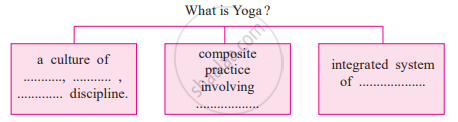
Complete the following diagram.
Answer in your own words.
How is the boy from the 1500s dressed?
Spot and write any three alliterative phrases or sentences from the poem.
(Alliterative phrases/sentences are those in which the same sound is repeated.)
Summarise this poem in your own words in 8 to 10 lines, highlighting only the main points.
Write the characteristics of a good listener.
Find out when and where we get strawberries in Maharashtra.
Describe the following with the help of the (The Twelve Months) story.
Winter
Write a short note on ‘money’.
____________ had provided Prospero formerly with books and provisions.
Identify the character or speaker.
Now pray tell me, sir, your reason for raising this sea-storm?
Read the incident again and answer the following question.
When did the writer remember the fact that he had to buy something for Mr. Gilson?
Usha went to visit her______ house after shopping in the market.
Read the lines and answer the questions.
Deep inside the mountain
the adventures hide themselves.
Where do adventures hide?
Did he hire Kiouni? Why?
Read the poem aloud in pairs
Work in pairs and answer the following.
Write the rhyme scheme of the poem.
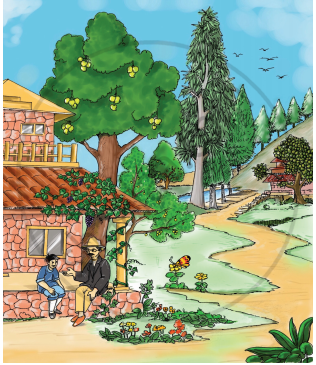
Listen to your teacher read the first part of the story. Many things described in the story can be seen in the picture. Find and name them.
What is as sharp as a blade?
Gulliver was hailed as a hero because he ______.
Complete the sentence given below with word/phrase.
The wild dogs came to the spot to catch______.
What sight made the farmer thankful?
How does Patna differ from Delhi?
It ploughs soil before _________.
Rearrange the story in order.
- Jaswant stayed back in his post.
- He killed 300 chinese soldiers in the battle.
- He fired weapons from separate points.
- Sela and Nura helped him in the battle.
- Jaswant shot himself to death.
- Chinese soldiers caught the man who supplied food.
- He was awarded the Mahavir Chakra.
Look at the picture and Choose the correct word.

Choose the correct option from the given homophones.
I saw a ______ on the flower.
Choose the correct option from the given homophones.
The wind ______off the leaves.
Identify the character or the speaker.
“I will camp here for the night.”
Identify the character or the speaker.
“Oh no! What shall I do now?”
Who is the hero of this story?
Name the character or speaker.
"Did someone scold you?"
Did Nandhini have fever?
Read the advertisement and answer the question given below.

What is free, for LED TV?
Read the advertisement and answer the question given below.

When does the offer end?
List the things that humans should save.
Pick out the rhyming words and write.
| green | |
| human | |
| will | |
| welfare |
What is the main idea of the story?
What does the poet want us to do at night?
Did the girl buy a picture book?
What did Pinocchio say in the end?
Now, read the following passage on “Laughter Therapy” and answer the questions that follow.

- Laughing is an excellent way to reduce stress in our lives; it can help you to cope with and survive a stressful life. Laughter provides full-scale support for your muscles and unleashes a rush of stress-busting endorphins. Since our bodies cannot distinguish between real and fake laughter, anything that makes you giggle will have a positive impact.
- Laughter Therapy aims to get people laughing, in groups and individual sessions and can help reduce stress, make people and employees happier and more committed, as well as improve their interpersonal skills. This laughter comes from the body and not the mind.
- Laughter Yoga (Hasya yoga) is a practice involving prolonged voluntary laughter. It aims to get people laughing in groups. It is practiced in the early mornings in open-parks. It has been made popular as an exercise routine developed by Indian physician Madan Kataria, who writes about the practice in his 2002 book ‘Laugh for no reason'. Laughter Yoga is based on the belief that voluntary laughter provides the same physiological as well as psychological benefits as spontaneous laughter.
- Laughter yoga session may start with gentle warm-up techniques which include stretching, chanting, clapping, eye contact and body movements to help break down inhibitions and encourage a sense of playfulness. Moreover, laughter is the best medicine. Breathing exercises are used to prepare the lungs for laughter followed by a series of laughter exercises that combine a method of acting and visualization techniques. Twenty minutes of laughter is sufficient to augment physiological development.
- A handful of small-scale scientific studies have indicated that laughter yoga has some medically beneficial effects, including cardiovascular health and mood. This therapy has proved to be good for depressed patients. This laughter therapy also plays a crucial role in social bonding.
Answer the following.
a. How does laughter help one to cope with stress?
b. Which word in the text (para 2) means the same as ‘dedicated'?
c. Why do you think voluntary laughter provides the same physiological as well as psychological benefits as spontaneous laughter?
d. ‘Laughter is the best medicine’. Explain.
e. Given below is a set of activities. Which of these are followed in the ‘Laughter Yoga’ technique?
- sitting on the ground with legs crossed
- body movements
- clapping
- closed eyes
- breathing exercises
- chanting
- stretching of arms and legs
- bending backwards
- running/jogging
- eye contact
f. ‘Laughter therapy also plays a crucial role in social bonding’. How?
