Advertisements
Advertisements
प्रश्न
Discuss the following in pairs or in small groups.
“Before you begin experimenting you need to perfect the technique with which you experiment.”
Advertisements
उत्तर
There is a tendency among people that they they start experimenting without perfecting the technique with which one experiments. Great exponents of arts, however, often recommend that improvisation should follow perfection of the technique with which one begins with. Otherwise, the experiment becomes an end in itself without bearing any fruit.
APPEARS IN
संबंधित प्रश्न
Write a character sketch of Mrs. Van Daan.
Answer the following in 30-40 words each:
(a) Why do you think the booking clerk refused to accept the money? Why did the narrator get out so fast?
(b) Why could the Russian research vessel, ‘The Akademik Shokaskiy’ not move any further? What did the captain decide then?
(c) What sort of hunts did the Maharaja offer to organize for the high-ranking British officer? What trait of the officer does it reveal?
(d) What did Jo want the wizard to do when Mommy Skunk approached him?
Briefly comment on:
Tsetan’s support to the author during the journey.
Discuss in groups of four.
The accounts of exotic places in legends and the reality.
The narrative has many phrases to describe the scenic beauty of the mountainside like:
A flawless half-moon flated in a perfect blue sky.
Scan the text to locate other such picturesque phrases.
Put down the images that come to your mind immediately when you see the words in the box.
| Cat cupboard wall pond bird |
What impression of the character of Iona do you get from this story?
Both Ramanand and Azam Khan seem to have very fixed views. How does Ramanand score over Azam Khan towards the end of the story?
Explain the line:
Within a week it sickened to a raging fever and its pulse went up to a hundred and fifty in the shade.
Discuss in pairs or groups of four.
It is difficult to part with personal items like a watch which have a sentimental value attached to them.
Find from the story one word for the following.
the highest-ranking officer in the Municipality of a city/town ______
Read the story and complete the following.
When Revathi played her favourite raga, the plants began to move because, ____________.
Read the Preamble of the Constitution of India given in your textbook. Pick out a word that refers to the following.
Brotherhood
State whether the following statement is True or False. Correct the false statement by finding evidence from the poem to support your remark.
The poet repents planting the cherry tree.
Make a list of archaic words from the poem and give their modern equivalents.
Find out from a vet or from a website, what precaution a vet has to take when he/she is called to treat wild, dangerous animals?
Make point-wise notes of the same.
Select a season of your choice and give the following details:
- Time of the year -
- Characteristics- crops, festivals, etc.
- Features/changes - climate/weather/temperature etc.
- Advantages/Disadvantages -
The ______ bees make honey from nectar.
Pick out three lines that create an image in your mind of bees busy at work.
Refer to a good dictionary that carries phonetic transcriptions printed next to words. The word below is familiar to you. Copy the phonetic transcription from the dictionary and say it aloud as you write.
work ........
Form suitable groups and discuss the following.
You have heard/read stories of Akbar and Birbal, Tenali Raman, Mulla Nasruddin. Recollect and write down the names of those stories.
Pick out those aspects of a story that you find a common in all their stories.
- Humour
- Supernatural event
- Wisdom
- Suspense
- Magic
- Beauty of Nature
- Wit
- Play upon words
- Sadend
- Violence
Answer the following question in short.
Explain the significance of the title.
What can you do to show your love, respect, and support to the soldiers who fight for the country? Discuss this in the classroom. You can send greeting cards to them on various occasions, with the help of your teacher.
Form groups and discuss the following question:
Why are the clothes compared to living things?
State the difference between poetry and drama.
Rewrite the poem in the form of a prose passage.
Visit a library:
Read Lewis Carroll’s book ‘Alice in Wonderland.’
Read the poem : ‘Where lies the land...’ by A. C. Clough.
Discuss the following.
Abdul gets what he wants in the end. What is the major factor that contributes to this success?
List the adverbs/adverbial phrases used in the passage.
The table-tennis set was gifted by ______.
Write the characteristics of a good listener.
Read the poem and answer the following.
Which are the two different places where strawberries grow?
Name the following.
Did not let the passes go waste.
Find out how the following game is played.
Kho-Kho
Find out how the following game is played.
Badminton
How was Gulliver tied down on the seashore?
List the characters in the play.
Human characters
What is the world wide web?
Identify the character or speaker.
I will tie you neck and feet together.
Were the policemen willing to leave the house?
Why did Herman and the author slam the doors?
Why did Chulong catch the bird?
What were Chulongs plans for the bird?
Answer the following question in about 80-120 word.
If you were to live in the Complaining Street, how would you deal with the people who grumble?
An Anagram is a word or a phrase formed by rearranging the letters of a different word or phrase, typically using all the original letters exactly once.
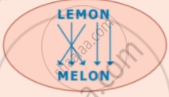
Now try to solve these anagrams
| 1. | ELBOW | |
| 2. | SECTION | |
| 3. | VIEWER | |
| 4. | RIPPLES | |
| 5. | NEEDLESS |
Find a sentence/word from the text which express the following.
One of the qualities of the teacher.
Read these lines and answer the questions given below.
Where the voice of the wind calls our wandering feet
Whose ‘Wandering feet’ is referred to here?
Read the comic strip again. Make groups of four and frame some questions on what you have read. Each group should ask a question in turns. You cannot repeat the same question. The team which asks more questions is the winner.
e.g:
- Which are the foreign vegetables mentioned?
- What was sad for Columbus?
Where did the space shuttle land?
How did Santhosh record his diary?
Why did the audience cheer?
Identify the character/speaker.
"Grow the fish at home, Anbu."
Robinson sailed England after ______ years.
Do you love to seek answers to the questions?
What do you save? Why it is needed?
The king looked for a______.
Ani valued honesty.
How should teenagers guard against cyber crimes?
