Advertisements
Advertisements
प्रश्न
Discuss in groups of four.
The accounts of exotic places in legends and the reality.
Advertisements
उत्तर
All the exotic places on earth have been much written and talked about already either in legends or articles. There are several ancient myths attached to such places. It has been seen in many cases, especially the river sources and mountain caves are associated with religion and declared holy. However, in reality these places are nothing but nature's beautiful treasures. Places like Kailash and Manasarovar occupy a prominent place in Hinduism as well as Buddhism.
APPEARS IN
संबंधित प्रश्न
B1. Select
Fill in the blanks choosing the correct alternatives from those given in the bracket:
(i) The author was inspired and motivated to read ............................................ by the time she was eleven.
[Shakespeare, Chaucer, G.B. Shaw]
(ii) Every lesson .......................... ......... took was spiced with half a dozen or more anecdotes.
[Mrs. Rowlands, Sister Monica, Mr. A.N. Patil]
(iii) The teachers helped the narrator to become ..................................... . .
[confident, happy, independent]
(iv) Mrs. Cynthia Nesamani and Sister Monica gave .......................................... to the narrator.
[freedom to do what he wanted, advice to do something, instructions to produce better results]
In a way, one of the greatest gifts any teacher can give a student, I think, is to inculcate a curiosity to learn.
I've been incredibly lucky to have at least one such teacher at every stage in my life. The first was Mrs. Rowlands who taught me in primary school. She taught me to read without ever pushing me. She made me want to read more by giving 'me some of the most interesting children's books available. And although I still love to go back to those books from time to time, it was only because of her that I was able to read Shakespeare by the time I was ten, and Chaucer a year later.
In later years, it was Mr. A.N. Patil, my Marathi and Hindi Teacher who made a huge impression on me. Every lesson he took, was spiced with half a dozen or more anecdotes from a wide variety of subjects: among them history, politics, religion and sociology. I was, and still am in awe of his knowledge, which despite rather desperate attempts, I doubt I'll ever be able to match.
There have also been other teachers who helped me to try to become independent: to think and act for myself using my own judgement, which to my mind has been just as, if not more important, than actually learning anything.
After all, it's much too easy to become a completely useless repository of facts and little else.
Two teachers whom I remember in particular are Mrs. Cynthia Nesamani and Sister Monica, both taught me in school. The former, by and large, gave me a free rein to do what I wanted to do. I, being one of those people who dislike instructions, she helped me to produce much better results than I'd have otherwise done.
B2.Complete
Read the extract and complete the following:
The teacher can
(i) .............
(ii) ..............
(iii )..............
(iv).................
B3. Similar word
Look at the following sentences arid pick the word having similar meaning to the given word and rewrite:
(i) Spiced His conversation is always with a lot of humour. (made interesting, garnished, flavoured)
(ii) Repository
The library should not merely be a ................ of books. (store-house, reservoir, tank)
(iii) Inculcate
It is the responsibility of the parents and teachers to .......values in the child's formative years. (imbibe, give, show)
(iv) Incredibly
I have been .. lucky to have at least one such teacher at every stage in my life. (importantly, unbelievably, beautifully)
B4. Language study
(i) There have also been other teachers. They have helped me to try to become
independent. (Combine using 'who')
(ii) It was only because of her that I was able-to read Shakespeare.
(Rewrite beginning with: If it was not for her, ).
B.5 Out motivators
Look at the following table and complete it by presenting your own views
| Personalities | Influence on your life |
| (i) Teachers | |
| (ii) Parents | |
| (iii) Relatives | |
| (iv) Friends |
Describe Miss Stapleton's first encounter with Sir Henry in about 125 words
Read the passage given below and answer the questions that follow:
The term dietary fibres refers collectively to indigestible carbohydrates present in plant foods. The importance of these dietary fibres came into the picture when it was observed that the people having diet rich in these fibres, had low incidence of coronary heart disease, irritable bowel syndrome, dental caries and gall stones.
The foodstuffs rich in these dietary fibres are cereals and grains, legumes, fruits with seeds, citrus fruits, carrots, cabbage, green leafy vegetables, apples, melons, peaches, pears etc.
These dietary fibres are not digested by the enzymes of the stomach and the small intestine whereas most of other carbohydrates like starch and sugar are digested and absorbed. The dietary fibres have the property of holding water and because of it, these get swollen and behave like a sponge as these pass through the gastrointestinal tract. The fibres add bulk to the diet and increase transit time in the gut. Some of these fibres may undergo fermentation in the colon.
In recent years, it has been considered essential to have some amount of fibres in the diet. Their beneficial effects lie in preventing coronary heart disease, and decreasing cholesterol level. The fibres like gums and pectin are reported to decrease postprandial (after meals) glucose level in blood. These types of dietary fibres are recommended for the management of certain types of diabetes. Recent studies have shown that the fenugreek (Methi) seeds, which contain 40 per cent gum, are effective in decreasing blood glucose and cholesterol levels as compared to other gum containing vegetables.
Some dietary fibres increase transit time and decrease the time of release of ingested food in colon. The diet having less fibres is associated with colon cancer and the dietary fibres may play a role in decreasing the risk of it.
The dietary fibres hold water so that stools are soft, bulky and readily eliminated. Therefore high fibre intake prevents or relieves constipation.
The fibres increase motility of the small intestine and the colon and by decreasing the transit time there is less time for exposure of the mucosa to harmful toxic substances. Therefore, there is a less desire to eat and the energy intake can be maintained within the range of requirement. This phenomenon helps in keeping a check on obesity. Another reason in helping to decrease obesity is that the high-fibre diets have somewhat lower coefficients of digestibility.
The dietary fibres may have some adverse effects on nutrition by binding some trace metals like calcium, magnesium, phosphorus, zinc and others and therefore preventing their proper absorption. This may pose a possibility of nutritional deficiency especially when diets contain marginal levels of mineral elements. This may become important constraints on increasing dietary fibres. It is suggested that an intake of 40 grams dietary fibres per day is desirable.
(Extracted from ‘The Tribune’)
(a) On the basis of your reading of the above passage make notes on it in points only, using recognizable abbreviations wherever necessary. Also suggest a suitable title. (5)
(b) Write a summary of the above in about 80 words. (3)
Attempt the following in 150-200 words.
Why does Anne call herself 'a bundle of contradictions'?
Describe the role of Mr. Keith in the life of Helen in ‘The Story of My Life’.
What caused a blow to man’s ego ?
Describe the shifts in the narration of the events as indicated in the three sections of the text. Give a subtitle to each section.
Do you think that the ruled always adopts the language of the ruler?
Look up the dictionary for the meaning of the word ‘diaspora’. What do you understand of the Indian diaspora from this piece?
How is colour highlighted in the poem and why? List all the words in the poem that suggest colour.
Discuss in pairs or in small groups
The description of novels as organisms.
How does the poet bring out the immortality of the bird?
Name the world-famous personality who reached great heights despite of humble circumstances.
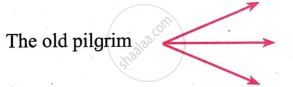
Read the poem and write 3 qualities of the following.
Read the Preamble of the Constitution of India given in your textbook. Pick out a word that refers to the following.
Brotherhood
Using a dictionary/internet note down the main difference between a remote-sensing satellite and a natural satellite.
Read the lesson and name the following.
The Father of modern neurosurgery ______
State whether the following statement is True or False:
Lysander and Demetrius fall in love with Helena as a result of the love potion.
Write a few lines about each character.
Add ten more words to the list on your own. Each of the component words must be meaningful.
What did Mr. Gizare appreciate the most?
An activity:
Speak fast, think faster! Form groups of 4-6. Discuss each of the following topics. Then each person in the group should choose a topic and speak about it for one minute. Try to say as many sentences as you can in that time
What is not likely to happen or will never happen...
‘It won’t rain in the classroom... I won’t ever see a live dinosaur... The sun will never set in the east...’ etc.
Draw word webs for the following. Begin with the given word and go on writing as many other words associated with it, as you can. Use these words to write other related words to form a word web.

Write about one occasion when you have behaved like -
Mr. Nobody
Form groups of 4-5. Read the following sentences aloud. Using your imagination and with the help of group discussion, write other situations in which the sentences can be used.
- The outcome: disappointment and anger.
- The hour of battle had sounded
- What a chase!
- This was our chance, .........
Using your imagination, write about a beautiful region - its landforms, water bodies, flora and fauna, night sky, people, etc.
Choose the appropriate phrase to insert in the gap, to make the sentence meaningful. Use the appropriate form of the verb.
The minister ______ his personal body-guards.
The poet uses a free, conversational style in his poem. It is also called Colloquial style.
Pick out and write down such lines or expressions that support the above statement.
- ______ you have not done what I asked.
- _______________________.
- _______________________.
- _______________________.
- _______________________.
- _______________________.
Listen carefully and guess how the sentence would end.
This step is broken. Please be ______.
What did the Judge tell Ahmad?
What is ‘e-mail’ or electronic mail?
Read the following line from the poem and answer the question given below.
Let us learn to walk with a smile and a song,
No matter if things do sometimes go wrong;
- What does the poet expect everyone to learn?
- What should we do when things go wrong sometimes?
And whether their station be high or humble,…
Pick out the alliteration from the above line.
In New York, Mr. Scotti left the plane because he thought he.
The wind hurried and passed through the ______
What should we learn from our teachers?
Write down the word that alliterate in the poetic line below
Festival of Flowers.
Read Section – III (para 1 and 4) and answer the following questions.
Paragraph 1
1. Who listened to the chipping sound of the chisel? ______
2. Who was working with the hammer and chisel? ______
Paragraph 4
1. Who was staring? ______
2. Who was the young stone carver? ______
3. What was he working on? ______
Identify the speaker/character.
Don't worry, Madam, it's only a warning.
The hatchlings use a tiny egg-tooth to come out of the eggs.
It is a problem for sea turtles to come ashore because ______.
When Amma said,'Don’t upset our foreign visitor' she meant______.
Read the questions related to the three sports stars you have read about and tick the appropriate boxes.
 |
 |
 |
|
| 1. Who won the Olympic 2016 silver medal in badminton? | |||
| 2. Who is the role model for her siblings? | |||
| 3. Whose mother tongue is Tamil? | |||
| 4. Whose attitude is 'never-say-die spirit'? | |||
| 5. Which player works in the Police Department? | |||
| 6. Which player holds the record for the highest individual score in cricket? |
The people were making all kinds of sounds because ______.
Write the story in your own words
Complete the sentence given below with word/phrase.
The wild dogs came to the spot to catch______.
What is a sol? How many sols make a year?
Find the rhyming word from the poem.
Crowd - ______.
Complete the following sentence using the prepositions from the option.
The summer vacation ends _____ Monday.
Whom did Vicky want to do all his work?
The bird-catcher let the pigeon jump into the fire.
What did the five friends call themselves?
______was with Robinson.
Do you love to seek answers to the questions?
Who were the friends referred in the story?
Moles dig ______ to catch earth worms.
Mugund did not cut the raw wood.
What incident made Mugund make a wooden drum?
Circle the words where you get a zzzzz sound. One is done for you.
| honeybees | |||
| price | prize | maze | face |
| rice | rise | blaze | fizz |
| lazy | lacy | busy | racy |
| raise | rays | race | ace |
| chase | this | these | frosty |
Read the passage given below:
| 1. | Very often, we do not take the first step towards a good cause because we say to ourselves, "The task is so big. What can I do alone?" So nothing gets done. There is much talk about environmental protection, air pollution and saving our forests. Do we really care? If we do, here are a few things we can do to make our surroundings more pleasant. |
| 2. | It is good to adopt a two-uses-attitude! By putting an article to a second use, we are giving it a longer lease of life and using up less raw material from nature. One of the worst things we do is abuse of paper. The clean sides of envelopes can be used to write small notes, lists and reminders around the house. The more paper we use, the more trees will have to be cut down. For the same reason, we should avoid the use of paper napkins or paper plates. Cloth napkins are just as good, for they can be washed and used over and over again. |
| 3. | Another area which needs the most urgent attention is effective garbage disposal. People who are conscious about it follow rules and laws strictly. As a result, their neighbourhoods are clean and beautiful Similarly, each one of us can contribute to a cleaner environment. All kitchen waste should be collected separately. Those of you who have green fingers can turn this into valuable manure. Dig a pit and put the kitchen waste into it. When the pit is a little over half full, cover it up with mud. Let nature do the rest. Within three or six months, we will have a good garden manure. It can also be done as a community project by digging a large pit in the colony. Do take help of all the members, for nothing succeeds like co-operation |
| 4. | A lot of people don't care about the environment because they don't understand the adverse effect that society has on it. It is important to convince people to care about the environment. The first step would be to convince people to change by providing simple alternative solutions and ways of doing things. Theintemet is a powerful tool and a group on social media of like-minded people can be formed. People can share environmental stories and issues, as well as pool in solutions and alternatives to educate one another. With the current state that our planet is in, it is imperative that people actively care about the environment and most importantly to act now. |
Based on your understanding of the passage, answer any Eight questions from the nine given below:
- Why don't we take the first step towards a good cause?
- What is a two-uses-attitude?
- What can we do to avoid the abuse of paper? (any two points)
- What is the result of an effective way of a garbage disposal?
- What procedure can one adopt for kitchen waste?
- How can making of garden manure be done as community project?
- How long does it take to make good garden manure?
- Select a suitable word from the passage which means - being concerned or interested. (Paragraph 3)
- Pick out the word from the passage which means - completely necessary? (Paragraph 4)
