Advertisements
Advertisements
प्रश्न
Why does the poet prefer to be a primitive Pagan rather than a member of civilised society?
Advertisements
उत्तर
Wordsworth is deeply disturbed by the materialism and consumerism, brought to us by the industrialisation. It has encompassed humanity, who is too busy “getting and spending”. He mourns that humanity has such wonderful powers that are being laid waste. The mankind has given her heart away to this destructive blessing, the poet calls it a “sordid boon”, an oxymoron. Thus, Wordsworth decides to become a Pagan and prays to God. Pagans were the people of Southern Europe, they were not worshippers of a monotheistic God. They were rustics or rural folk. Wordsworth admires their tradition and perceives that to be close to nature he should be one of them. He wishes to feed on and relish the mesmerising beauty of nature. He wishes to enjoy the lea he stands on so that he might feel a little less lonely. He wants to have the glimpses of the countryside and wants to taste the rural and rustic life that a Pagan lives. He wishes to go back in time where he might get a chance to see “The Old Man of the Sea”, Proteus, rising from the sea. He wishes to see “The Messenger of the Sea”, Triton, the son of Poseidon. Wordsworth wishes to be in absolute harmony with nature.
APPEARS IN
संबंधित प्रश्न
Read the extract given below and answer the questions that follow:
That for themselves a cooling covert make
"Gainst the hot season; the mid forest brake,
Rich with the sprinkling of fair musk-rose blooms;
..................
(a) Identify the poem and the poet.
(b) What is the role of the clear rills?
(c) How has the mid forest brake become rich?
(d) Name the figure of speech in 'cooling covert'.
|
The energy stored in coal and petroleum originally came to the earth from the sun. The bulk of the present-day supplies was laid down some 200 to 600 million years ago, when tropical conditions were widespread. Lush, swampy forests produced huge trees; warm coastal seas swarmed with microscopic forms of life. When these organisms died, much of their tissue was recycled as it is today — through scavenging and decay. But a significant amount of dead plant and animal material was covered with mud, which prevented complete decomposition. With the passage of time, layer upon layer of the fine sediment was deposited over the once-living material; the sheer weight turned the sediments to rock. Sandwiched between the layers, both coal and petroleum were produced and preserved under pressure. Coal was formed mostly of giant fern-like plants that have only small counterparts today. Coal may still be forming here and there on earth, but conditions are not right for the production of significant quantities. |
Combine related points.
In which language do you think Bhausahebanchi Bakhar was written?
This play, written in the 1950s, is a humorous and satirical depiction of the status of the mother in the family.
What are the issues it raises?
Discuss in pairs or groups of four.
Replacing old machines with new is better than getting them repaired.
Read the extract and state whether the following statement is true or false. Correct the false statement.
The author is an example of ‘reverse migration’.
Name the world-famous personality who reached great heights despite of humble circumstances.
What decision taken by Dick changed his fortune?
Read the story and complete the following.
Revathi was confident of proving her ownership of her pot of plants because, ____________.
Find evidence from the lesson and write in your own words.
India has many amazing success stories.
The two best things the servants brought to God were gold and jewel stones.
The special thread for kite - flying is sharpened by adding sugar and glass pieces.
Sue and Johnsy were very close friends.
Behrman did not know anything about the last leaf on the ivy.
The term 'Anaesthesia' in the poem means - 'The planner gives beautiful pictures of the new modern city'. Now find out what is Amnesia and Hypnosis in the given context.
Imagine that one of your family members/friends/classmates has recently undergone surgery. You were curious and wanted to learn about his/her experience.
Match the questions you asked with their answers.
| 1. | What health problem did you suffer from? | a. | I was given a bath and I wore a surgical gown. |
| 2. | Whom did you inform about it first? | b. | I was given an injection of anesthesia. |
| 3. | What type of doctor did you consult? | c. | I consulted an orthopedic surgeon. |
| 4 | How did he/she find out that you needed a surgery? | d. | I was relieved and happy that the operation was over. |
| 5. | What preparation was done before the surgery? | e. | I had fractured my ankle while playing hockey. |
| 6. | What did you feel when you were taken to the operation theatre? | f | No, I did not feel anything. I was fast asleep. |
| 7. | What was the first step before the actual surgery? | g. | I recovered and I could walk normally after 3 weeks. |
| 8. | Did you feel any pain during the surgery? | h. | Our school hockey coach. |
| 9. | What did you feel when you opened your eyes after the operation? | i. | The doctor took an X-ray of my ankle, and he found a fracture in my ankle. |
| 10. | How soon did you recover? | j. | I was very nervous. |
Answer the following question in short.
What did the bundle in silken cloth contain?
Imagine you are the Crane. What actions and words of the Peacock would you not like? Write about it in short.
The description of the character is given below. Identify the character from the play. Find some sentences which support your choice.
He is the centre of the play.
Form a pair. Write at least one short dialogue for the following expression.
I agree.
Read the following sentence aloud. Write who said it and to whom.
“I would rather not go to the party.”
Visit a library:
Read the stories of King Arthur and his Knights of the Round Table.
Read the ode ‘To Autumn’ by the famous poet John Keats. ‘Season of mists and mellow fruitfulness...’
Using your imagination, write about a beautiful region - its landforms, water bodies, flora and fauna, night sky, people, etc.
Read the following from the Language Study pages:
- adjective clause
- adverb clause
- noun clause
Find one example of each from the passages. (Note the linking word when you do that.)
Say whether you agree or disagree.
The wolf could not trace Bertha because she was behind a myrtle bush.
Do you know of similar stories in your mother tongue or in other languages? Narrate it in short.
Find the meaning of the following word.
delicious
Find out how the following game is played.
Hockey
Think about what you do and you must learn to do when you speak. Make a list of such 'Do's' and Don'ts' for yourself.
Write what the poet is doing.
Does the poet like the experience?
Write the line which tells us about it.
What did Anshuman’s father compare bad habits to?
Why does the poet say that the dewdrops greet the dawn?
Write in short how the travellers crossed the first ditch.
__________________was the chief of all spirits
What did the Bodwells think when they heard the mother shout.
The rich man was from...
Look at the following situations the writer was in. He could have avoided the situation and saved himself. Glance through the write up again and comment on what the writer should have done in the following situations.
- Gilson asked the writer to bring a tie.
- On the day of arrival, the writer had no time to think about the tie.
- The writer remembered about the tie when the bus was leaving for the airport.
- The writer walked down in search of the shop.
- The writer rushed out with the tie in a paper bag.
There were many toys in the stall. Three of Hamid’s friends had bought some toys.
Write the names of Hamid’s friends in column A and the toys they bought in column B
| A | B |
Why did Alice follow the rabbit?
Did he hire Kiouni? Why?
Read the story and fill in the grid by ticking each character’s qualities.
Discuss in pairs to rate the characteristic and give marks from 1 to 10 depending on the grade of each quality.
Justify your views in one or two sentences.
| Characteristics | Jane Eyre | Mrs. Reed | Bessie | Helen Burns | Miss. Temple |
| arrogant | |||||
| bitter | |||||
| caring | |||||
| courageous | |||||
| cruel | |||||
| emotional | |||||
| friendly | |||||
| kind | |||||
| sensitive | |||||
| rich | |||||
| poor | |||||
| patient | |||||
| self-disciplined | |||||
| unjust |
Discuss in groups and share your views in three or four sentences with others in the class.
What is your favourite dish? Do you know the spices that go into it?
The war between the two kingdoms ended in peace.
The wild boar settled down scraping the hole into a ______ to have a good sleep.
Match the planet with its feature.
| 1. | Mars | blue ice giant |
| 2. | Saturn | red storm |
| 3. | Jupiter | red planet |
| 4. | Neptune | ring and moons |
The boy was rather unsympathetic to his sister.
Where were the boys taken to?
What does it give to the farmer?
The villagers, built a _______ on his memory.
Read scene I of the play carefully and answer the question below.
Who is about to go on a hunt? Do the wolves panic on his arrival? Explain.
Write the rhyming word.
face - ______.
Tenzin’s family first lived in ______.
Jana saw a _______ behind her.
What happened to Jayan?
Bala's home doesn't have ______.
Why did Bala go to Chennai with his father?
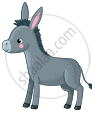
Match the animals with their sounds.
 |
bray |
 |
croak |
 |
bark |
 |
hum |
 |
neigh |
 |
mew |
Describe in your own words the garden that Alice saw.
What should parents do to ensure the safety of children in cyber space?
