Advertisements
Advertisements
प्रश्न
Notice these expression in the text. Infer their meaning from the context.
salt flats
Advertisements
उत्तर
salt flats: thatched roofed houses covered with snow
APPEARS IN
संबंधित प्रश्न
B1. Complete the following statements:
(i) The poet is talking about............................. .
(ii) As a nation weare missing our .................................... .
(iii) Old people havekeys ........................... .
(iv) The elderly remember .......................... .
"Oh the value of the elderly! How could anyone not know? They hold so many keys, so many
things they can show.
We all will read the other side this I firmly believe.
And the elderly are closest oh what clues we could retrieve.
For their characters are closest to how we'll be on high.
They are the ones most developed, you can see it if you try.
They've let go of the frivolous and kept things that are dear.
The memories of so sweet, of loved ones that were near.
As a nation we are missing our greatest true resource,
To get to know our elders and let them guide our course."
B2 Express
State what the underlined words mean:
(i) Oh the value of the elderly! State the value ............. .
(ii) They are the ones most developed. 'They' stand for ............. .
B3: Match the words in Column A with their rhyming word in Column B:
| Column A | Column B |
| (i) Course | (a) Show |
| (ii) Believe | (b) resource |
| - | (c) retrieve |
How did the air raids disrupt the Dutch public life?
To what end have humans used their superior intelligence ?
Guess the meaning of the following word:
Kora
In which language are these word found?
Comment on the indifference that meets Iona's attempts to share his grief with his fellow human beings.
'The author's treatment of the subject matter makes the readers identify themselves with the experience.' Comment on the statement.
Why is the quality of pity earth-bound while the other two passions are elevating?
The following common word is used in a different sense in the poem. Guess what it means.
What quality of 'beauty' and 'love' does the poem highlight?
Read the extract 'Being Neighborly' and complete the following statement:
In order to tidy the room, Jo __________________.
An acrostic is a poem or a write· up in which the first letter of each line forms a word. when it is read vertically.
For example,
Faithful
Reliable
Inspiring
Encouraging
Noble
Dedicated
With your benchmate / group, complete the acrostic of BELIEVE and FAITH.
(Please note that the words / phrases should be more or less related to the topic. You can use a thesaurus.)
Be certain of
E ......................
L ......................
I ......................
E ......................
V ......................
E ......................
F ......................
A ......................
I ......................
T ......................
H ......................
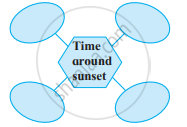
Pick out words from the poem to fill in the web diagram. They should be related to the theme in the web.
Make a list of the preparations made for an assault on Tiger Hill.
They also explored to ______________.
Choose the proper alternatives from the statements given below which would explain why town planning is essential - _______________.
- To develop the city according to the guidelines.
- To get the ‘Best City Award’.
- To attract tourists.
- To use and develop the land available in the city for the interest of the citizens.
Write four reasons why animals in a zoo suffer more than those who live free in the wild.
Discuss in your class.
How can we take help of robots in our daily life?
The term 'Anaesthesia' in the poem means - 'The planner gives beautiful pictures of the new modern city'. Now find out what is Amnesia and Hypnosis in the given context.
Imagine that one of your family members/friends/classmates has recently undergone surgery. You were curious and wanted to learn about his/her experience.
Match the questions you asked with their answers.
| 1. | What health problem did you suffer from? | a. | I was given a bath and I wore a surgical gown. |
| 2. | Whom did you inform about it first? | b. | I was given an injection of anesthesia. |
| 3. | What type of doctor did you consult? | c. | I consulted an orthopedic surgeon. |
| 4 | How did he/she find out that you needed a surgery? | d. | I was relieved and happy that the operation was over. |
| 5. | What preparation was done before the surgery? | e. | I had fractured my ankle while playing hockey. |
| 6. | What did you feel when you were taken to the operation theatre? | f | No, I did not feel anything. I was fast asleep. |
| 7. | What was the first step before the actual surgery? | g. | I recovered and I could walk normally after 3 weeks. |
| 8. | Did you feel any pain during the surgery? | h. | Our school hockey coach. |
| 9. | What did you feel when you opened your eyes after the operation? | i. | The doctor took an X-ray of my ankle, and he found a fracture in my ankle. |
| 10. | How soon did you recover? | j. | I was very nervous. |
Fill in the gap, choosing a word from the bracket to make an appropriate comparison.
(tall / quiet / humble / merry / busy / slippery / fast / sly / slow / big)
as ______ as a mouse.
The description of the character is given below. Identify the character from the play. Find some sentences which support your choice.
He is a major character. He dominates in the story.
Read the passage and find the verbs used with the following nouns and phrases:
- volcano
- molten rock
- volcanic mountain
- dust
- 165 village and towns
- the wind and the sea
- seeds
- bird
Discuss the question after you have seen a presentation of the ‘ad’.
What does the ad tell you?
Write a useful ‘ad’ for the importance of games, drinking enough water, your own school.
List the characters in the play and write one or two lines about each.
How long a period did Shalihotra allow to find the missing things?
What were the three things that Sushruta discovered?
What does the poet pray for? Why?
Write about one occasion when you have behaved like -
Mr. Nobody
There were no old cities left on the earth.
Answer in your own words.
How is the boy from the 1500s dressed?
Read the following from the Language Study pages:
- adjective clause
- adverb clause
- noun clause
Find one example of each from the passages. (Note the linking word when you do that.)
List 5 of the sounds that you like.
Make groups. One person in the group chooses an announcement. Everyone in the group reads that announcement silently but carefully and closes their books. Then that person presents the announcement, changing one of the details in the announcement. Others spot the change. For example, you might say ‘red’ key chain instead of ‘blue’ in the last announcement.
Read the poem aloud using proper intonation.
Read the word. Write the words that combine to make it.
anywhere
Describe Gulliver’s home in Lilliput.
- Form groups of 5–8. Then make pairs of groups. Decide which group will be hosts and which will be guests. Arrange mock parties in the classroom so that the roles of hosts and guests can actually be played out.
- Later on, hold groupwise discussions on how your party went. Make lists of the tips you followed and those you forgot to follow.
What game did Anne choose to play?
Write the name of the toy against the picture.

Write the name of the toys against each picture.

Activity
It’s fun to help out in the kitchen. You can even practice reading aloud when reading the recipe. And you can learn a little math by figuring out how to measure. Here are a few fun items to make that are “Alice” themed.
He preferred handling mail by himself.
Read the following lines and answer the questions.
It isn’t an instantaneous thing
Born of despair with a sudden spring
- What does ‘it’ refer to?
- What does ‘born of despair mean’?
Identify the speaker/character.
Don't worry, Madam, it's only a warning.
What is the poem about?
Name the planets the poet flies through.
Read scene I of the play carefully and answer the question below.
Who is about to go on a hunt? Do the wolves panic on his arrival? Explain.
Who asked the Robot to charge the phone?
Brain of a robot is the______.
They use ______ as bait.
Look at the picture and tick choose the correct word.

Answer using Yes or No and pick sentence from the story to support your answer.
Did Robinson’s ship sink?
Match the rhyming words.
| 1. | flow | know |
| 2. | grow | week |
| 3. | seek | blow |
Name the character or speaker.
"Why does Nandhini look so sad?"
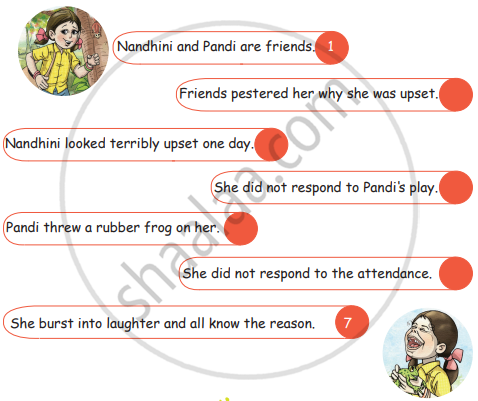
Number the actions of Pandi and Nandhini in order.
Read the advertisement and answer the question given below.

What is the name of the dealer?
Miss Malliga teaches _______.
What will you do if you have a gold plate?
Which problem do you think you can solve with art? How?
The fir tree was sad ______.
