Topics
Chemical Substances-Nature and Behaviour
Chemical Reactions and Equations
- Chemical Reaction
- Characteristics of Chemical Reactions
- Chemical Equations
- Balanced and Unbalanced Chemical Equations
- Balancing Chemical Equation
- Types of Chemical Reactions > Combination Reaction
- Types of Chemical Reactions > Decomposition Reaction
- Types of Chemical Reactions > Single Displacement Reaction
- Types of Chemical Reactions > Double Displacement Reaction
- Types of Chemical Reactions > Reversible and Irreversible Reactions
- Types of Chemical Reactions > Oxidation and Reduction Reactions
- Corrosion of Metals
- Rancidity
World of Living
Acids, Bases and Salts
- Introduction to Acids, Bases and Indicators
- Indicators for Testing Acids and Bases
- Acids
- Properties of Acids
- Common Properties of Acids
- Uses of Acids
- Bases
- Properties of Bases
- Uses of Bases
- Chemical Properties of Acids and Bases
- Common Properties of Acids and Bases
- Strength of Acid and Base Solutions : pH Scale
- Universal Indicator
- Importance of pH in Everyday Life
- Salts
- Salts > Family of Salts
- Salts > pH of Salts
- Common Salt
- Sodium hydroxide
- Washing Soda
- Baking Soda
- Bleaching Powder
- Plaster of Paris
- Water of Crystallisation: Hydrated Salts
Natural Phenomena
Metals and Non-metals
- Metals
- Non-Metals
- Physical Properties of Metals
- Physical Properties of Non-Metals
- Reaction of Metals with Oxygen
- Reaction of Metals with Water
- Reaction of Metals with Dilute Acids
- Reaction of Metals with Salt Solutions
- Reaction of Metals with Chlorine
- Reaction of Metals with Hydrogen
- Reaction of Non-Metals with Oxygen
- Reaction of Non-Metals with Water and Dilute Acids
- Reaction of Non-Metals with Salt Solutions and Chlorine
- Reaction of Non-Metals with Hydrogen
- Metals Vs Non Metals
- Uses of Metals and Non Metals
- Reactions of Metals and Non-Metals
- Ions
- Formation of Positive Ions (or Cations)
- Formation of Negative Ions (or Anions)
- Ionic Bond
- Ionic Compounds
- The Covalent Bond
- Single Bond
- Double Bond
- Triple Bond
- Properties of Ionic Compounds
- Properties of Covalent Compounds
- Occurrence of Metals
- Basic Principles of Metallurgy > Concentration of Ores
- Conversion of Concentrated Ore into Metal
- Extraction of Highly Reactive Metals
- Extraction of Moderately Reactive Metals
- Extraction of Less Reactive Metals
- Basic Principles of Metallurgy > Refining of Metals
- Corrosion of Metals
- Conditions for Rusting of Iron
- Prevention of Corrosion
- Alloys
Carbon and its Compounds
- Introduction to Carbon
- Characters of Carbon
- The Covalent Bond
- Allotropes of Carbon > Diamond
- Allotropes of Carbon > Graphite
- Allotropes of Carbon > Fullerene
- Organic Compounds
- Hydrocarbons
- Saturated Hydrocarbons (Alkanes)
- Unsaturated Hydrocarbons (Alkenes and Alkynes)
- Alkyl Group
- Cyclic Hydrocarbons
- Chains, Branches and Rings of Carbon Compound
- Naming of Hydrocarbons
- Isomerism
- Homologous Series
- Functional Groups in Carbon Compounds
- Haloalkanes
- Alcohols
- Aldehyde
- Ketones
- Carboxylic Acids
- Coal and Petroleum
- Nomenclature of Carbon Compounds
- Chemical Properties of Carbon Compounds > Combustion
- Chemical Properties of Carbon Compounds > Oxidation
- Chemical Properties of Carbon Compounds > Addition Reaction
- Chemical Properties of Carbon Compounds > Substitution Reaction
- Ethanol
- Ethanoic Acid
- Soaps
- Detergents
Effects of Current
Natural Resources
Life Processes
- Characteristics of Living Things
- Life Processes in Living Organisms
- Nutrition
- Autotrophic Nutrition
- Heterotrophic Nutrition
- Nutrition in Plants
- Experiments on Photosynthesis
- Raw Materials for Photosynthesis
- Site of Photosynthesis
- Nutrition in Animals
- Nutrition in Amoeba
- Nutrition in Human Beings
- Respiration
- Aerobic Respiration
- Anaerobic Respiration
- Respiration in Plant
- Respiration in Animals
- Human Respiratory System
- Transportation in Living Organisms
- Transportation in Plants
- Transportation in Human Beings
- Blood
- Human Circulatory System
- Blood Pressure (B.P.)
- Lymph and Lymphatic System
- Excretion
- Excretion in Plants
- Excretion in Animals
- Excretion in Human Beings
- Renal Failure (Kidney Failure)
- Organ and Body Donation
Control and Coordination
- Response to Stimuli
- Coordination in Plants
- Plant Hormones
- Plant Movements
- Tropic Movements in Plants
- Phototropism
- Geotropism
- Chemotropism
- Hydrotropism
- Thigmotropism
- Nastic Movements
- Thigmonasty
- Photonasty
- Coordination in Animals
- Human Nervous System
- Peripheral Nervous System (PNS)
- Central Nervous System (CNS)
- Autonomic Nervous System (ANS)
- Voluntary Nervous System
- The Human Brain
- The Spinal Cord
- Biomolecules in the Cell > Hormones
- Endocrine Glands
- Human Endocrine System
How do Organisms Reproduce?
- DNA Copying and Variation
- The Importance of Variation
- Reproduction
- Modes of Reproduction
- Asexual Reproduction
- Asexual Reproduction in Unicellular Organisms > Binary Fission
- Binary Fission > Simple Binary Fission
- Binary Fission > Longitudinal Binary Fission
- Binary Fission > Transverse Binary Fission
- Asexual Reproduction in Unicellular Organisms > Multiple Fission
- Asexual Reproduction in Multicellular Organisms > Fragmentation
- Asexual Reproduction in Multicellular Organisms > Regeneration
- Asexual Reproduction in Unicellular Organisms > Budding
- Asexual Reproduction in Multicellular Organisms > Budding
- Asexual Reproduction in Multicellular Organisms > Spore Formation
- Vegetative Reproduction or Vegetative Propagation
- Natural Vegetative Propagation
- Artificial Vegetative Propagation
- Tissue Culture
- Sexual Reproduction
- Sexual Reproduction in Plants
- Pollination
- Self-pollination
- Cross-pollination
- Fertilisation in Flowering Plants
- Formation of Seed and Fruit
- Seed Germination
- Sexual Reproduction in Animals
- Puberty
- The Male Reproductive System
- The Female Reproductive System
- Fertilization in Humans
- Menstrual Cycle (Ovarian Cycle)
- Major Events of Menstrual Cycle
- Menarche and Menopause
- Birth Control
- Natural Contraceptive Methods
- Artificial Contraceptive Methods
- Induced Abortion or Medical Termination of Pregnancy (MTP)
- Sexually Transmitted Diseases (STD) or Sexually Transmitted Infections (STI)
- Concept of Reproductive Health
Heredity
- Heredity
- Variation
- Accumulation of Variation During Reproduction
- Gregor Johann Mendel – Father of Genetics
- Monohybrid Cross
- Dihybrid Cross
- Characteristics (or Traits) Transmitted to Progeny
- Inheritance of Blood Groups
- Sex Determination in Humans
- Acquired and Inherited Traits
Light – Reflection and Refraction
- Nature of Light
- Reflection of Light
- Reflection of Light from Plane Surfaces: Plane Mirror
- Law of Reflection of Light
- Regular Reflection and Diffuse Reflection of Light
- Objects and Images
- Images Formed by a Plane Mirrors
- The Position of Image Formed in a Plane Mirror
- Uses of Plane Mirrors
- Spherical Mirrors
- Image Formation by Spherical Mirrors
- Rules for Obtaining Images Formed by Concave Mirrors
- Formation of Different Types of Images by a Concave Mirror
- Representation of Images Formed by Spherical Mirrors Using Ray Diagrams
- Sign Convention for Reflection by Spherical Mirrors
- Mirror Formula and Magnification
- Rules for Obtaining Images Formed by Convex Mirrors
- Formation of Image by a Convex Mirror
- Refraction of Light
- Effects of Refraction of Light
- Laws of Refraction of Light
- Refraction through a Rectangular Glass Slab
- The Refractive Index
- Refraction by Spherical Lenses
- Rules for Obtaining Images Formed by Convex Lenses
- Formation of Different Types of Images by a Convex Lens
- Image Formation by Lenses
- Image Formation in Lenses Using Ray Diagrams
- Sign Convention for Reflection by Spherical Mirrors
- Lens Formula and Magnification
- Lens Formula and Magnification Formulae for a Concave Lens
- Power of a Lens
The Human Eye and the Colourful World
- Human Eye
- Working of the Eye
- Rods and Cones
- Power of Accommodation
- Range of Vision of a Normal Human Eye
- Advantages of Having Two Eyes for Vision
- Defects of Vision and Their Corrections > Myopia
- Defects of Vision and Their Corrections > Hypermetropia
- Defects of Vision and Their Corrections > Presbyopia
- Glass Prism
- Refraction of Light through a Prism
- Dispersion of Light Through a Prism
- The Rainbow
- Atmospheric Refraction
- Scattering of Light
Electricity
- Electric Charges
- Conductors and Insulators
- Electric Potential and Potential Difference
- Electric Current
- Electric Circuit
- Circuit Diagram
- Ohm's Law
- Resistance of a Conductor
- Graph Between V and I
- Experiment to Verify Ohm's Law
- Good Conductors, Resistors and Insulators
- Factors Affecting the Resistance of a Conductor
- Resistivity
- Resistance of a System of Resistors
- Resistors in Series
- Resistors in Parallel
- Domestic Electric Circuits
- Heating Effect of Electric Current
- Practical Applications of Heating Effect of Electric Current
- Electric Power
- Commercial Unit of Electrical Energy
- Effects Produced by Electric Current
- Applications of the Heating Effect of Current
Magnetic Effects of Electric Current
- Introduction to Magnets and Their Properties
- Electromagnetism
- Magnetic Field and Field Lines
- Magnetic Field of Earth
- Magnetic Effect of Current (or Electromagnetism)
- Magnetic Field Due to a Current-Carrying Conductor
- Magnetic Field due to a Current through a Straight Conductor
- Right-hand Thumb Rule
- Magnetic Field due to a Current through a Circular Loop
- Magnetic Field due to a Current in a Solenoid
- Electromagnet
- Magnetism in Human Beings
- Force on a Current-Carrying Conductor in a Magnetic Field
- Domestic Electric Circuits
Our Environment
Notes
VERSATILE NATURE OF CARBON:-
Catenation:- Carbon has the unique ability to form bonds with other atoms of carbon, giving rise to large molecules. .The linkage of atoms of the same elements to form longer chain is called CATENATION.
Carbon has the atomic number of 6, meaning each carbon atom has a total of six electrons. Two are in the completed inner orbit, while four electrons are found in the atom’s outermost orbit. This basically means that carbon has four valence electrons (outer electrons that are available for forming bonds with other atoms). Because of this arrangement within the atom’s orbits, carbon is called Tetravalent.
Carbon due to its tetravalent nature has the unique property to form bonds with other atoms of carbon forming a long chain. Because of its property of catenation, carbon can form a
-
Straight chain
-
Branched chain
-
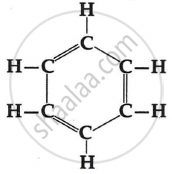
Cyclic ring

carbon atoms may be linked by single, double or triple bonds. Compounds of carbon, which are linked by only single bonds between the carbon atoms are called saturated compounds.
Compounds of carbon having double or triple bonds between their carbon atoms are called unsaturated compounds.
The carbon-carbon bond is very strong and hence stable. This gives us the large number of compounds with many carbon atoms linked to each other.
Since carbon has a valency of four, it is capable of bonding with four other atoms of carbon or atoms of some other mono-valent element. Compounds of carbon are formed with oxygen, hydrogen, nitrogen, sulphur, chlorine and many other elements giving rise to compounds with specific properties which depend on the elements other than carbon present in the molecule. Again the bonds that carbon forms with most other elements are very strong making these compounds exceptionally stable. One reason for the formation of strong bonds by carbon is its small size. This enables the nucleus to hold on to the shared pairs of electrons strongly. The bonds formed by elements having bigger atoms are much weaker.
CHAIN, BRANCHES AND RINGS:-
Formulae and structures of saturated compounds of carbon and hydrogen

(i)STRAIGHT(UNBRANCHED) CHAIN:-
Ex. Propane C3H8

(ii)BRANCHED CHAIN:-
Pentane C5H12
These compounds have the same molecular formula but different structure. These are known as structural isomers.

(iii)CYCLIC:-
Cyclohexane C6H12