Advertisements
Advertisements
Question
'Failure had a tempo faster than success.'
Advertisements
Solution
The concept of people who achieve success very fast also fail very fast holds truth as far as this story is concerned. The tempo of failure is always faster than success. Thus, on one hand, we strive so much to attain success while on the other hand, it takes just seconds for failure to reach us. Most of the time, it is just a matter of chance that a man gains success while a man's failure is pre-destined and occurs only because of his own actions. Success, when planned and achieved because of hard work, stays for long. However, when failure strikes, it is very abrupt and never knocks on the door before approaching. Thus, it can be said that the tempo of failure is faster than that of success.
APPEARS IN
RELATED QUESTIONS
How does the poem relate to our study of the Diary of Anne Frank and the events of the Holocaust?
Explain the use of figurative language in the poem.
There's nobody on the house-tops now...
Just a palsied few at the windows set;
For the best of the sight is, all allow,
At the Shambles' Gate-or, better yet,
By the very scaffold's foot, I trow.
Read the above lines and answer the question that follow.
What is ‘scaffold’?
What lesson do you learn from this poem?
How does Seattle justify his religion as opposed to what the white men had said about it?
Discuss trans-culturation as represented in Seattle’s speech.
The author shows death as a relief from a harsh life. Justify with reference to the story.
What is the setting of “All Summer in a Day”?
She laid the table after she had finished the cooking. (Begin: When…)
She battled her way ___________the crowd.
Not many people read for pleasure these days.
(Begin: Few ................................. )
Given below is an interesting combination of words. Explain why they have been used together.
eternal brilliance
Other sounds that occur frequently in the poem.
(i) What do you understand by the terms `outsider art’ and `art brut’ or `raw art’?
(ii) Who was the “untutored genius who created a paradise” and what is the nature of his contribution to art?
There is a parallel drawn between rain and music. Which words indicate this? Explain the similarity between the two.
Look for some more poems in the rain and see how this one is different from them.
Comment on the attitude shown by Taplow towards Crocker-Harris.
Discuss in pairs or in small groups
The eccentricities of the old are often endearing.
Find out the information about the qualification and eligibility required in the profession related to wild life such as:
Forest officer / Ranger
Find out the information about the qualification and eligibility required in the profession related to wild life such as:
Wildlife photographer
Use the phrase in a sentence of your own, after finding out its meaning.
lifted off
We add ‘un-’ to make opposites. For example, true — untrue. Add ‘un’– to the word below to make its opposite. Then look up the meaning of the word you have formed in the dictionary.
identified ______
Re-word the line from the story:
“We cannot bandage the children’s mouths, so they really have to exercise their will-power.”
Look at these sentences.
|
|
| ‘Would’ tells us what the author used to do, or what used to happen. | ‘Could’ tells us what the author was usually able to do, or grandfather is now not able to do. |
Choose would and could to replace the italicised words in the following sentences.
Choose would and could to replace the italicised words in the following sentences.
Grandfather says, in the old days,
1. elephants were able to fly in the sky, like clouds. They were also able to change their shapes. They used to fly behind clouds and frighten them. People used to look up at the sky in wonder.
2. because there was no electricity, he used to get up with the sun, and he used to go to bed with the sun, like the birds.
3. like the owl, he was able to see quite well in the dark. He was able to tell who was coming by listening to their footsteps.
Write down the significance of the following in the context of 'On to the Summit': Ice axe.
'Organic farming is the need of the time'. Write your views in favour of and against the statement.
| Views | Counterviews |
| 1. | |
| 2. | |
| 3. | |
| 4. |
Refer to a standard dictionary and find out the meaning of the following word:
Reporter
Complete the tabular columns to specify Dos and Don’ts associated with the 'Expansion of Ideas'.
| Expansion of Ideas | |
| Dos | Don’ts |
| (i) Begin impressively | (i) Do not go off-track |
| (ii) | (ii) |
| (iii) | (iii) |
| (iv) | (iv) |
Convert the stories into dialogues and read the dialogues aloud in the class.
Browse on the net and gather a variety of templates to write a 'Curriculum Vitae'.
Find the meaning of ‘anticlimax’.
Divide the class into groups of 4-6. Each group selects for itself, one of the difficult situations listed below. Each group imagines itself to be in that situation.

(a) marooned on an island
A group of passengers is marooned on an island in the middle of the ocean.
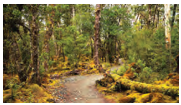
(b) lost in a forest
A group of pilgrims walking through a thick jungle have lost their way.

(c) stranded on the highway
A team of players from an office has got down at the wrong place on a highway at night. It is a lonely spot.
- Describe their surroundings in 4-5 sentences.
- Write the reactions of the companions using exclamations.
- Using your imagination, write what is the only ray of hope for them.
- Two members of the group are going out to try to get help. They can take any five things with them. Write what they choose, and why they choose it.
Given in a mixed order below are some good human attributes of the family. Pick out from the box and write it against the line that reflects it.
Fritz felt that someone needed his help and he was determined to find the sender.
Write a few lines about what Mathilde had and what she dreamt about.
Imagine what must have happened after Mathilde’s friend discovered that the diamonds were real. Do you think she would return the necklace to Mathilde? Would that make Mathilde happy?
Discuss in groups about the procedure of planting a tree. Write the steps in bullet points and present them before the class.
Work in groups and discuss. Then write a diary entry in about 60-80 words describing your feelings and emotions for the given situation.
Imagine, you are Pongo.
Your feelings and emotions when you came back and found the oranges gone.
Having an ice cream on a hot summer day is exciting and enjoyable.
Write about some of the exciting and enjoyable things that one can do in the winter season.
Do you want to try to write your own paragraph now?
Write a paragraph on Monkey.

- ______
- ______
- ______
- ______
- ______
Discuss and write –
- Why do cats and dogs fight?
- Why do we walk across the road, not run?
- Why do people like ice-cream?
This is a park where children talk to different animals and birds. Write four sentences about the picture. Use capital letters where required, complete sentences and punctuation.

Now colour the picture.
Make groups of ten and present one of the following activities in class.
| skit | song | dance | painting a chart for class | make paper bags from old newspaper |
How is school education in the village different from that in the city?
Why did the friends part ways?
What does each of the following mean in the story? Choose the right option.
on the beat:
How would Sletherby gain from his friendship with Honoria Saltpen–Jago?
Rearrange the sentences given below and write a summary of the story in a paragraph. Begin with:
Philip Sletherby was travelling by train to Brill Manor.
- The young man introduced himself as Bertie, the son of Saltpen Jago.
- Bertie needed three pounds desperately and asked Sletherby to lend it to him.
- All the time Sletherby was gazing at the door panel of the car, on which were the two crests – a demi-lion and a greyhound courant.
- He was received by Claude People. K.C., who had kept on talking about various things.
- Bertie had left his purse behind, after sealing an envelope with the crest on the purse.
- Bertie stated that it was the Jago crest. He further added that his mother’s hair was dark brown similar to his.
- While describing the appearance of Honario Saltpen-Jago, K.C. referred to her altered hairstyle.
- Sletherby realized that Bertie had not lied to him, but that he had mistaken him for fraud.
- He explained that the Saltpen crest was that of a demi-lion.
- Sletherby sat dumbstruck on learning that Mrs. Honario Saltpen Jago had changed her dark brown hair to a blonde, just five weeks ago.
- Sletherby pointed out to him that his mother’s letter had a greyhound courant crest.
- His companion in the train was a young man who was searching for something frantically
- Suspecting foul play, Sletherby did not give him any money, as he knew Mrs. Saltpen-Jago was a blonde.
Bring out the people’s reaction to the noises from the surgery.
What angered the author?
Read the given sentence and underline the 'no' word.
Ram has no book.
A certain book/chapter has been included in your syllabus. You have heard that a film version is now available. Write a letter to the Manager of a film theatre near your school, requesting that the film be shown. Tell him/her why it will be beneficial to the students.
Discuss the following and write the summary of your discussion in the form of bullet points.
- How are certain ideas/customs/knowledge passed on from one generation to the next?
- Is it necessary for children to follow the footsteps of their forefathers? If yes, why? Why is it sometimes necessary to change the old ways?
Write a paragraph on ‘Online Shopping’ using the points in the below table.
| Advantages | Disadvantages | ||
| 1. | Time-saving | 1. | Delay in delivery |
| 2. | Variety of products | 2. | Products are not always genuine. |
| 3. | Easy to Pay | 3. | Prone to scams |
| 4. | Easy to order | 4. | At times, it is challenging to return. |
| 5. | Good discounts | 5. | Cannot see or touch the product before purchase. |
You want to convince the customer to buy your product. Prepare a conversation between you and the customer about it.
Prepare a set of questions to interview -
A famous author
These two passages are examples of a short introduction to works of art - a short review. They cover the following points:
- The name of the creator
- The theme or subject matter
- Type of art
- Individual style
- Presentation techniques
- Its effect on viewers
- Message or interpretation
Choose a book/film and review it in short using the points you have listed.
Write points and counterpoints on the following topic:
You should study all subjects in your mother tongue
What do you like better - to listen to a joke, or to tell a joke?
