Divide the class into groups of 4-6. Each group selects for itself, one of the difficult situations listed below. Each group imagines itself to be in that situation.
Advertisements
Question
Divide the class into groups of 4-6. Each group selects for itself, one of the difficult situations listed below. Each group imagines itself to be in that situation.

(a) marooned on an island
A group of passengers is marooned on an island in the middle of the ocean.
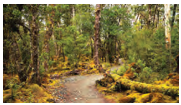
(b) lost in a forest
A group of pilgrims walking through a thick jungle have lost their way.

(c) stranded on the highway
A team of players from an office has got down at the wrong place on a highway at night. It is a lonely spot.
- Describe their surroundings in 4-5 sentences.
- Write the reactions of the companions using exclamations.
- Using your imagination, write what is the only ray of hope for them.
- Two members of the group are going out to try to get help. They can take any five things with them. Write what they choose, and why they choose it.
Advertisements
Solution
marooned on an island
A group of passengers is marooned on an island in the middle of the ocean.
- There is no hint of human life apart from them. They see the vast ocean in front of them and a huge mountain behind them. The island appears rather big, for they find themselves on a long and near-endless stretch of beach comprising pearl-white sands. They are standing on the edge of what seems to be a thick and wide island jungle.
- "What awful weather!"
"Alas, I'm lost in the wild!"
"Oh God, save me! I don't know what to do in this situation." - They get unexpected help due to their luck.
- - Water - They might have to walk far and feel thirsty.
- Build a fire - rescuers will understand someone needs help.
- Stick and cloth - Create a rescue signal
- First aid - In case of injury
- Long and solid sticks - Create shelter to rest
- Basic spear - To defend from predators
lost in a forest
A group of pilgrims walking through a thick jungle have lost their way.
1. look at these huge trees with so many leaves – barely any sunlight at the bottom! What are those queer noises? There seem to be thousands of creepy-crawly insects and birds! What if there are poisonous snakes? Dangerous carnivorous animals?
2. "Ouch! What was that!" said Reena.
"Oh my God! Are there tigers and lions here?" said Mohan.
"Someone, please save me!" shrieked Ria.
3. The only ray of hope was the probable return of the guide before the sun went down. He would then take us to our camp, a safe haven with boundary walls and guards.
4. Mohan and Sandeep are going for help. They will take a lantern and matchesin case it gets dark. Before they can get help, they will take stout sticks to protect themselves from animals, food, and water to keep themselves from starving. They will also take one of the whistles to tell us where they are.
Stranded on the highway
A team of office players has got down at the wrong place on a highway at night. It is a lonely spot.
- They are never-ending roads with no civilisation in sight. On both sides of the road, there are dense forests surrounding them. No vehicles are visible on the road so late at night. There are no sounds except for the strong wind and their chatter.
- "I am so scared. This highway is known for people getting mugged!" "There is no signal on my phone. How will we be able to call for help?" "What if we don't get help? We won't make it to the hockey match tomorrow!"
- They see a board that says an SOS telephone booth is within 10 kilometres. The contact details for emergency help are also printed. The board says help is available 24*7 to people through these telephones.
-
Two members are going to get help. Take with them:
Water: They may get thirsty on the way.
Their hockey sticks: To defend themselves in case of danger.
Reflective jackets: Make sure they are visible to vehicles on the road in the dark.
A Whistle: To create sharp noise and attract attention. A torchlight: in case they need to walk in the dark.
RELATED QUESTIONS
How does figurative language assist in conveying the theme and purpose of the poem?
Explain the importance of rythm in the poem.
What brought the six humans together? Where were they?
In which context is the expression, ‘mountain mist’ used here?
What lesson is learnt from the poem?
The eight other runners pulled up on their heels
The ones who had trained for so long to complete
one by one they all turned around and went back to help him
And brought the young boy to his feet.
Then all the nine runners joined hands and continued
The hundred-yard dash now reduced to a walk
And a banner above that said (Special Olympics)
Could not have been more on the mark.
That's how the race ended, with nine gold medals
They came to the finish line holding hands still
And a standing ovation and nine beaming faces
Said more than these words ever will.
Read the lines given above and answer the following question:
Explain with reference to context.
Besides being an amusing tale about a failure to communicate the story “A Horse and Two Goats” makes some crucial points also. Justify.
Write a composition (350 – 400 words) on the following:
All Girls or all-Boys Schools provide a better learning environment than co-educational schools. Express your views either for or against the statement.
Join the following sentence to make one complete sentence without using and, but or so.
The child helped her mother to make breakfast. She washed the tomatoes.
Give an account of how Napoleon and his companions were unjust and cruel in their behavior towards the other animals.
We have come across words like 'gale' and 'storm' in the account. Here are two more words for 'storm': typhoon, cyclone. How many words does your language have for 'storm'?
Do you think it is important to preserve languages?
Write a letter to the Editor of a magazine describing a dance performance you have seen or an art gallery you have visited.
Discuss the following in pairs or in small groups.
The cleverest of criminals leave behind clues to their crime.
Make a list of words which are spelled differently in American and British English.
Match the words and phrases with their meanings in the box below.
|
|
|
paragraph numbers |
|
1. |
homesick |
(3) |
|
2. |
practically |
(4) |
|
3. |
it pains me |
(7) |
|
4. |
appreciate |
(9) |
|
5. |
thoughtless |
(10) |
|
6. |
exercise |
(11) |
|
7. |
relief |
(13) |
|
8. |
ghastly |
(14) |
|
Almost |
it hurts me |
terrible |
|
test the strength of |
understanding the difficulties |
|
|
wanting to be home |
a welcome change |
not very caring |
Look at these sentences.
|
|
| ‘Would’ tells us what the author used to do, or what used to happen. | ‘Could’ tells us what the author was usually able to do, or grandfather is now not able to do. |
Choose would and could to replace the italicised words in the following sentences.
Choose would and could to replace the italicised words in the following sentences.
Grandfather says, in the old days,
1. elephants were able to fly in the sky, like clouds. They were also able to change their shapes. They used to fly behind clouds and frighten them. People used to look up at the sky in wonder.
2. because there was no electricity, he used to get up with the sun, and he used to go to bed with the sun, like the birds.
3. like the owl, he was able to see quite well in the dark. He was able to tell who was coming by listening to their footsteps.
Give your opinion: Whether we should or should not participate in adventure sports because __________________.
The writer goes in search of an invaluable indigenous variety of seeds. List three reasons for the importance of keeping records of our indigenous agricultural practices.
Column A shows your involvement in growing a tree, as well as the stages in the life of a tree. Column B shows the feelings you experience at all stages. Match them appropriately.
| A | B | ||
| 1. | You planted a sapling. | a. | Gave you a feeling of joy to see the promising future. |
| 2. | You watered the plant. | b. | The new experience brought excitement to you. |
| 3. | You saw the shoot for the first time. | c. | You were happy and satisfied because you experienced what you had often heard, that a small beginning can lead to great achievements. |
| 4. | You fenced the plant. | d. | The colour, symbolizing life, gave you a feeling of hope. |
| 5. | The plant gradually saw lush green leaves grow on it. | e. | You wanted to make a humble beginning. |
| 6. | The tree had buds too. | f. | Your motive was to protect it. |
| 7. | Birds made a nest on the tree which was fully grown and laden with flowers. | g. | You cared for it. |
The poet is prompted to call the sower an ‘august personality’ which means one who has reached the highest position in his workplace.
Explain this using the following point.
Hard work
Imagine that you are a compere of a ‘Prize Distribution Ceremony’ of your college. Write a script for the same.
You can take the help of the following points.
- Introduction – A brief introduction of the programme / function / show
- Welcome speech – Welcome to all guests. Felicitation – felicitation of the guests (the principal, vice-principal, etc.).
- Lighting the lamp
- Welcome song
- Main events
- Vote of thanks
Give, in your own words, TWO reasons for the following:
The woman was reluctant to cross the street by herself.
Write in your own words:-
Which two facts show that the poet is confident of overcoming his irrational feeling?
When a family member is very ill for long, the grandmother of the family urges everyone to send for a person who claims he can cure victims of black magic. Compose a dialogue with her, in which her granddaughter politely convinces her that she should not believe in such things.
Write a paragraph and give an appropriate title to it. Use the following points.
| Birds and Animals | Love and Affection |
| Loyal | Our Best Friends |
| Serve us | Protection and Security |
| Kindness, honesty, compassion | Do not hurt or destroy us |
| Loneliness Avoided | |
Look at the picture given below and frame your own slogan.

Tortoises and Turtles are not the same. Read the facts given below. List the similarities and differences between them.
| Tortoise | Turtle |
| reptile family | reptile family |
| land animal | sea animal |
| has a long life | lives for many years |
| uses tiny feet to walk | use flippers to swim |
| eats grass, weeds and flowers | eats insects and bugs |
| Similarities | Differences |
Fill in the blanks with different words and write your own poem.
Your Title for the poem:______
My ______would say:
“Little boy/girl______
Go to ______
and get some ______, ______
______ and ______”
And so I go to the _______
_____ all the way
and when ______ asks me
what I want
I rattle off a list: “
______, ______
______ and ______”
And back home,
______ twists my ears
Ouch!
Now complete the following sentence, choosing the right word.
The sum was ______ difficult for the class to solve. Only ______ students could do it.
(two, too)
Complete the following stories by using an appropriate word from the box given below –
| my, his, he, your |
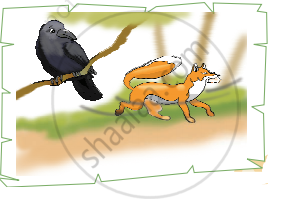
Sitting on a tree a crow was enjoying a piece of bread. A hungry fox wanted to have that bread. said very sweetly, “Dear brother, I've heard that ______ voice is very sweet. Please sing a song for me.” The foolish crow opened ______ beak and the piece of bread fell down. The fox picked it up in ______ mouth and ran away.
Write rhyming words for the words given below. One has been done for you.
- morning - evening
- car
- high
- boots
- heat
- where
What do you expect your close friends to do for you? Beautify the petals with your thoughts.

Explain the following phrase selected from the story in your own word and work with a partner to make sentence using these phrase:
making up for lost time
Now, refer to a dictionary and match the professions with their relevant job descriptions.
| A | B |
| 1. pathologist | studies languages and their structure |
| 2. ornithologist | studies atmosphere, weather and climate |
| 3. entomologist | studies the matter that constitutes the earth |
| 4. archaeologist | studies earthquakes |
| 5. sociologist | studies reptiles and amphibians |
| 6. geologist | studies functioning of human society |
| 7. linguist | studies artefacts and physical remains |
| 8. seismologist | studies birds |
| 9. herpetologist | studies insects |
| 10. meteorologist | studies diseases |
You have recently attended a seminar on ‘Science and Literature’ in which writers presented papers on Science Fiction and Literature and focused on the creativity of young writers. Write a short report about it for a leading newspaper in about 100-120 words.
Read the given sentence and underline the 'no' word.
Ram has no book.
You have had to shift to a new house recently. Write a letter to your grandmother telling her what you miss about your old house. Tell her also what you like about your new house and what you plan to do to make it comfortable for yourself.
Who is your favourite comedian?
What do you like better - to listen to a joke, or to tell a joke?
