Advertisements
Advertisements
Question
Write a few lines about what Mathilde had and what she dreamt about.
Advertisements
Solution
Mathilde was a pretty and charming girl. She was born into a family of clerks. She wanted to be wedded to an aristocrat, but she was married to a minor official at the Ministry of Education. She dressed plainly, but she dreamt of rich dresses and jewels. She wanted so much to charm, be envied, and be sought after. She lived in a shabby, poorly furnished house. She dreamed of a grand, palatial mansion with vast rooms and inviting smaller rooms, perfumed for afternoon chats with close friends.
RELATED QUESTIONS
Fill in each blank with the suitable word.
He broke _____________ in the middle of his speech at the function.
Explain:
‘Some are aglow with the bloom that cleaves
To the limpid glory of new born leaves.’
How was the country affected by the war?
Explain and discuss the themes of the poem.
What tells you that the patriot was overambitious?
You had been waiting outside the examination hall. Describe what you saw and the sounds you heard when you arrived at the place. What were your feelings? Describe how the scene changed once you entered the hall and the examination started.
I have appointment________the dentist.
Join the following sentence to make one complete sentence without using and, but or so.
My grandfather is very old. He is very active.
I prefer going out with friends to staying alone at home.
(Begin : I would rather ………….)
Read the extract given below and answer the questions that follow:
NEXT MORNING, I HAD AN IDEA. IT WAS nothing clear cut, merely speculative, But I considered it all the way to school. Then, after assembly, as soon as they were quiet I waded in. This might be a bit rough, I thought, but here goes.
“I am your teacher, and I think it right and proper that I should let you know something of my plans-for this class.”
(i) Who is ‘I’ in the above lines? Where is he? In what mood was he when he entered the class?
(ii) What did the narrator expect from his students at this moment?
(iii) Who entered soon after this? What did she do that made the narrator angry? What challenges did he give her?
(iv) What was the effect of the challenge on her? What plan did the narrator have in mind regarding the conduct of the young ladies? Whose help did he seek for this?
(v) What did the narrator expect from the boy? What was the reaction of the children when they heard the narrator’s expectations?
Distinguish between the following pairs of sentences.
Green stripes could be used or alternatively black ones.
Approval from the outside world and approval within the family.
Within a few pages, the author has packed the important events in the lives of John Ipe and his wife. Discuss how conciseness and economy of expression can achieve an effective portrayal of entire lives.
Discuss in pairs.
‘Failure had a tempo faster than success.’
Although the author was not a vindictive man he was very happy to see the twenty-one stone lady
who had impoverished him twenty years ago, and says he had finally had his revenge. What makes him say this?
Multiple Choice Question:
What lesson did they possibly learn?
Answer the following question:
“It was to be a battle of champions.” (8)
(i) What qualities did the two champions have? Pick out words and phrases from the paragraph above this line in the text and write them down.
|
Mongoose |
Cobra |
| (a) ________ | (a) ________ |
| (b) ________ | (b) ________ |
| (c) ________ | (c) ________ |
(ii) What did the cobra and the mongoose do, to show their readiness for the fight?
Pillars form support for concrete buildings. Metaphorically speaking a strong nation too depends on strong pillars. Discuss with your partner and explain the pillars of a democratic nation. Make a list of obstacles that are a threat to the progress of a nation.
Imagine your friend is a table tennis champion who has won the semi-final in the inter-collegiate championship. Due to overconfidence, she neither practices nor does she take her opponent seriously. This may result in her losing the final. Suggest some ways to make her aware of the importance of hard work and regular practice.
The pride of any city is its skyline.
Write 5 lines about the place where you reside and what makes you feel proud of it.
Compose four lines expressing the grief of having lost nature due to modernisation.
Form groups and try to write a script for a short film or documentary on any topic of your choice. The script must develop properly. You can take the help of the following points.
- choose a topic
- central theme
- the beginning, the middle, and the end
- the message
Form pairs. Discuss how ‘Part II’ of the story could have been different. Write your storyline in the form of bullets showing the main events.
Think and respond with ‘YES’ or ‘NO’.
When you are faced with a very serious problem or some grave danger, what do you experience?
| Your feelings | panic | |
| wishing you were never born | ||
| hopelessness | ||
| helplessness | ||
| no emotion | ||
| calmness and composure | ||
| willingness to tackle it | ||
| Your reactions | break down and cry | |
| run away and hide | ||
| pray to God | ||
| ask for help | ||
| build up courage | ||
| take it as a challenge |
Write your opinion, in your own words:-
Why did they appreciate and praise the stranger’s story?
Having an ice cream on a hot summer day is exciting and enjoyable.
Write about some of the exciting and enjoyable things that one can do in the winter season.
Complete the following picture board.
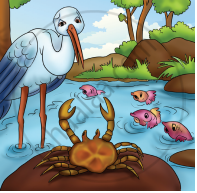 |
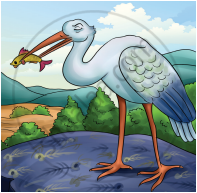 |
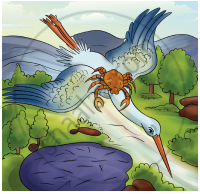 |
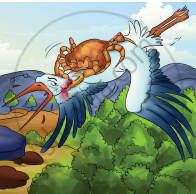 |
Punctuate the following sentences using capital letters, full stops (.) commas (,) question marks (?) apostrophe ( ' ) exclamation mark (!) wherever necessary.

dear samir,
i am sending you a photograph of my newest pet frisky is a bulldog and a very playful puppy by next summer he should be old enough to go with us on our long walks i m sure you are looking forward to seeing him I know you will like him
warm regards
sanju
Rewrite the passage below using capital letters where necessary
one saturday afternoon amarjit and his little sister rani went for a picnic to india gate. there they saw ducks, water and their friend raj
Some words have similar sound, but different meaning. Choose the correct word from the option and fill in the blank.
The squirrel has a long ______.
Some word have similar sound, but different meaning. Choose the correct word from the option and fill in the blank.
He is our school ______.
What was Sletherby’s response to Bertie’s request?
How did Woman 5 spend her time in the waiting hall?
Write conversation on the following situation.
Between two friends about the importance of reading newspapers
The photograph did not look like ______.
Why was Miss Meadows upset and dejected?
Do you think you can afford to buy all of these at once?
What is the conflict between Margot and the other children in the story, “All Summer in a day”?
Write letter to your father asking permission to go on a educational tour.
