मराठी
महाराष्ट्र राज्य शिक्षण मंडळएस.एस.सी (इंग्रजी माध्यम) इयत्ता ९ वी

Write what you think about the following thoughts and actions of Mathilde : Mathilde and her husband paid off the debt in ten years. - English

Advertisements
Advertisements

प्रश्न

Write what you think about the following thoughts and actions of Mathilde :

Mathilde and her husband paid off the debt in ten years.

थोडक्यात उत्तर
Advertisements

उत्तर

Mathilde's husband's income was "insufficient." So, they both worked hard for ten years to save enough money to pay off the loan. They severely reduced their wants, and her husband worked more hours to reduce the debt load. Somehow, they tackled the difficulties together bravely and honestly.

shaalaa.com
Writing Skills
  या प्रश्नात किंवा उत्तरात काही त्रुटी आहे का?
पाठ 1.5: The Necklace - English Workshop Part ll [पृष्ठ २५]

APPEARS IN

बालभारती English Kumarbharati [English] Standard 9 Maharashtra State Board
पाठ 1.5 The Necklace
English Workshop Part ll | Q 2. (g) | पृष्ठ २५
बालभारती My English Coursebook [Marathi] Standard 9 Maharashtra State Board
पाठ 1.5 The Necklace
ENGLISH WORKSHOP - II | Q 3. (g) | पृष्ठ ३१

संबंधित प्रश्‍न

Who is the narrator? What has been described earlier?


What kinds of stories captivated the young minds in the past?


The poet compares the flowers to the milky way. Is the comparison apt?


Write a short note on Abou bin Adhem.


Narayan has created a memorable character in Muni. Discuss.


What is the climax of Ray Bradbury’s “All Summer in a Day?”


Fill in the blank with an appropriate word: 

The soldier fought bravely__________ his country. 


How does G. K. Chesterton in his essay On Running after one's Hat, romanticize difficult situations by dwelling on the notion that "An inconvenience is only an adventure wrongly considered'"?


Wilfred Owen paints a horrific picture of a nightmarish memory on the battlefield. How does Duke et Decorum Est become Owen's condemnation and bitter response to war?


Which courtesies did Braithwaite ask his class to observe and how did the students react to these ‘new rules’? Describe the incident that brought about a change in  Denham’s hostile attitude towards Braithwaite


Fill in the blanks with an appropriate word: 

  1. The teacher spoke for Raju when he was wrongly accused of stealing money.
  2. We can visit her at the hostel at 3 pm and 6 pm on Saturdays.
  3. The Sinha's have lived in New Delhi 1943.
  4. Little children are often afraid of the dark.
  5. Sneha has applied for a scholarship.
  6. It took Ahmed many months to get the loss of his friend.
  7. She turned the generous offer made by the manager.
  8. We were asked to take our footwear as we were entering a place of worship.

Locate Ile Amsterdam on the world map.


The phrase 'inter alia' meaning 'among other things' is one of the many Latin expressions commonly used in English.

Find out what these Latin phrases mean.

1.Prima face

2. ad hoc

3. in camera

4.ad infinitum

5.mutatis multanis

6.tabula rasa


Discuss with your partners

The manner you adopt when you talk about a teacher to other teachers.


The word ‘round’ usually means a kind of shape. What is its meaning in the story?


The traits of the characters you meet in the extract are jumbled. Sort them out and write them in the appropriate columns.

(Shy, bold, gruff, friendly, withdrawn, perceptive, empathetic, playful, lonely, happy, gentlemanly, frank, mature, dull, sharp, adventurous.)

Jo Laurie Grandpa


Imagine that Revathi’s father is abroad on business and she wishes to convey the news of her prize - winning plants. Draft an email for the above subject.

(Use an email format.)


Pick out the examples of alliteration from the poem and write them down.


Form pairs and make a 'pair presentation' of any one of the two stories. To do so, each person presents only one sentence at a time, and the next one is immediately presented by the partner. Thus, each person in the pair presents alternate sentences without breaking the flow of the narration.


Given in a mixed order below are some good human attributes of the family. Pick out from the box and write it against the line that reflects it.

After some days, Elizabeth informed that she wanted the family to move to a safer place.


Form pairs. List the things on which you have the same opinion and also the ones on which you have different opinions. Prepare a list of ten things in all and see how far you agree or disagree with your friend. Some useful phrases are given alongside. You could talk about:

  • Clothes, latest fashion.
  • Performance of sportsmen and women.
  • Traffic/Transport in your area.
  • Cleanliness and hygiene in your area.
  • Future occupations/Careers.
  • Latest news items.
  • TV programs
  • Mobile Apps
  • Any subject of your choice.
Agreement Ask for your friend’s opinion: Disagreement
I totally agree with you. Do you think ...? No, I don’t think so.
Exactly/Absolutely! Do you agree ...? I totally disagree.
You are right. What do you think? Not necessarily.
I don’t know, I need to think about it. (partial agreement) What is your opinion? I’m not sure about that.
I suppose so. How do you feel about that? Let’s agree to disagree!

Say ‘WHY’?

One should avoid getting angry about a difference of opinion.


Look around in your vicinity - your family, friends, neighbours, classmates, etc. and write about any four teenagers who have made a name for themselves by doing something extraordinary. 

Teenager Group Name/s Special/extraordinary tasks/things performed
1. Family ______ ______
2. Friends ______ ______
3. Neighbours ______ ______
4. Classmates ______ ______

Read about the space mission of Sunita Williams. Imagine you are going to interview her. Frame 10 to 12 interview relevant questions regarding-

  1. her early life, training
  2. education
  3. her actual flight into space
  4. future plans
  5. her message to viewers.

Write a Diary entry each day for a month and compile them into a book. You may also name your diary as Anne Frank did.


Develop the following hints.

Tortoise - hare - forest - tortoise walking- seen by a hardware laughs - tortoise speed - tortoise sad - bet - race - tortoise moving- slow speed -hare moves - fast - sleepy tortoise - reaches a winning point - first - wins the bet.


Trees can help you recognise seasons. How do the trees look different in each season? Write a short paragraph with the clues given below.

  • Summer - Trees stretch their leafy branches towards the sun. 
  • Spring - Branches are full of new green leaves.
  • Rain - Trees absorb water and look green. 
  • Autumn - Trees shed their leaves.

Describe Hiawatha, his home and friends in ten lines.


Tina goes to her school library to borrow a book. Complete her dialogue with the librarian by using and or or in the blanks.

Tina Ma’am, I want to borrow a book.
Librarian Do you want a story book ______a book of poems?
Tina I want a story book.
Librarian Do you like stories about animals ______adventure stories?
Tina I like both.
Librarian Go to the second cupboard. On the first shelf, you will find animal stories ______ on the second, adventure stories.
Tina Ma’am, I want Black Beauty______ Panchantantra Stories
Librarian You can have either Black Beauty______Panchantantra Stories

Can you write six things that are made of wood?


Why was Mary Kom named the ‘Queen of Boxing’ and ‘Magnificent Mary'?


Respond to the following advertisements.

Classified Advertisement

WANTED 100 part-time Graphic Artists Experienced in Photoshop and InDesignSalary negotiable. Apply to: MM Graphics, Triplicane, Chennai - 5 or Mail your Resume to [email protected]

Block Advertisement

Female IELTS Teachers Required Postgraduates in English with a minimum of 3 years experience Must be bold and confident Good salary, transport and food allowance provided Apply to:

ARV Institute of Languages

149B, Bose Road, Coimbatore

Ph: 98400 xxxxx

Email: [email protected]


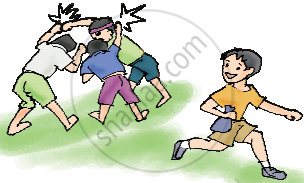
Observe the following picture and write a paragraph in about 150 word about each one of them.


Answer the following question as briefly as possible and with close reference to the relevant text.

Referring closely to the short story, B. Wordsworth relate two important lessons that the young narrator learnt from his friend, B. Wordsworth. How were these lessons relevant?


Read the given sentence and underline the no word.

There is nothing to do.


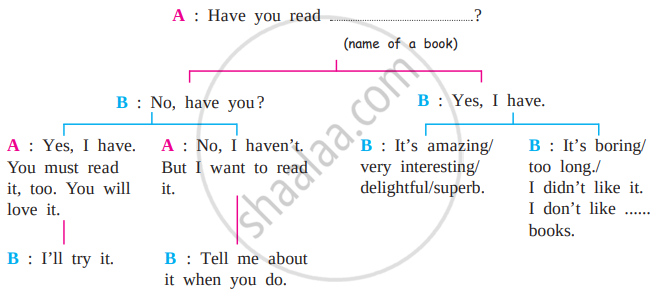
Suppose a foreigner comes to visit your place and you have to accompany him for sightseeing. Prepare a dialogue between you and the foreigner.


Imagine someone has invited your family to a programme, and you were the only person at home when the invitation was given orally.

Write a note (4-5 lines) to pass on the message to the other people in your family. Or, Write an imaginary conversation in which you pass on the message to your parents.


Read the passage given below and answer the questions (i), (ii) and (iii) that follow.

(1) “Can I see the Manager?” I said, and added solemnly, “Alone.” I don't know why I said “Alone.” “Certainly,” said the accountant and fetched him.  
(2) The Manager was a grave, calm man. I held my fifty-six dollars clutched in a crumpled ball in my pocket.
“Are you the Manager?” I asked. God knows I did not doubt it.
“Yes,” he said.
“Can I see you …. alone?” I asked.
5
(3) The Manager looked at me in some alarm. He felt that I had an awful secret to reveal.
“Come in here,” he said, and led the way to a private room. He turned the key in the lock.
“We are safe from interruption here,” he said; “Sit down.”
We both sat down and looked at each other. I found no voice to speak.
“You are one of Pinkerton’s men, I presume,” he said.
10


(4)

He had gathered from my mysterious manner that I was a detective. I knew what he was thinking, and it made me worse.
“No, not from Pinkerton’s,” I said, seeming to imply that I came from a rival agency. “To tell the truth,” I went on, as if I had been prompted to lie about it,
“I am not a detective at all. I have come to open an account. I intend to keep all my money in this bank.”
The Manager looked relieved but still serious; he concluded now that I was a son of Baron Rothschild or a young Gould.
“A large account, I suppose,” he said.
“Fairly large,” I whispered. “I propose to deposit fifty-six dollars now and fifty dollars a month regularly.”

15


20


25

(5) The Manager got up and opened the door. He called to the accountant.
“Mr. Montgomery,” he said unkindly loud, “this gentleman is opening an account, he will deposit fifty-six dollars. Good morning.”
I rose. A big iron door stood open at the side of the room.
“Good morning,” I said, and stepped into the safe. “Come out,” said the Manager coldly and showed me the other way.

30
(6) I went up to the accountant’s wicket and poked the ball of money at him with a quick convulsive movement as if I were doing a conjuring trick. My face was ghastly pale.
“Here,” I said, “deposit it.” The tone of the words seemed to mean, “Let us do this painful thing while the fit is on us.”
He took the money and gave it to another clerk.

35
(7) He made me write the sum on a slip and sign my name in a book. I no longer knew what I was doing. The bank swam before my eyes.
“Is it deposited?” I asked in a hollow, vibrating voice.
“It is,” said the accountant. “Then I want to draw a cheque.”
My idea was to draw out six dollars of it for present use. Someone gave me a chequebook through a wicket and someone else began telling me how to write it out. The people in the bank had the impression that I was an invalid millionaire. I wrote something on the cheque and thrust it in at the clerk. He looked at it.

40


45

(8) “What! Are you drawing it all out again?” he asked in surprise. Then I realised that I had written fifty-six instead of six. I was too far gone to reason now. I had a feeling that it was impossible to explain the thing. I had burned my boats. All the clerks had stopped writing to look at me. Reckless with misery, I made a plunge.
“Yes, the whole thing.”
“You withdraw all your money from the bank?” “Every cent of it.”
“Are you not going to deposit anymore?” said the clerk, astonished.
“Never.”


50


55

(9) An idiot hope struck me that they might think something had insulted me while I was writing the cheque and that I had changed my mind. I made a wretched attempt to look like a man with a fearfully quick temper.  
(10) The clerk prepared to pay the money.
“How will you have it?” he said. This question came as a bolt from the blue.
“What?”
“How will you have it?”
“Oh!”— I caught his meaning and answered without even trying to think— “in fifties.”
He gave me a fifty-dollar bill. “And the six?” he asked dryly.
“In sixes,” I said.
He gave it to me and I rushed out.
As the big door swung behind me. I caught the echo of a roar of laughter that went up to the ceiling of the bank. Since then, I bank no more. I keep my money in cash in my trousers pocket and my savings in silver dollars in a sock.

60


65


70

Adapted from: My Financial Career
By Stephen Leacock
 
    1. Find a single word from the passage that will exactly replace the underlined word or words in the following sentences.    [3]
      1. The kind stranger went and got back the ball from where it had rolled into the bush.
      2. I took offence at the expression on his face that was clearly meant to insinuate I was a liar.
      3. The firm experienced a financial loss when the contract went to a contender who had just entered the business.
    2. For each of the words given below, choose the correct sentence that uses the same word unchanged in spelling, but with a different meaning from that which it carries in the passage.   [3]
      1. alarm (line 8)
        1. The silence from the other end set off alarm bells in her head.
        2. The pallor of his skin alarmed those standing around.
        3. I set my alarm for six o’clock but slept through it.
        4. The sound of the approaching jets caused some alarm in the war room.
      2. wicket (line 44)
        1. The wicketkeeper was the true saviour of the day for that one match.
        2. The team wanted to bat while the wicket was still dry.
        3. The man at the window handed us our tickets through the wicket.
        4. The quick loss of wickets demoralised the team.
      3. reason (line 48)
        1. After the tragedy, his ability to reason is severely diminished.
        2. They reasoned they could get better seats if they arrived early.
        3. Recipients of funds were selected without rhyme or reason.
        4. We have every reason to celebrate.
  1. Answer the following questions as briefly as possible in your own words.
    1. With reference to the passage, explain the meaning of the expression of the ‘I had burned my boats?’   [2]
    2. Cite any two instances of the behaviour of the bank employees that indicate the insignificance of a deposit of fifty-six dollars.    [2]
    3. Why do you think the people in the bank thought of the narrator as an “invalid millionaire?”    [2]
  2. Summarise why the narrator decided ‘to bank no more’ (paragraphs 6 to 10). You are required to write the summary in the form of a connected passage in about 100 words. Failure to keep within the word limit will be penalised.    [8]

Share
Notifications

Englishहिंदीमराठी


      Forgot password?
Use app×