Advertisements
Advertisements
प्रश्न
Read the passage given below and answer the questions (i), (ii) and (iii) that follow.
| (1) | “Can I see the Manager?” I said, and added solemnly, “Alone.” I don't know why I said “Alone.” “Certainly,” said the accountant and fetched him. | |
| (2) | The Manager was a grave, calm man. I held my fifty-six dollars clutched in a crumpled ball in my pocket. “Are you the Manager?” I asked. God knows I did not doubt it. “Yes,” he said. “Can I see you …. alone?” I asked. |
5 |
| (3) | The Manager looked at me in some alarm. He felt that I had an awful secret to reveal. “Come in here,” he said, and led the way to a private room. He turned the key in the lock. “We are safe from interruption here,” he said; “Sit down.” We both sat down and looked at each other. I found no voice to speak. “You are one of Pinkerton’s men, I presume,” he said. |
10 |
| (4) |
He had gathered from my mysterious manner that I was a detective. I knew what he was thinking, and it made me worse. |
15
20
|
| (5) | The Manager got up and opened the door. He called to the accountant. “Mr. Montgomery,” he said unkindly loud, “this gentleman is opening an account, he will deposit fifty-six dollars. Good morning.” I rose. A big iron door stood open at the side of the room. “Good morning,” I said, and stepped into the safe. “Come out,” said the Manager coldly and showed me the other way. |
30 |
| (6) | I went up to the accountant’s wicket and poked the ball of money at him with a quick convulsive movement as if I were doing a conjuring trick. My face was ghastly pale. “Here,” I said, “deposit it.” The tone of the words seemed to mean, “Let us do this painful thing while the fit is on us.” He took the money and gave it to another clerk. |
35 |
| (7) | He made me write the sum on a slip and sign my name in a book. I no longer knew what I was doing. The bank swam before my eyes. “Is it deposited?” I asked in a hollow, vibrating voice. “It is,” said the accountant. “Then I want to draw a cheque.” My idea was to draw out six dollars of it for present use. Someone gave me a chequebook through a wicket and someone else began telling me how to write it out. The people in the bank had the impression that I was an invalid millionaire. I wrote something on the cheque and thrust it in at the clerk. He looked at it. |
40
45 |
| (8) | “What! Are you drawing it all out again?” he asked in surprise. Then I realised that I had written fifty-six instead of six. I was too far gone to reason now. I had a feeling that it was impossible to explain the thing. I had burned my boats. All the clerks had stopped writing to look at me. Reckless with misery, I made a plunge. “Yes, the whole thing.” “You withdraw all your money from the bank?” “Every cent of it.” “Are you not going to deposit anymore?” said the clerk, astonished. “Never.” |
50
55 |
| (9) | An idiot hope struck me that they might think something had insulted me while I was writing the cheque and that I had changed my mind. I made a wretched attempt to look like a man with a fearfully quick temper. | |
| (10) | The clerk prepared to pay the money. “How will you have it?” he said. This question came as a bolt from the blue. “What?” “How will you have it?” “Oh!”— I caught his meaning and answered without even trying to think— “in fifties.” He gave me a fifty-dollar bill. “And the six?” he asked dryly. “In sixes,” I said. He gave it to me and I rushed out. As the big door swung behind me. I caught the echo of a roar of laughter that went up to the ceiling of the bank. Since then, I bank no more. I keep my money in cash in my trousers pocket and my savings in silver dollars in a sock. |
60
65
70 |
| Adapted from: My Financial Career By Stephen Leacock |
||
-
- Find a single word from the passage that will exactly replace the underlined word or words in the following sentences. [3]
- The kind stranger went and got back the ball from where it had rolled into the bush.
- I took offence at the expression on his face that was clearly meant to insinuate I was a liar.
- The firm experienced a financial loss when the contract went to a contender who had just entered the business.
- For each of the words given below, choose the correct sentence that uses the same word unchanged in spelling, but with a different meaning from that which it carries in the passage. [3]
- alarm (line 8)
- The silence from the other end set off alarm bells in her head.
- The pallor of his skin alarmed those standing around.
- I set my alarm for six o’clock but slept through it.
- The sound of the approaching jets caused some alarm in the war room.
- wicket (line 44)
- The wicketkeeper was the true saviour of the day for that one match.
- The team wanted to bat while the wicket was still dry.
- The man at the window handed us our tickets through the wicket.
- The quick loss of wickets demoralised the team.
- reason (line 48)
- After the tragedy, his ability to reason is severely diminished.
- They reasoned they could get better seats if they arrived early.
- Recipients of funds were selected without rhyme or reason.
- We have every reason to celebrate.
- alarm (line 8)
- Find a single word from the passage that will exactly replace the underlined word or words in the following sentences. [3]
- Answer the following questions as briefly as possible in your own words.
- With reference to the passage, explain the meaning of the expression of the ‘I had burned my boats?’ [2]
- Cite any two instances of the behaviour of the bank employees that indicate the insignificance of a deposit of fifty-six dollars. [2]
- Why do you think the people in the bank thought of the narrator as an “invalid millionaire?” [2]
- Summarise why the narrator decided ‘to bank no more’ (paragraphs 6 to 10). You are required to write the summary in the form of a connected passage in about 100 words. Failure to keep within the word limit will be penalised. [8]
Advertisements
उत्तर
-
- fetched
- imply
- rival
- I set my alarm for six o’clock but slept through it.
- The team wanted to bat while the wicket was still dry.
- We have every reason to celebrate.
-
- “I had burned my boats” means deciding or taking an action that makes it impossible to return to the previous situation. Here, it signifies that the narrator could not go back on his decision.
- The manager asked the narrator to leave the safe and said a cold ‘Good morning’.
- When the narrator was withdrawing the amount, the clerk sarcastically asked the denomination in which he wanted it.
- The clerks stopped writing and looked at him.
- The narrator’s exit was followed by a roar of laughter.
- The narrator was nervous. At the accountant’s window, he grew pale and his movements became convulsive. As he wrote and signed his name, he became even more nervous, and his voice became hollow. When the chequebook was handed to him, somebody tried explaining how to write it out since it was obvious. He was physically distressed and fumbling. Since he wanted to make a withdrawal, people in the bank must have assumed he had a substantial deposit.
| The | narrator | wanted | to | open |
| an | account | with | fifty-six | dollars. |
| The | Manager | coldly | instructed | the |
| accountant | to | help | him. | The |
| narrator | unsteadily | passed | on | his |
| money | to | the | accountant | who |
| passed | it | to | the | clerk |
| The | narrator | had | to | write |
| the | sum | down | and | sign |
| He | asked | to | make | a |
| withdrawal | intending | to | withdraw | six |
| dollars | In | his | agitation | he |
| withdrew | the | entire | sum | He |
| could | not | reason | or | explain |
| his | action | so | recklessly | stated |
| that | he | was | withdrawing | the |
| entire | amount | he | had | deposited |
APPEARS IN
संबंधित प्रश्न
But a BIRD that stalks down his narrow cage
Can seldom see through his bars of rage
His wings are clipped and his feet are tied
So he opens his throat to sing.
Read the above lines and answer the question that follow.
What docs the word “clipped” mean in this poem?
What tells you that the speaker was swayed by the enthusiasm of his admirers? What proves him wrong?
It was roses, roses, all the way,
With myrtle mixed in my path like mad;
The house-roofs seemed to heave and sway,
The church-spires flamed, such flags they had,
A year ago on this very day.
Read the above lines and answer the question that follow.
“The house-tops seemed to heave and sway”. Explain
There's nobody on the house-tops now...
Just a palsied few at the windows set;
For the best of the sight is, all allow,
At the Shambles' Gate-or, better yet,
By the very scaffold's foot, I trow.
Read the above lines and answer the question that follow.
Explain with reference to the context.
What event is referred to in the poem?
What does the reader learn about the characters of the narrator and the old man, in Ernest Hemingway “Old Man and the Bridge?
List the pair of opposites found in the poem.
Write a letter to the President, Residents’ Welfare Association of your locality suggesting some measures that could be taken for solving the problem of water scarcity and conserving water.
Use the phrase in a sentence of your own, after finding out its meaning.
spread across
The words in the box are all words that describe movement. Use them to fill in the blank in the sentence below.
When the cobra tried to bite it, the mongoose ____________ aside.
List the reactions of the agricultural officer to the author’s inquiry about Kasbai rice seeds. One is done for you.
(a) He had not heard of Kasbai.
(b) ___________________________
(c) ___________________________
Compose 8 to 10 lines. Narrate an incident in your life without using any rhyming pattern.
You have just returned after your first experience of the kite - festival in Gujarat / Ahmedabad. You were thrilled with the festivities.
You have a friend who lives abroad. Write a letter to your friend describing how you enjoyed the kite-festival.
Write in your own words, how the Robinson family made each of their homes.
Write what you think about the following thoughts and actions of Mathilde :
Mathilde and her husband decided to replace the necklace.
What is the meaning of ‘intellectual rubbish’?
Write a letter to any one of the following to tell them how much you appreciate them.
- Your mother
- Your father
- Any one of your relatives
- Your teacher
Prepare and present a short speech on the following.
An inspiring incident in the life of a great leader.
Write a news report on the ‘Environment Day’ celebrated in your school.
Read the script from:
| Joan (Girl) | Good morning, Captain squire ........... (up to) |
| Joan | (Simply) ............. Polly and Jack have promised to come with me. |
Write a summary of that part of the script (in Indirect speech) in 15 to 20 lines.
‘There is no short-cut to success’.
Expand this maxim with a suitable introduction, body with examples, and conclusion. Write it in your notebook in about 20 lines.
Read the acrostic poem on ‘Friend’. Write an acrostic poem like this on ‘Tree’.
| Friend | Tree |
|
Friends always love each other |
T |
|
Respect each Other |
R |
|
Interact with each other |
E |
|
Enjoy playing with each Other |
E |
|
Never hurt your friends |
|
|
Do everything together |
Find out the following from ten families living in your neighbourhood.
| Count the number of F1* F2 F3 F4 F5 F6 F7 F8 F9 F10 Total |
| children below 5 years of age |
| children from 5-14 years |
| grown-up children from 15-20 |
| elders from 21-50 years |
| old people who are above 50 years |
| total number of people in the family |
*F = Family
- How many members are educated in each family?
- From amongst the ten families, how many are educated?
Now talk to your partner and then write a report about your neighbourhood.
See the picture Travel Time below. Answer the questions that follow.
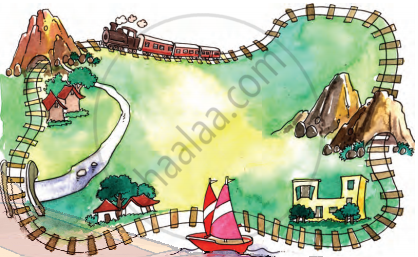
- Where did you go for an excursion/holiday?
- With whom did you go?
- What did you take with you?
- What was the first thing you saw when you reached your destination?
- What did you like best about the place?
- How long did you stay there?
- What did you miss about home?
What had really happened in the dentist’s room?
‘Just one more installment and BABY’S REALLY OURS!’ This tells us that the couple
Write an essay of about 200 word
The profession you would like to choose
Write a composition in approximately 350 – 400 words on the following subject:
(You are reminded that you will be rewarded for orderly and coherent presentation of material, use of appropriate style and general accuracy of spelling, punctuation, and grammar.)
Online education during the pandemic has been a blessing in disguise.
Give your views on the above statement.
Gather more information about the following:
- Different types of impairment that limit a person’s activity or make it difficult for him/her to mix with others in society.
- How modern technology can be used to overcome these problems.
