Advertisements
Advertisements
प्रश्न
Suggest a few instances in the poem which highlight humour and irony.
Advertisements
उत्तर
A model answer has been provided for students' reference.
It is strongly recommended that students prepare the answer on their own.
The poet has used the tools of humour and irony in the poem. Humour refers to cognitive experiences which provoke laughter in a person. Irony refers to the strange aspect of a situation that is very different from what one expects. Some instances of humour and irony in the poem are:
The decision of the king to hang the chief of the builders for constructing a low arch when his crown struck against it evokes laughter among the readers. It is an example of humour. The way the king got convinced that actually the labourers who constructed the arch were responsible is also humourous. The king wanted to hang the labourers but the labourers were able to defend themselves. This situation is humorous as it evokes laughter among the readers and ironic as the readers find that the labourers are able to shift the responsibility to the architect. Ironically, the architect is able to shift the responsibility to the king himself. The selection of the wisest man who would give the verdict as to who was the real culprit evokes laughter and is, therefore, humorous. The old man ultimately blamed the arch and declared that the arch must be hanged. Ironically, one of the ministers pointed out that the gathering wanted a man to be hanged. As the noose fitted the king's neck, so, he was hanged.
The choice of a successor is humorous as an idiot is consulted in selecting the successor. The idiot chose a melon who became the symbolic head of the state.
APPEARS IN
संबंधित प्रश्न
He asked. Boy, did he ask! First he asked me for a chance, then he asked nearly all the people he came across if they wanted to buy a telephone system from him. And his asking paid off. As he likes to put it, “Even a blind hog finds an acorn every once in a while.” That simply means that if you ask enough, eventually someone will say ‘yes’.
He cared. He cared about me and his customers. He discovered that when he cared more about taking care of his customers than he cared about taking care of himself, it wasn’t long before he didn’t have to worry about taking care of himself.
Most of all, Cowboy started every day as a winner! He hit the front door expecting something good to happen. He believed that things were going to go his way regardless of what happened. He had no expectation of failure, only an expectation of success. And I’ve found that when you expect success and take action on that expectation, you almost always get success.
Cowboy has made millions of dollars. He has also lost it all, only to get it all back again. In his life as in mine, it has been that once you know and practice the principles of success, they will work for you again and again.
He can also be an inspiration to you. He is proof that it’s not environment or education or technical skills and ability that make you success. He proves that it takes more: it takes the principles we so often overlook or take for granted. These are the principles of that Ya Gotta’s for success.
Question:
(1) What was the cowboy’s motto?
(2) What did the cowboy learn after he lost millions of dollars?
(3) Why did the cowboy firmly believe that asking would pay off?
(4) When you expect success and take action on that expectation you almost always succeed. [Name the part of speech of the underlined words]
(5)
(a) He cared about me and his customers. [Rewrite using ‘not only ……………….but also’’]
(b) Cowboy has made millions of dollars [Add a question tag]
(6) In what way is the cowboy a source of inspiration for you?
Talk to your partner about the following.
Have you known someone like the author’s grandmother? Do you feel the same sense of loss with regard to someone whom you have loved and lost?
|
The energy stored in coal and petroleum originally came to the earth from the sun. The bulk of the present-day supplies was laid down some 200 to 600 million years ago, when tropical conditions were widespread. Lush, swampy forests produced huge trees; warm coastal seas swarmed with microscopic forms of life. When these organisms died, much of their tissue was recycled as it is today — through scavenging and decay. But a significant amount of dead plant and animal material was covered with mud, which prevented complete decomposition. With the passage of time, layer upon layer of the fine sediment was deposited over the once-living material; the sheer weight turned the sediments to rock. Sandwiched between the layers, both coal and petroleum were produced and preserved under pressure. Coal was formed mostly of giant fern-like plants that have only small counterparts today. Coal may still be forming here and there on earth, but conditions are not right for the production of significant quantities. |
Number the points.
Look for a story, a poem and a newspaper article on environment conservation and see how the style of each is different from the other.
“I have done something; oh, God! I've done something real at last.” Why does Andrew say this? What does it mean?
What was the reason for young Paul's restlessness at the beginning of the story? How did it find expression?
Discuss in small groups.
‘Poets are the unacknowledged legislators of the world’.
The text is an excerpt from Sesame and Lilies which consists of two essays, primarily, written for delivery as public lectures in 1864. Identify the features that fit the speech mode. Notice the sentence patterns.
What, according to the poet, are human beings out of tune with?
Discuss in pairs or in small groups
What does a novel do?
What does the reference to raw mythology imply?
Find from the story one word for the following.
the highest-ranking official who commands a ship ______
Think and answer in your own words.
Why is the street light compared to a one-red-eyed-giant?
The tongue justifies the possession of the spectacles on behalf of the nose. Pick up the expressions from the poem that argues in favour of the Nose and complete the following web diagram.

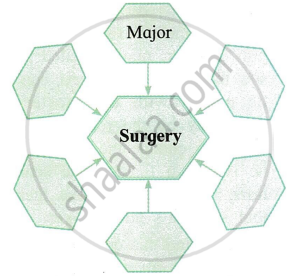
Fill in the web with words related to 'Surgery'.
Read the description of the Kabaddi match and do the following:
Note down the names of the players and say whether each one belongs to 9 A or 9 B.
Language Study: Degrees of comparison.
We use different forms of adjectives and adverbs to show comparison. They are known as degrees of comparison.
- Positive: Mangesh was as strong as Ravi.
She is as tall as her sister. - Comparative: Mangesh was stronger than other players.
She is taller than her sister. - Superlative: Mangesh was the strongest player in the team.
Their sister is the tallest amongst the three.
State the difference between poetry and drama.
The consequences of Oberon’s jealousy for Titania are comic rather than tragic. Comment.
Explain the following statement with reference to the context.
You ought to be ashamed of yourself.
Enact the ad by playing the roles of Didi and her relatives. One more child acts as the salesman of ‘Hemagauri’ and presents the text given in white letters in pink bubbles.
Write a short speech for the State of Maharashtra.
Write a conversation between a donkey and a school boy.
Find, in your science textbook, the topics of the stalls handled by students of VI A.
(Write the page number.)
Complete the following sentence with reference to the passage:
The king was determined to prevent his beloved son from ____________.
Draw word webs for the following. Begin with the given word and go on writing as many other words associated with it, as you can. Use these words to write other related words to form a word web.

Read the passage and answer the following:
Where does the story take place?
Put the following events in chronological order.
- The sword in the stone appeared in the churchyard.
- Lord Uther died.
- Lord Uther drove the barbarians away.
- The Lords and knights began to fight for the kingdom.
- Sir Kay left his sword behind at home.
- Merlin announced that Arthur was the son of Lord Uther.
- Arthur brought the sword from the churchyard.
- Ancient Britain was invaded by wild barbarians.
- Many knights tried to pull the sword out of the stone.
- Arthur grew up in Sir Ector’s house.
- Merlin entrusted a baby to Sir Ector.
Write one or two sentences about something beautiful, using your own experience or imagination. Then rearrange the words in the sentences in a poetic form. You may write about a beautiful day, a beautiful night, a stream, a crop standing in a field, a graceful bird or animal, etc.
Write out a few things that you would really miss about your home if you were to stay away from it for long.
Discuss how you will measure the worth of a sports event.
Find two examples of the following from the lesson.
An Exclamation
Guess the meaning of weary.
Your parents sometimes behave like the young bird’s parents. They may seem cruel and unrelenting. Does it mean that they do not care for you? Explain your views about it with reference from the story
Identify the speaker/character.
‘ It’s Somu’s thoughtless ways that reduce me to tears’
Answer the following question based on the reading of the story. Do not forget to go back to the passage whenever necessary to find and confirm the answer.
| Action | Effect |
| While you warm yourself | I will prepare the best tea. |
| I saved enough money | |
| Six hundred and two villages were destroyed. | |
| It was a terrible earthquake and it was felt | |
| I ran back to the village | |
| They lifted the door | |
| I went to thank the Army Officer |
Read the lines and answer the questions.
And in fighting for their country, faith and king
noble impressions on people’s minds would ring
- What does ‘noble impression’ mean?
- Who can leave a noble impression?
Read Section – III (para 1 and 4) and answer the following questions.
Paragraph 1
1. Who listened to the chipping sound of the chisel? ______
2. Who was working with the hammer and chisel? ______
Paragraph 4
1. Who was staring? ______
2. Who was the young stone carver? ______
3. What was he working on? ______
Read the line and answer the question.
I must go down to the sea again, to the lonely sea and the sky
Where does the poet want to go?
Olive Ridleys are the only sea turtles seen on Indian shores.
Work in groups of five. Tell the story in ten sentences.
You can begin the story like this:
The author’s Grandfather served in the Indian Forest Service.
After his retirement he built ______ Now continue the story. Each one should say one sentence.
Selvi asked, 'Did they come in an aeroplane?' because she______.
A school-going girl writes the diary account.
Describe Gulliver’s encounter with the army of Blefuscu.
Try your own.
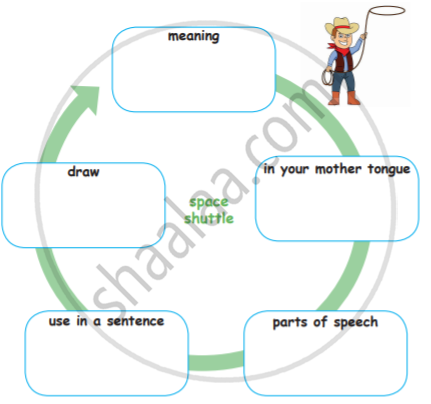
Try your own.
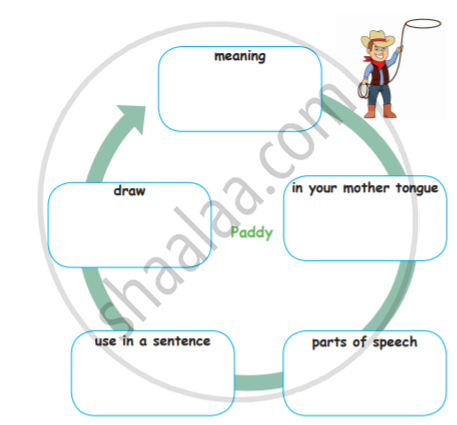
How do we keep our integrity?
Choose the picture for the passage.
| Our national emblem is taken from Ashoka’s pillar at Sarnath. It is found on all government documents, coins, currency notes, postcards, and envelopes. It consists of four lions standing back to back but, we can see only three lions at a time. There is a Dharma chakra in the centre of the base plate, with the figure of a bull in the right and that of a horse in the left. The entire structure is sitting on a lotus. The words ‘Sathyameva Jayate’ is written under it in Devanagari script. These words mean, ‘Truth alone Triumphs’. |
Read the advertisement and answer the question given below.

What is free, for LED TV?
Meena went to ______ her father.
Fill in the blank with rhyming word.
larder- ______
Match the rhyming words.
| Say | grow |
| All | time |
| Go | day |
| Rhyme | fall |
We shouldn't ______ ever.
Write the word with same meaning.

purse- ______
Which problem do you think you can solve with art? How?
What subject did he like the most?
What is the main idea of the story?
List three questions that the little boy asks.
- ______
- ______
- ______
Are these sentence TRUE or FALSE
The poet tells the child to think of friends after it is dark.
Now, read the following passage on “Laughter Therapy” and answer the questions that follow.

- Laughing is an excellent way to reduce stress in our lives; it can help you to cope with and survive a stressful life. Laughter provides full-scale support for your muscles and unleashes a rush of stress-busting endorphins. Since our bodies cannot distinguish between real and fake laughter, anything that makes you giggle will have a positive impact.
- Laughter Therapy aims to get people laughing, in groups and individual sessions and can help reduce stress, make people and employees happier and more committed, as well as improve their interpersonal skills. This laughter comes from the body and not the mind.
- Laughter Yoga (Hasya yoga) is a practice involving prolonged voluntary laughter. It aims to get people laughing in groups. It is practiced in the early mornings in open-parks. It has been made popular as an exercise routine developed by Indian physician Madan Kataria, who writes about the practice in his 2002 book ‘Laugh for no reason'. Laughter Yoga is based on the belief that voluntary laughter provides the same physiological as well as psychological benefits as spontaneous laughter.
- Laughter yoga session may start with gentle warm-up techniques which include stretching, chanting, clapping, eye contact and body movements to help break down inhibitions and encourage a sense of playfulness. Moreover, laughter is the best medicine. Breathing exercises are used to prepare the lungs for laughter followed by a series of laughter exercises that combine a method of acting and visualization techniques. Twenty minutes of laughter is sufficient to augment physiological development.
- A handful of small-scale scientific studies have indicated that laughter yoga has some medically beneficial effects, including cardiovascular health and mood. This therapy has proved to be good for depressed patients. This laughter therapy also plays a crucial role in social bonding.
Answer the following.
a. How does laughter help one to cope with stress?
b. Which word in the text (para 2) means the same as ‘dedicated'?
c. Why do you think voluntary laughter provides the same physiological as well as psychological benefits as spontaneous laughter?
d. ‘Laughter is the best medicine’. Explain.
e. Given below is a set of activities. Which of these are followed in the ‘Laughter Yoga’ technique?
- sitting on the ground with legs crossed
- body movements
- clapping
- closed eyes
- breathing exercises
- chanting
- stretching of arms and legs
- bending backwards
- running/jogging
- eye contact
f. ‘Laughter therapy also plays a crucial role in social bonding’. How?
