Advertisements
Advertisements
प्रश्न
What was the reason for young Paul's restlessness at the beginning of the story? How did it find expression?
Advertisements
उत्तर
Paul, the first born of Hester, desired to be lucky for his mother's sake. He desired her affection and wanted her not to worry. The mother, however, considered her husband unlucky. Even she herself was not able to earn much, though their lifestyle extended beyond their income. This left dissatisfaction in the mother's heart and thus she found herself incapable of loving her children. The boy, Paul, sensed the tension that hovered the house and heard every other thing in the house whispering that there should be more money He realised how his mother grieved at his father having no luck or 'lucre' to earn money that led to a loveless household. Thus, he tried to prove it to his mother that he was lucky unlike his father, and worthy of his mother's love. He wished to wipe his mother's worries and got her what she desired, money, to win what he desired, her mother's love. Thus, he rode his rocking horse and betted on the horses predicting the winning horse through his clairvoyance. This made him tired and restless. The desire to earn more and more and even more left him insatiable and thus his anxiety showed on his face. He strained and thus rode harder before Derby and though he achieved 80,000 pounds for his mother, he died proving his luck to his mother for love's sake.
APPEARS IN
संबंधित प्रश्न
Write a character sketch of Mrs. Van Daan.
Read the following passage and do the given activities :
B1 Select :
Complete the following sentences by selecting the correct alternatives:
(i) It is more important to have _______ before rushing to work. (lunch, breakfast, dinner)
(ii) Skipping breakfast brings a higher risk of _______ (cancer, heart attack, brain attack)
(iii) An adequate _______ is provided by your meal. (energy, weight, height)
(iv) More than half of the people risk heart attack due to _______ eating. (early morning, afternoon, late night)
MEN WHO SKIP BREAKFAST FACE
27% HIGHER RISK OF HEART ATTACK
Late-Night Eaters at 55% risk. TNN.
London-Breakfast is widely acknowledged as the most important meal of the day. But now, there’s more reason to have that piece of toast before rushing to work: Skipping breakfast has for the first time been associated with an increase in heart attacks.
A study published in the American Heart Association journal circulation showed that men who skipped breakfast had a 27% higher risk of heart attack or death from coronary heart disease than those who didn’t.
“Skipping breakfast may lead to one or more risk factors, including obesity, high blood pressure, high cholesterol, and diabetes, which may, in turn, lead to a heart attack over time,” said Leah E. Cahill, lead author from the Harvard School of Public Health.
“Our study group has spent decades studying the health effects of diet quality and composition, and now this new data also suggests overall dietary habits can be important to lower risk of coronary heart disease,” said co-author Eric Rimm.
“Don’t skip breakfast,” Cahill said. “Eating breakfast is associated with a decreased risk of heart attacks. Incorporating many types of healthy foods into your breakfast is an essay way to ensure your meal provides adequate energy and a healthy balance of nutrients.
B2 Find:
Find the pieces of ‘advice’ from the passage and write.
B3 Antonyms :
Find out the antonyms for the following words from the passage and write:
(i) higher (ii) decrease
(iii) excluding (iv) low
B4 Reported Speech :
Complete the reported speech of the following sentences given indirect form:
(i) “Our study group has spent decades studying the health effects of diet quality and composition,” said co-author Eric Rimm.
Co-author Eric Rimm _________
(ii) “Dont’s skip breakfast,” Cahill said.
Cahill _______
B5 Personal Response :
How will you practice the message implied in the passage in your life?
Answer the following in 200-250 words :
Describe the relationship between Anne and Margot?
Talk to your partner about the following.
Describe the changing relationship between the author and his grandmother. Did their feelings for each other change?
Notice the following uses of the word ‘tell’ in the text.
1. Her fingers were busy telling the beads of her rosary.
2. I would tell her English words and little things about Western science and learning.
3. At her age, one could never tell.
4. She told us that her end was near.
Given below are four different senses of the word ‘tell’. Match the meanings to the uses listed above.
1. make something known to someone in spoken or written words
2. count while reciting
3. be sure
4. give information to somebody
Notice these expression in the text. Infer their meaning from the context.
manoeuvres
Briefly explain the following statement from the text.
“You have passed through a fantastic experience: or more correctly, a catastrophic experience.”
Locate expressions in the text reflect the Indian idiom, for example, the pride of the generations of his ancestors.
We 'draw up a deed'. Complete the following phrase with an appropriate word.
________one's will
Many sentences and paragraphs in the excerpt begin with the word ‘And’. To what extent does this contribute to the rhetorical style of the lecture?
How is the essence of the poem captured in the lines 'two tickets to Happiness'?
Name the world-famous personality who reached great heights despite of humble circumstances.
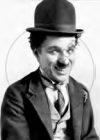
Name the world-famous personality who reached great heights despite of humble circumstances.
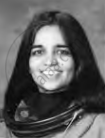
Make groups and discuss the following:
What inspired them to spend the best part of their lives to research and share their findings?
Read the poem aloud and you will find some old outdated words that we do not use in the everyday language now.
However, some writers/poets use them to impart an old-fashioned flavour to suit the background of their write-up. Such words are called Archaic words.
Give the modern words for the archaic words from the poem.
- thy
- being
- bestow'd
- thee
- thou
- cans't
Find evidence from the lesson and write in your own words.
Indians respect the freedom of others.
State whether the following statement is True or False. Correct the false statement by finding evidence from the poem to support your remark.
Birds and insects were benefitted from the tree.
Read the poem below and fill in the gaps, choosing appropriate pairs of rhyming words, to make them meaningful.
|
Little things Little drops of water, Thus the little minutes, Little deeds of kindness, |
(love - above / sand - land / be - eternity)
Pick out a word from the poem to complete the sentence meaningfully.
Handicapped people should never be ______. (ignored and avoided)
Write 3 to 4 lines about the following in your own words.
The Robotic Surgery
The man in the moon is mentioned in many nursery rhymes and stories. When people see the spots on the surface of the moon, they imagine that it’s a human face or the figure of a man who lives on the moon. Sometimes, other characters like rabbits are also imagined to live with the man. Here are two nursery rhymes about the man on the moon.
Read the story and write about the following in short.
Yonamine Chiru of Okinawa
Guess the meaning of the following from the context.
The meadow is wrapped in shadow.
Read the following.
- I mean what I say. I say what I mean.
- I see what I eat. I eat what I see.
Use your imagination to write a funny sentence on this pattern.
Make a time table of your daily routine
- On a school day
- On a holiday, and
- During examinations.
Start at the time you normally get up and list your activities
hourly: 7 am to 8 am, and so on.
Read the following sentence aloud. Write who said it and to whom.
“Look, here’s something for you.”
Gather information about your favourite great historical personality. You may use the internet. You may also gather photographs, pictures, etc. Prepare a collage using the pictures, inspirational quotes, and a brief description of the person’s importance. Hold an exhibition of your collages in the classroom.
Write the symbol that is used in the poem to represent the following idea.
Choice of two options.
Pick out from the poem, two lines each that reflect an optimistic (positive) attitude and pessimistic (negative) attitude.
Optimism :
- ______
- ______
Pessimism :
- ______
- ______
‘And calls our Best away’ is a gentle way of expressing the unpleasant idea of a loved one dying. It is an example of euphemism. Think and write down 3 or 4 ways in which we can express the idea of ‘death’ in a tactful and gentle manner.
- _________________
- _________________
- _________________
- _________________
Find the meaning of the following word.
starlets
Why is Great January annoyed with Holena and her mother? Does he help them?
List the rhyming words in the (On the water) poem.
What did Ahmad tell Kasim when he dug a channel and began to draw water?
Identify the character or speaker.
He was the chief of all spirits.
What are the three rules given by the bird?
Why did Mrs. Jhunjhunwalla buy the painting?
Hamid thought that his grandma would be pleased if he bought______
Identify the character/speaker.
I'll see you later at the Queen's croquet game.
Learning About Nature
Learn about caterpillars and butterflies. Read a book about a caterpillar turning into a butterfly. You can get one from the library or go online and find information with pictures.
Look at the number pattern. Fill the blank in the middle of the series or end of the series.
FAG, GAF, HAI, IAH, ______
Neerja leapt into action when she______.
Vasantha could not see the rescue operation because ______
The boy was so inspired by Mithali that he was happy for his sister to play cricket.
Match the planet with its feature.
| 1. | Mars | blue ice giant |
| 2. | Saturn | red storm |
| 3. | Jupiter | red planet |
| 4. | Neptune | ring and moons |
Where did the space shuttle land?
He got _________ the disease.
The robot that sat on her shoulder was a______.
Whose hospitality is described in the poem?
Match the words with the pictures.
| Robinson |  |
| cannibals |  |
| Friday |  |
| footprint |  |
Match the following.
| 1. | Pablo | Inspector |
| 2. | Velayudham | old man |
| 3. | Sreejith | dog |
Where does the scene take place?
Choose the word with same meaning.
Foot hills- ______
Match the rhyming words.
| strokes | floor |
| shore | rush |
| brush | chokes |
What happen to a child who shuts his ears?
Choose the right word.
Tansen was a famous ______.
Why did the animals think that the jackal was a king?
Read the passage and write a summary of it. Suggest a suitable title for the summary.
|
A sparrow is a small bird which is found throughout the world. There are many different species of sparrows. Sparrows are only about four to six inches in length. Many people appreciate their beautiful songs. Sparrows prefer to build their nests in low places-usually on the ground clumps of grass low trees and low bushes. In cities, they build their nests in building nooks or holes. They rarely build their nests in high places. They build their nests out of twigs grasses and plant fibers. Their nests are usually small and well-built structures. Female sparrows lay four to six eggs at a time. The eggs are white with reddish-brown spots. They hatch within eleven to fourteen days. Both the male and female parents care for the young. Insects are fed to the young after hatching. The large feet of the sparrows are used for scratching seeds. Adult sparrows mainly eat seeds. Sparrows can be found almost everywhere where there are humans. Many people throughout the world enjoy these delightful birds. The sparrows are some of the few birds that engage in dust bathing. Sparrows will first scratch a hole in the ground with their feet then lie in it and fling dirt or sand over their bodies with flicks of their wings. They will also bathe in water or in dry or melting snow. Water bathing is similar to dust bathing with the sparrow standing in shallow water and flicking water over its back with its wings also ducking its head under the water. Both activities are social with up to a hundred birds participating at once and are followed by preening and sometimes group singing. |
Here is an amazing news item on how the qualities of duty and devotion is not restricted to humans alone but shared by animals. Read the passage and answer the questions that follow.
Caesar, the Hero of Mumbai on 26/11
- Mumbai: Caesar, the last surviving hero of his kind, died of a heart attack on Thursday. Caesar, a Labrador Retriever, was covered with tri-color and given an emotional farewell from the city Police Force. The Mumbai Police Commissioner too marked the passing of the hero with a tweet.
- Caesar, who was 11 years old was the sole survivor among the dogs of Mumbai Police who took part in bomb detection operations during the terrorist attack on Mumbai that began on November 26, 2008. He died of a heart attack at a farm in Virar where he and his three canine buddies had been sent after retirement. During the terror attack in Mumbai, Caesar saved several lives when he sniffed out the hand grenades left by the terrorists at the busy CST railway station.
- Caesar was also a part of the search team at Nariman House, where terrorists were holed up for three days. Earlier he was also pressed into service for bomb search operation after the 2006 serial train blasts and July 2017 blast in Mumbai. The Mumbai police officials also tweeted their grief saying, “Services of retired members of Dog Squad during 26/11 will be unforgettable. We will remember our heroes forever.”
Answer the following questions.
- The Labrador Retriever was covered with tri-color. What does this signify?
- How did Caesar save several lives at the CST railway station?
- Which word in the third paragraph of the passage means the same as ‘forced’?
- “Services of retired members of Dog Squad during 26/11 will be unforgettable”. Mention three services rendered by Caesar.
- Caesar is a Labrador breed of dogs. Name a few other native breeds that are used by the Police Force.
- Try to rewrite the news item in your mother tongue without losing the spirit and flavour of the text. Give a suitable title to the translated version.
