Advertisements
Advertisements
प्रश्न
“I have done something; oh, God! I've done something real at last.” Why does Andrew say this? What does it mean?
Advertisements
उत्तर
A model answer has been provided for students' reference.
It is strongly recommended that students prepare the answer on their own.
Andrew, the protagonist of the story Birth, utters these words as he is able to bring a still born child back to life which seemed impossible in the beginning. The child is born still to the wife of Joe Morgan. The child is the first child of the couple who has been married for nearly twenty years. The child is born under critical condition. Both the child and the mother are in critical condition requiring urgent attention. The nurse dumps the child thinking it to be still born.
Andrew takes care of the mother first and seeing her in the recovery path turns his attention to the child. Andrew pulls the child out. It is a perfectly formed boy. Its limp white body is white and soft. Its head is hanging loosely on the thin neck. Andrew at once understands that it is a case of asphyxia pallida. He orders the nurse to get him cold water and hot water and basins. He lays the child upon a blanket and begins the special method of respiration. Fifteen minutes passes but no breath comes from the body of the child. In sheer desperation, he rubs the child with a towel, crushes and relaxes the chest with both hands. Then a miracle happens. The little chest gives a short, convulsive heave and then another. Andrew redoubles his effort. The child is now gasping, deeper and still deeper. Then comes the child's cry. He hands over the child to the nurse and climbs down the stair. He utters the quoted words out of deep satisfaction on achieving the seemingly impossible task.
It means that Andrew has been able to do something wonderful. He has been able to apply what ever he learnt in the medical textbooks and even beyond that. It is really a great achievement for Andrew. The above words mean that a doctor is a medium through which God or Almighty grants life to the patients. The miracle happened by the grace of the Almighty. Andrew acknowledges this fact in the above quoted words. These words bring home the fact that saving the life of a patient is the most coveted achievement of a doctor.
APPEARS IN
संबंधित प्रश्न
Mention the odd way in which the author’s grandmother behaved just before she died.
Notice the kind of English Tsetan uses while talking to the author. How do you think he picked it up?
There lies a great difference between text book medicine and the world of practising physician. Discuss.
While tribal communities may not seem to possess the scientific temper,there are many ideas from tribal conventions that could enrich modern societies.
Comment on the contemporary concern that the poem echoes.
Divide the class into 5 groups. Each group can prepare a decorative chart/poster using an epigrammatic line from the poem. You may use calligraphy/painting/or Paint program on a computer. (With permission, put up these charts in your school.)
Answer in your own words.
How did Revathi prove to the organisers of the competition, that the plants truly belonged to her?
Which pictures reflect gender equality? Write their numbers.
Who said to whom and when / why?
| Who said | To whom? | When / why? | |
| ......the world is full of inequalities. | |||
| I want to do something interesting. | |||
| It is against the will of God. | |||
| Our home is full of love....... | |||
| ...... we can affirm along with United Nations that men and women are equal. |
Rearrange the following in the proper order and insert them into a flow chart as per the poem.
- The plate turned to lead when it was gifted to false-hearted claimants.
- Many claimants donated their wealth to receive the plate of gold.
- For almost two years, no claimants received the plate of gold.
- A plate of gold fell in a temple from Heaven.
- The peasant offered comfort and courage to a blind miserable beggar, whom all had ignored.
- The priests announced that the one who loved God most of all would receive the gift from Heaven.
- When the priest gave the plate of gold to that peasant, it shone with thrice its luster.
- A simple peasant, who had nothing to offer, came to that temple.
Compare and contrast the two opposing human feelings as expressed by the poet.
Read the story and choose the appropriate meaning.
Palette __________________.
In the following sentence, point out the Main Clause and Subordinate Clause. Encircle the Subordinator.
Old Behrman was a painter, who lived on the ground floor.
Justify the verdict delivered in the poem.
I can support my answer with the help of the following suitable arguments:
- _______________________
- _______________________
- _______________________
Expand the idea inherent in the following proverb :
If winter comes, can spring be far behind? - Shelley
List five of your favourite Hindi or Marathi poems or songs. Try to translate any one of them into English.
Explain the use of the following property in the development of the play.
Hat
Complete the following sentence with reference to the passage:
He realised that making the body suffer was not ____________.
Form groups. Discuss the first two paragraphs. Try to present their content in the form of a series of conversations among the volunteers.
Write a character sketch of each of the animals. Write about their actions and thoughts and the qualities that emerge through them. You may present the sketch in the form of a graphic.
Write the meaning of doth.
Answer in your own words.
What task did Grandpa wish to avoid?
Who is the speaker in this poem?
Rohan and Muk entered the garden at midnight ______.
Put the following events in proper order.
- Holmes and others go to the bank.
- Clay digs a tunnel.
- Ross closes the office of the 'Red-headed League'.
- Holmes catches the criminal Clay.
- Clay and Ross enter the cellar to steal the gold.
- The bank received a lot of gold from the Bank of France.
- Holmes visits the area around Mr. Wilson’s shop.
Read the poem and answer the following.
Which strawberries are sweeter?
Find the meaning of the following word.
adorning
Find out how the following game is played.
Kho-Kho
Write other meaningful words that begin/end with footprint.
In what way can we help to reduce or minimize waste generation?
Discuss the issue in groups of 4 or 5 and note down all good suggestions.
Resolve to follow them yourself. Some have been given below for your reference.
- Don’t waste food.
- Take as much as you want but finish everything that’s on your plate.
- Don’t throw away broken or half-used things. Repair them and use them.
- Avoid things which can be used only once.
For example: thermocol (polysterene) cups, plastic glasses, etc. - Reuse!
- Recycle!
Rewrite the following line in your own words.
'Never one comes flying by
But will flutter down to drink.'
Guess the meaning of the following word.
beautify
Answer the following question in about 80-120 word.
If you were to live in the Complaining Street, how would you deal with the people who grumble?
Identify the speaker/character.
‘ The one that spits deadly poison straight into its opponent’s eyes.’
Why did Mrs. Jhunjhunwalla buy the painting?
Read the lines and answer the questions.
Deep inside the mountain
the adventures hide themselves.
Where do adventures hide?
Tackling the Issues
Ask the class to discuss solutions to an issue that plagues contemporary society at large or just your community—for example, homelessness, violence, environmental degradation, hunger.
Half the class should mention idealistic solutions to the chosen issue; the other half should mention only realistic approaches to solving the problem.
See if, in listening to both sides, someone can come up with a proposal that is both realistic and unconventional—an idea that hasn't been tried yet.
Work in pairs and answer the following.
Pick out the rhyming words.
Women should not be compared with men in cricket, says Mithali.
Mithali is one of the women players to score seven consecutive 50s.
We do not really see the landscape from a normal train because the______.
Why did the trees become a green blur?
They ate a bowl of __________.
What happened to the two girls at the end of the war?
How do the wheels go?
Kaliyan worked in a ______.
Try your own.
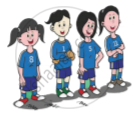
Master trained Akilan on a ______.
Write the events won by these players.
 |
______ |
 |
______ |
 |
______ |
Find and write the clues.
Clue for blind eye ______
Where do ants pile their food?
Every year the children visit the______.
The king shouted at Ani.
What subject did he like the most?
Why did he rub the circle again and again?
While listening to the story, what did Alice see?
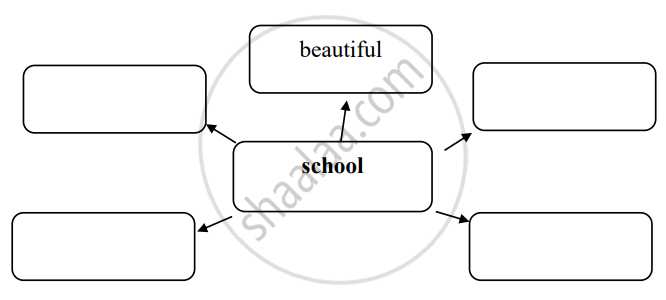
Write the related words as shown in the example:
Read the passage given below and answer the questions that follow
Humans have long been fascinated by fiction. We experience excitement in assigning supernatural power to imaginary characters in fictional stories – and so we have Spider man, Batman, He–man, Titans and many more. The ‘Cyborg’ was an offshoot of such wild imagination of humans to invest our species with superhuman powers. Today, the Cyborg is no more an imaginary organism. We are living in a world where a sizeable population of humans have merged their bodies with technological implants. The term ‘Cyborg’, short for ‘cybernetic organism’, was coined to describe a man, whose body is implanted with technological devices to supplement and substitute body functions.
Cyborgs include people with cardiac pacemakers, contact lenses, bionic ears and eyes, prosthetics and so on. In other words, a cyborg is partly human and partly machine. The technological innovations in the field of medicine and healthcare augment humans with machines, producing a beta version of the human body. The advent of brain machine interfaces is certain to blur the boundary between humans and machines. Scientists are working hard to find a technique for age reversal too. People do not want to die, so mankind is striving to get to the final frontier, which is development of machines and devices that would accord man immortality.
The needs of humans are not limited. As time passes, food habits change, thinking patterns change, and even appearances change. We are about to travel by driverless, fully automated vehicles. Computers and smart phones have become our masters. The more we depend and merge with technological advancements, the more the humanness in us slowly erodes. Intelligence is sought to be infused into machines and robotics are designed in such a way to give man a virtual human companion. The field of artificial intelligence is overtaking the human brain and many fear that it could even harm the human race. Despite certain limitations and potential threats, many believe that cyborgs will be the next step in the evolution of mankind. The amalgamation of man and machine is sure to add a new dimension to the life of mankind and this will prove to be the ‘biggest evolution in Biology’ since the emergence of life, four billion years ago.
Questions:
a) Account for the popularity of characters with supernatural powers.
b) Who is referred to as a ‘Cyborg’?
c) What is expected to happen with the advent of the brain machine interface?
d) The needs of humans are not limited. How is this statement elaborated in the passage?
e) How can a machine turn into a virtual companion for humans?
f) Explain the flipside of the rapid technological advancement.
g) Identify the word in para 1 which means ‘everlasting life’.
h) Which of the following words is synonymous with ‘amalgamation’?
- recreation
- integration
- exploration
- proposition
i) Which of the following options is the antonym of the word ‘advent’?
- drawback
- dispute
- departure
- danger
j) Find out the word which is the antonym of ‘natural’ in para 3.
On the basis of your understanding of the given passage, make notes in any appropriate format.
The Sherpas were nomadic people who first migrated from Tibet approximately 600 years ago, through the Nangpa La pass and settled in the Solukhumbu District, Nepal. These nomadic people then gradually moved westward along salt trade routes. During 14th century, Sherpa ancestors migrated from Kham. The group of people from the Kham region, east of Tibet, was called “Shyar Khamba”. The inhabitants of Shyar Khamba, were called Sherpa. Sherpa migrants travelled through Ü and Tsang, before crossing the Himalayas. According to Sherpa oral history, four groups migrated out of Solukhumbu at different times, giving rise to the four fundamental Sherpa clans: Minyagpa, Thimmi, Sertawa and Chawa. These four groups have since split into the more than 20 different clans that exist today
Sherpas had little contact with the world beyond the mountains and they spoke their own language. AngDawa, a 76-year-old former mountaineer recalled “My first expedition was to Makalu [the world’s fifth highest mountain] with Sir Edmund Hillary’’. We were not allowed to go to the top. We wore leather boots that got really heavy when wet, and we only got a little salary, but we danced the Sherpa dance, and we were able to buy firewood and make campfires, and we spent a lot of the time dancing and singing and drinking. Today Sherpas get good pay and good equipment, but they don’t have good entertainment. My one regret is that I never got to the top of Everest. I got to the South Summit, but I never got a chance to go for the top.
The transformation began when the Sherpa Tenzing Norgay and the New Zealander Edmund Hillary scaled Everest in 1953. Edmund Hillary took efforts to build schools and health clinics to raise the living standards of the Sherpas. Thus life in Khumbu improved due to the efforts taken by Edmund Hillary and hence he was known as ‘Sherpa King’.
Sherpas working on the Everest generally tend to perish one by one, casualties of crevasse falls, avalanches, and altitude sickness. Some have simply disappeared on the mountain, never to be seen again. Apart from the bad seasons in 1922, 1970 and 2014 they do not die en masse. Sherpas carry the heaviest loads and pay the highest prices on the world’s tallest mountain. In some ways, Sherpas have benefited from the commercialization of the Everest more than any group, earning income from thousands of climbers and trekkers drawn to the mountain. While interest in climbing Everest grew gradually over the decades after the first ascent, it wasn’t until the 1990s that the economic motives of commercial guiding on Everest began. This leads to eclipse the amateur impetus of traditional mountaineering. Climbers looked after each other for the love of adventure and “the brotherhood of the rope” now are tending to mountain businesses. Sherpas have taken up jobs as guides to look after clients for a salary. Commercial guiding agencies promised any reasonably fit person a shot at Everest.
